
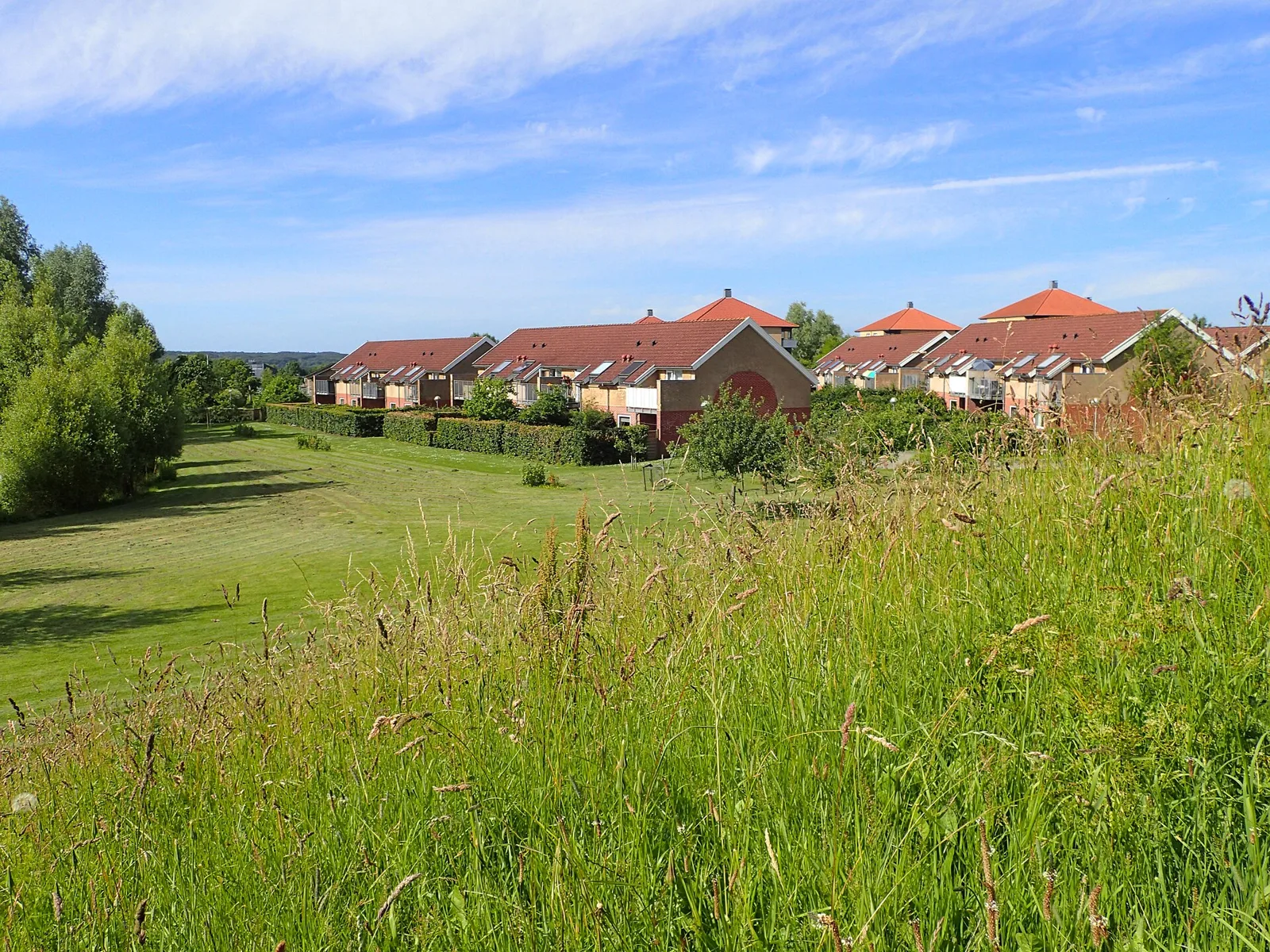
Photo: RhinoMind, CC BY-SA 4.0, Wikimedia Commons
Living in Skejby, Aarhus
Værelse til leje privat Living in Skejby, Aarhus - uden gebyr - Aarhus
The northern hospital district of Aarhus, anchored by Aarhus Universitetshospital - one of Denmark's largest - with mixed residential streets, a strong healthcare-sector workforce and good cycle access to the center.
Skejby is the northern district of Aarhus dominated by Aarhus Universitetshospital (AUH) - one of Denmark's largest hospitals, consolidated here over the past decade as the main regional medical center. The district sits roughly five kilometers north of the central station, between the Lisbjerg hills to the north and the western suburbs, with a mix of hospital buildings, residential streets and the new Skejby residential developments that have grown up around the medical campus.
What it is
A composite district with two halves. The eastern half is dominated by the AUH Skejby hospital complex - a vast campus consolidating most of the Aarhus regional hospital services, with research institutes and a large outpatient footprint. The western half is residential, with a mix of post-war detached houses, terraced rows and newer apartment buildings that have been built up over the past two decades to house the hospital workforce. The Letbane L2 line connects the hospital directly to the central station and onward south toward Viby J. and Odder.
Who lives here
A heavy concentration of healthcare workers - nurses, doctors, technicians, researchers - and their families, alongside a long-tenured Danish residential population in the older houses. The newer apartment buildings draw a younger professional cohort, often dual-income healthcare and research couples. International residents are visible at the hospital and in the research institutes, with a smaller residential footprint. Demographics skew 25-55 with above-average education levels and steady employment.
What it's like during the day
A working district. The hospital handles around 10,000 staff and substantial outpatient flows; shift changes generate predictable traffic peaks around 7 AM and 3 PM. The residential streets are calm; the commercial activity concentrates around the small Skejby Vænget shops and the hospital's own canteens and cafés. The proximity to Vejlby-Risskov Idrætscenter gives sports-facility access.
What it's like in the evening
Quiet outside the hospital itself. The hospital runs 24-hour shifts but the residential streets settle into a domestic rhythm in the evening. No concentrated bar or restaurant scene within the district - evening dining means a trip into the central core, Trøjborg or the newer harbor district. The Skejby Sygehus canteens are open into the evening but cater mainly to staff and visitors.
Getting around
Excellent transit. The Letbane L2 line stops at Universitetshospitalet and connects to the central station in around 12 minutes, then onward south toward Viby J. and Odder. Multiple Midttrafik bus routes serve the hospital and the residential streets. Cycling is well-supported - the dedicated paths along Olof Palmes Allé and the Aarhus Cykelby corridors give 15-20 minute commutes into the center. By car, the Ring 2 and Djurslandmotorvejen put the wider region within easy reach.
Eating and shopping
Practical. A small supermarket and a few convenience shops cover daily groceries; the larger Veri Center in Vejlby and the Storcenter Nord in Katrinebjerg handle bigger runs. Restaurants are limited to the hospital canteens, a few neighborhood kitchens, and the cluster around the newer apartment developments. For café and restaurant culture, the central core and Trøjborg are a Letbane ride away.
When NOT to pick it
If you want urban density, walkable café culture and a strong neighborhood evening scene, Skejby is too clinical - the hospital dominates the visual and functional landscape, and the residential side is calm. If you don't work in healthcare or research, the daily-life convenience is more limited than the inner districts. And if you find the hospital traffic peaks disruptive, the shift-change rhythm is real.
Skejby suits residents who work at the hospital or the surrounding research institutes, who appreciate the direct Letbane link to the central station and the southern suburbs, and who value newer housing with good infrastructure. For healthcare workers, researchers on short-to-medium postings, and families who want newer residential stock with quick access to the medical campus, it is the most logical choice in the northern ring.