
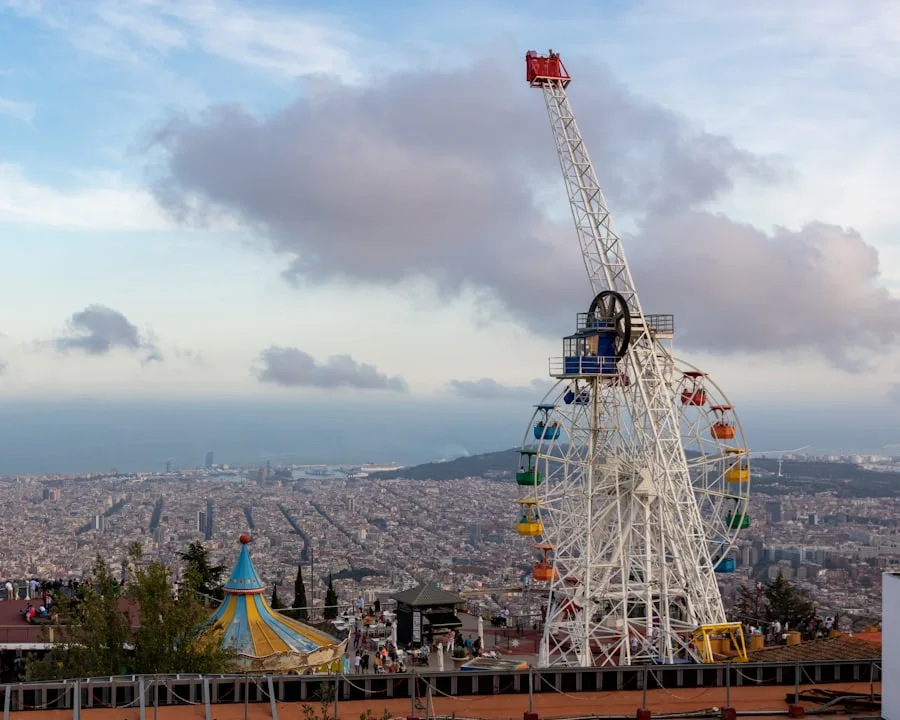
Living in Vall d'Hebron, Barcelona
Alquiler de habitación en piso compartido Living in Vall d'Hebron, Barcelona - sin agencia - Barcelona
University and hospital district at the top of Horta-Guinardó. Green, sporty, with a hospital complex that is a world of its own.
History and identity
La Vall d'Hebron takes its name from the 17th-century monastery of Sant Jeroni de la Vall d'Hebron, demolished in the 19th century. For most of the 20th century it was an almost rural valley on the edge of Barcelona. The transformation came in the 1950s-60s with the Vall d'Hebron hospital complex (now the largest in Catalonia) and in 1992 with the Olympic Games, which brought the Velòdrom, cycling tracks, the tennis pavilion and the university Olympic village. Today it's a hybrid: working-class housing, university campuses (Mundet of UB), hospitals, sports facilities, and the edge of the Collserola natural park starting just above.
What to expect
Mid-density 60s-70s buildings, newer blocks, a few towers. Wide streets designed for hospital traffic. The population is a mix of long-standing families, healthcare staff, university students, nurses and doctors on rotation. People live pragmatically here: little nightlife, lots of neighbourhood life, supermarkets and pharmacies on every corner. Greenery is everywhere: tree-lined squares, the Vall d'Hebron park, and Collserola right beside it.
Transport
Metro L3 (Vall d'Hebron, Montbau, Mundet) connects to Plaça Catalunya in 20 minutes. Buses V21, V25, 27, 76. The Ronda de Dalt ring road for those with cars. Cycling works downhill to the centre, brutal coming back up. The hospital is an interchange point for several night lines.
What to do in the neighbourhood
Hospital Vall d'Hebron - not an attraction, but the hospital complex is a small city within the city. Velòdrom d'Horta (Olympic). Laberint d'Horta, the 1791 neoclassical hedge maze, is the oldest historic garden in the city - few tourists, magical atmosphere. Parc de la Vall d'Hebron, wide and sporty. The UB Mundet campus with modernist architecture. Collserola trails start at the upper edge. Plain neighbourhood bars, a few unpretentious restaurants.
Who it's ideal for
Hospital staff, UB Mundet students, families wanting greenery and more moderate prices than Sarrià, sporty people living for the bike lanes and trails. Less suited to those who want the centre, evening nightlife, lively atmosphere.