
Living in Köpenick, Berlin
WG-Zimmer Living in Köpenick, Berlin - direkt von privat, ohne Makler - Berlin
The far south-east of Berlin. A historic town with a castle on an island, the Müggelsee lake and Berlin's largest forest. A different planet from the centre.
History and identity
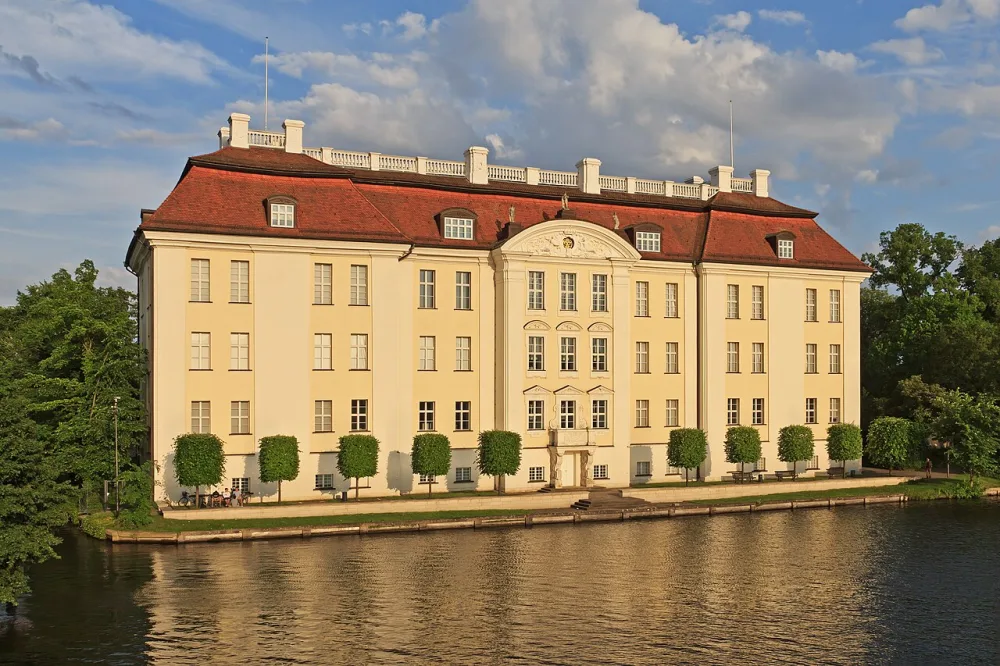
Köpenick is documented from the 9th century as a Slavic settlement and remained independent until 1920, when it was absorbed into Greater Berlin. The Schloss Köpenick on an island (Schlossinsel) between the Spree and the Dahme is a small baroque gem, now a museum of decorative arts. The old town (Altstadt) around the castle keeps a medieval plan with low houses and tight squares. Köpenick is famous for the 1906 episode when an unemployed shoemaker, Wilhelm Voigt, dressed as a Prussian captain, occupied the town hall and arrested the mayor: the "Köpenickiade" entered German folklore. Under the GDR it was an industrial and residential area. Today the Treptow-Köpenick district is Berlin's largest by area and the least densely populated.
What to expect
Three distinct souls. Altstadt: picturesque, low houses, cobbles, traditional restaurants on the river. Residential zones: well-kept GDR-era Plattenbau blocks, single-family houses, tree-lined avenues. Nature: the Müggelsee (Berlin's largest lake), the Köpenicker Forst forest, the Dahme river. The population is mostly long-standing German families, older residents, some young families seeking space and green. Very few expats. Life is calm, almost small-town.
Transport
S-Bahn S3 (Köpenick, Hirschgarten, Friedrichshagen) to the centre in 30 minutes. Trams 60, 61, 62, 63, 67, 68 - Köpenick has Berlin's densest tram network. Alexanderplatz reachable in 35 minutes by S-Bahn. Excellent for cycling: trails along rivers and lakes. Public ferries (BVG-Fähren) cross the Spree.
What to do in the neighbourhood
Schloss Köpenick on the island, with its gardens. Altstadt Köpenick - medieval town with the Rathaus, symbol of the Köpenickiade. Müggelsee: summer swimming (Strandbad Müggelsee, including FKK), sailing, kayaking, ice-cream shops. Müggelturm, panoramic observation tower above the forest. Köpenicker Forst, huge forest with MTB and jogging trails. Kietzer Vorstadt, historic fishermen's quarter. Traditional beer halls in the Altstadt (Ratskeller). Summer baths and smaller lakes (Langer See, Großer Müggelsee).
Who it's ideal for
Families seeking space, green, calm and lower prices than the centre. Remote workers. Older residents looking for quality of life. Lake and nature lovers. Less suited to those wanting central living, nightlife, an international cultural scene, or a short commute.