
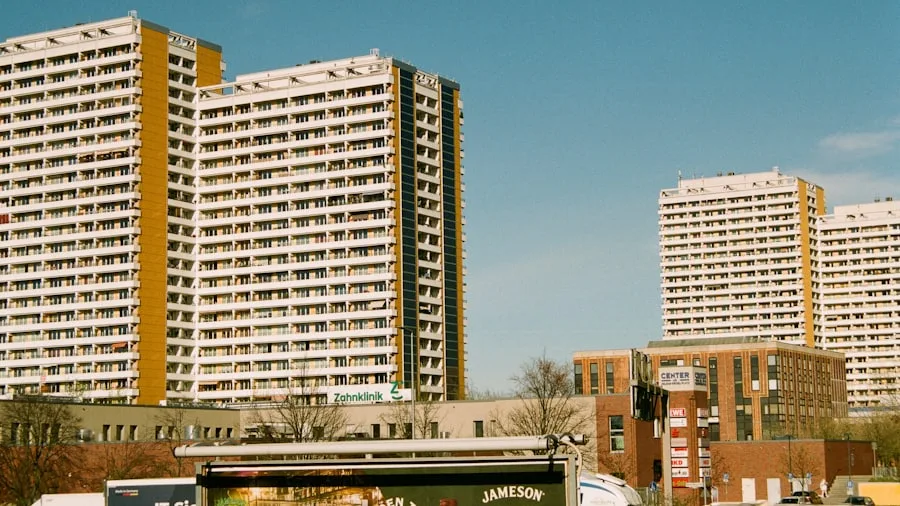
Living in Marzahn, Berlin
WG-Zimmer Living in Marzahn, Berlin - direkt von privat, ohne Makler - Berlin
The Berlin of the Plattenbauten, the GDR's legacy in 11-storey prefab blocks. Behind the bad reputation, a green, well-served neighbourhood with the most surprising gardens in the city.
History and identity
Marzahn was a medieval farming village (Angerdorf) of Brandenburg, annexed to Berlin in 1920 but rural until the 1970s. Between 1977 and 1990 the GDR built here the largest Plattenbau complex (prefab concrete blocks) of the entire Soviet bloc: 60,000 apartments for 165,000 inhabitants, on land that had been fields. It was the model of a "modern socialist city" for workers. After reunification Marzahn suffered from unemployment, population flight and social stigma. In the last 25 years the city has invested heavily in renovation (the Plattenbauten have been repainted, insulated, modernised), creating one of the urbanistically greenest and most functional districts in Berlin. The population is slowly growing, especially thanks to Eastern European migration.
What to expect
6-, 11- and 18-storey Plattenbau, renovated and repainted, with big green spaces between buildings, playgrounds everywhere, supermarkets, kindergartens. Very wide streets, moderate traffic, bike lanes. The population is mostly German working-class, a large community of ethnic Germans from the former USSR ("Russlanddeutsche") repatriated in the 1990s and post-Soviet immigration, some long-standing Vietnamese families from the GDR era. Real neighbourhood life, no tourism, very working-class atmosphere. The bad reputation (far-right and neo-Nazi presence in the 1990s) has been largely overcome, though pockets remain.
Transport
S-Bahn S7 (Marzahn, Springpfuhl, Poelchaustraße, Raoul-Wallenberg-Straße, Mehrower Allee, Ahrensfelde). Trams M6, M8, M17, 16, 18, 27 - very dense network. Buses 154, 192, 195. Alexanderplatz in 25-30 minutes by S-Bahn. Excellent for cycling: wide direct bike lanes.
What to do in the neighbourhood
Gärten der Welt - one of Berlin's most beautiful theme parks, with Chinese, Japanese, Italian, Balinese and Korean gardens, a great terrace with views over Marzahn-Hellersdorf. A must-visit. Schloss Biesdorf on the southern edge. Marzahner Promenade main shopping street. Eastgate Berlin, large shopping centre. Cecilienplatz centre of the historic village. Dorfkirche Alt-Marzahn, the medieval village church, miraculously surviving among the Plattenbauten. Wuhlepark trails along the Wuhle stream.
Who it's ideal for
Families and young professionals seeking space and some of Berlin's lowest prices, people open to the urban diversity of east Berlin, residents who value huge green spaces and supermarkets within reach. Less suited to those seeking a historic atmosphere, gourmet restaurants, nightlife, an "international Berlin" feel - here Berlin is working-class.