
Photo / Wikimedia Commons
Living in Timpuri Noi, Bucharest
Închiriez cameră în apartament Living in Timpuri Noi, Bucharest - direct de la proprietar - Bucharest
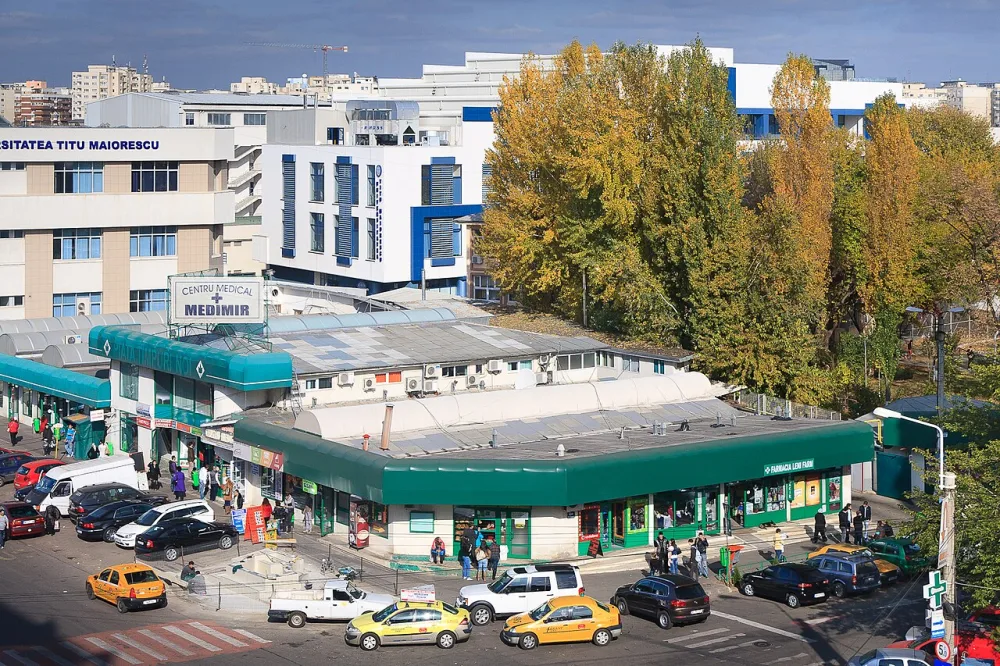
An evolving district east of the center, between the Dâmbovița river and the old industrial belt. Originally working-class, today a mix of remaining 1970s housing, new office developments around the M1 metro, and a slowly improving residential scene.
Timpuri Noi - literally "new times" - was named in the Communist era after the local printing works that produced the newspaper of the same title. The neighborhood developed in the 1960s and 1970s as a mixed residential-industrial zone, with apartment blocks for workers, factories, and the broad boulevards typical of the period. After 1989 most of the industry shut down or moved out; in the last decade, the area around Timpuri Noi Square has been redeveloped as a mid-sized office cluster, anchored by the Vodafone Romania headquarters and several other corporate buildings.
Who lives here
A demographic in transition. Long-time residents in the 1970s blocks (many original tenants now elderly, joined by their adult children), younger professionals working in the new offices, a growing share of expats and remote workers in the renovated apartments. Families are present but in lower density than in Tineretului. The area is one of the cheaper M1-accessible options for renters.
What it's like during the day
Mixed. Around the Timpuri Noi Square and the new office buildings the daytime is busy with corporate foot traffic; further from the center the streets feel residential and quiet. The Dâmbovița river runs along the northern edge, with walking paths and the Splaiul Unirii boulevard. Industrial relics - old factory walls, train tracks - are still visible. The Văcărești Lake nature reserve sits to the southeast, a unique semi-wild park inside the city.
What it's like in the evening
Decent. A handful of cocktail bars, restaurants and breweries have opened around the new office cluster - the Beraria H beer hall complex is one of the largest in the city. The Timpuri Noi Square itself has a small evening scene. For broader nightlife, residents walk or take the metro one stop west into Unirii and from there into Centru Vechi.
Getting around
Metro M1 at Timpuri Noi station sits in the heart of the district - 5 minutes to Piața Unirii (the city's main metro interchange), 10 to Universitate. Trams and buses on Splaiul Unirii and the perpendicular streets. The walk to Centru Vechi is 20 minutes northwest; to Tineretului, 15 minutes south. Cycling along the Dâmbovița embankment is realistic and pleasant in summer.
Eating and shopping
The food scene is patchier than central neighborhoods. Several solid restaurants near the office cluster, the Beraria H complex with its in-house brewery and food hall, a few local Romanian cârciuma (taverns) in the older blocks. Mega Image, Carrefour and Profi cover daily groceries densely. For fresh produce, the Piaţa Unirii market is one metro stop west.
When NOT to pick it
If you want a settled, finished neighborhood feel - Timpuri Noi is mid-transformation, with construction visible in pockets. If you prefer pre-war architecture: there is very little here, the housing stock is post-war and post-2010. If you want a strong residential character - the area still feels more office-adjacent than purely residential.
Timpuri Noi is the right pick if you work in or near the new office cluster, want metro access on the M1 line, and value relatively affordable rents inside the central ring. It's also a strong option for people who like watching a neighborhood evolve - there's real change underway, and the next five years will likely shift the character further.