
Photo Unsplash
Living in Glasnevin, Dublin
Room to rent from private landlords Living in Glasnevin, Dublin - no agency fees - Dublin
A quiet, leafy Northside neighborhood about 3 km from the city centre, anchored by the Victorian Glasnevin Cemetery, the National Botanic Gardens, period red-brick housing and a strong family-oriented community along the Tolka river.
Glasnevin is a Northside Dublin neighborhood roughly 3 km from the city centre, built along the Tolka river and organized around two of Dublin's most famous green spaces: the National Botanic Gardens and Glasnevin Cemetery. Originally a village outside the city, it was absorbed into Dublin through the 19th and early 20th centuries and developed as a settled middle-class residential area of Victorian terraces, Edwardian semis and inter-war detached houses. The neighborhood has a reputation as one of the most stable and family-oriented parts of the Northside - quieter than Phibsborough, leafier than Drumcondra, and with a strong civic life built around schools, the cemetery institutions and the botanic gardens.
What it is
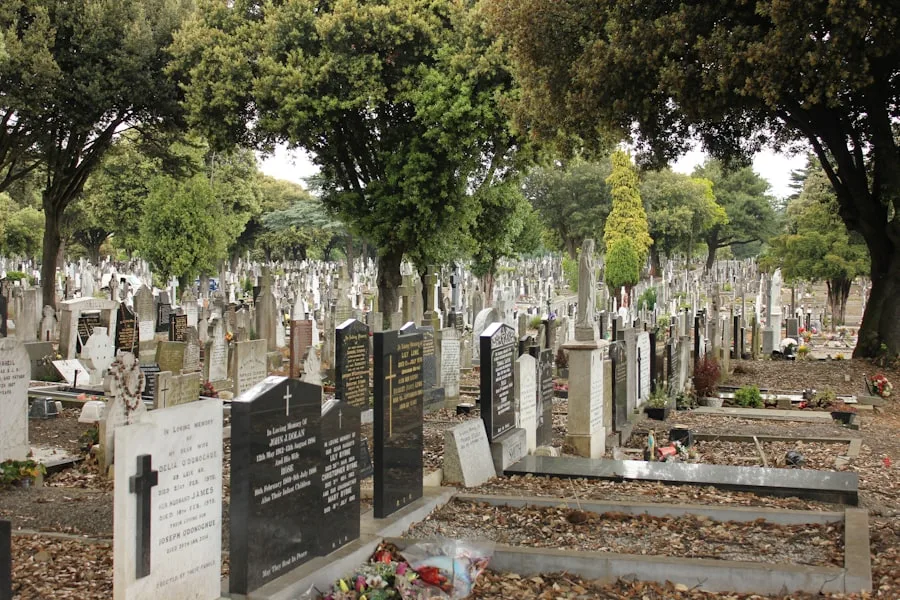
A largely residential neighborhood bounded roughly by the Royal Canal to the south, Glasnevin Hill and Ballygall Road to the north, Drumcondra Road to the east and Finglas Road to the west. Most housing is 19th and early-20th-century terraces and semis on streets like Botanic Avenue, Lindsay Road and Iona Road, with later 1930s-50s estates further out. Dublin City University sits at the northern edge. The National Botanic Gardens (19.5 hectares of Victorian glasshouses and over 17,000 plant species), Glasnevin Cemetery (1832, 1.5 million burials including Daniel O'Connell, Michael Collins and Brendan Behan), the Cemetery Museum and the Tolka river walk are the major institutions and green spaces.
Who lives here
A settled mix of long-tenured Dublin families, young families upgrading from inner-city flats, DCU staff and graduate students, and a steady flow of professionals working in the city centre. The neighborhood has historically been one of the most desirable Northside addresses - Iona Road and the streets around the Botanic Gardens are sometimes called "Northside Millionaires' Row" in local shorthand - but most of Glasnevin sits at normal Dublin family-housing prices. Almost no party-scene students, very few short-term tourist rentals, a noticeable share of older residents who have lived in the same houses for decades.
What it's like during the day
Genuinely quiet. The residential streets see school-run traffic in the morning and afternoon, walkers heading to the Botanic Gardens or the cemetery, and a steady trickle of DCU students on bikes heading north. The Botanic Gardens draws a steady daytime crowd - families, gardeners, photographers, the Botanic House restaurant - but the visitors are dispersed across nearly 20 hectares and never feel overwhelming. Glasnevin Cemetery runs guided tours and is visited by Irish-history visitors as well as locals using it as a green walking space (it is more a Victorian landscaped park than a working cemetery feel). The local commercial spine around the Washerwoman and Mobhi Road has a relaxed village-shopping pace.
What it's like in the evening
Quiet to the point of sleepy. Most residents stay home or walk locally to a small number of well-loved pubs and restaurants. The Gravediggers (officially John Kavanagh's), an unchanged 1833 pub backing onto the cemetery wall, is one of the most famous traditional pubs in Dublin - cosy snugs, no music, no televisions, excellent Guinness. Hedigan's (The Brian Boru) on Prospect Road is the other classic. The Tolka House and a small cluster of restaurants near the Botanic Gardens cover dinner. Beyond these, evening life moves to Phibsborough or the city centre. Streets are dark and quiet by 10pm.
Getting around
Solid bus links, no Luas or DART. The Drumcondra Road corridor on the eastern edge is served by frequent routes (4, 9, 13, 16, 40, 83 and others) running into the city centre in 15-20 minutes. Finglas Road on the western edge has further routes. Drumcondra train station (15 minutes' walk east) gives a commuter line into Connolly. Dublin Airport is 7 km north - about 15 minutes by car or the 41 bus. Cycling into town along the Royal Canal Greenway takes 15 minutes and is one of the more pleasant Dublin commutes. Driving in and out is normal Northside traffic - slow at rush hour, fine off-peak. There is no Luas stop in Glasnevin itself; the closest is Phibsborough on the Green Line extension, a 20-minute walk south.
Eating and shopping
Daily groceries are well covered along Mobhi Road and Botanic Road - a Tesco Express, SuperValu, a Lidl in the nearby industrial estate, a Tesco Extra on the Finglas Road for the big weekly shop. The local pubs and the Botanic House restaurant cover most casual eating; for a wider restaurant scene, residents go to Drumcondra (Brioche, Fia) or Phibsborough (Two Boys Brew, La Madeleine). The Saturday food market at the Botanic Gardens and a small parade of independent shops on Washerwoman Hill give the neighborhood a village-shopping character. For department stores, electronics or anything specialist, residents travel to the Omni Park shopping centre in Santry or into the city centre.
When NOT to pick it
Skip Glasnevin if you want walking-distance nightlife, a young-professional bar scene, or the buzz of an emerging neighborhood. The pace is unapologetically quiet - wonderful if you want to walk in the Botanic Gardens before work, exhausting if you want to bar-hop after work. Public transport is bus-only, so if you need a Luas or DART connection for daily commuting, the lack of rail will feel restrictive. Rentals are tight - much of the housing stock is owner-occupied and turnover is slow, so finding a room can take patience.
Glasnevin is the right pick for renters who want a settled, leafy, family-feel Northside neighborhood within easy reach of the city - DCU staff and graduate students, young professionals starting a family, anyone who prioritizes green space and quiet streets over nightlife. The combination of the Botanic Gardens, the Tolka river walks, the canal greenway and one of Dublin's most atmospheric old pubs makes it one of the more rewarding everyday neighborhoods on the Northside.