
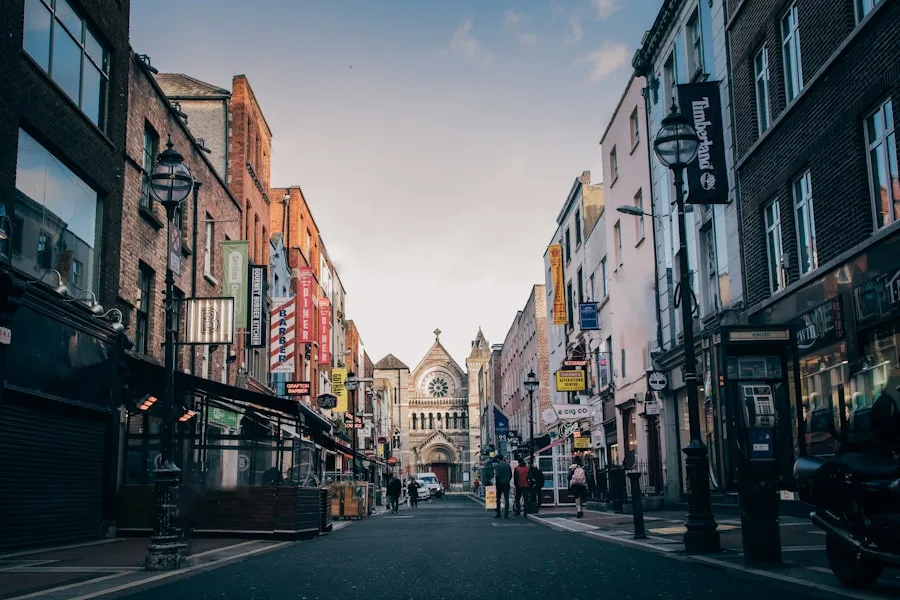
Photo Unsplash
Living in Dublin, Ireland
Room to rent from private landlords Dublin - no agency fees
What to know before moving to Dublin - how renting a room works in a market under severe pressure, the PPS Number that opens administrative doors, HSE healthcare, the Leap card, and the very different characters of the Liberties, Stoneybatter, Sandymount and the rest.
Dublin is the capital and largest city of Ireland, a small-to-mid-sized European capital that punches well above its weight - home to most of the country's major institutions, the European headquarters of dozens of multinational tech and finance companies, and a population of around 590,000 in the city itself (1.5 million in the wider metropolitan region). For people moving here, the city's compact scale and English-language daily life are part of its appeal; the housing market is the major obstacle. This guide covers what you'll want to know before signing a lease, from the PPS Number to the Leap card, and the very different characters of the first fifteen central neighborhoods.
The city in a few sentences
Dublin sits on the eastern coast of Ireland on the River Liffey, at the head of Dublin Bay. The city has a long history - Viking origins in the 9th century, English crown control from the 12th, the 18th-century Georgian expansion that gave the city much of its current visual identity, and the upheavals of the 19th and 20th centuries including the Easter Rising of 1916 and Irish independence in 1922. The compact center sits around the Liffey, with the Trinity College campus, St Stephen's Green and the Grafton Street shopping spine on the southern side, and the General Post Office, O'Connell Street and the Henry Street shopping spine on the northern side.
The climate is temperate oceanic and mild year-round. Winters are wet, grey and rarely cold - temperatures typically hover from 4-8°C with occasional frost but very little snow. Summers are mild and bright, with temperatures around 16-20°C, though heat waves into the high 20s have become more frequent. Rain is a constant possibility in all seasons, often passing showers rather than sustained downpours. The light in summer evenings is long - daylight extends past 10 PM around the solstice.
The language
English is the working language of all daily life. Gaeilge (Irish) is the first official language of Ireland, taught in schools and used on bilingual signage everywhere - street names, government buildings, transit announcements - but spoken as a daily language by a small minority concentrated in the Gaeltacht regions on the western coast, not in Dublin. For newcomers, no Irish is needed for any normal interaction; a few basic words and phrases (sláinte, dia dhugo raibh maith agat) are politely appreciated but unnecessary.
The English spoken in Dublin has a distinct accent - quick, lyrical, with vocabulary borrowings from Irish (craic, yer man, the press for a cupboard, deadly as a positive adjective) and a long tradition of verbal play that fills the city's pubs and literary culture. Most newcomers acclimatize within weeks. Many residents are themselves international - Polish, Brazilian, Spanish, Indian, Nigerian - and the linguistic mix is part of contemporary Dublin's character.
Renting a room: how it works
Dublin's rental market is under severe and sustained pressure. Supply has lagged demand for over a decade, and the housing crisis is one of the most acute in Western Europe - the practical effect for newcomers is that finding a room takes patience, speed and documentation. ie and increasingly through Facebook groups and word of mouth. Acting fast on listings, having references and proof of employment ready, and being flexible on location are essential.
Standard apartment leases run from a fixed term (often a year) to indefinite, with deposits typically equal to one month's rent (a recent legal limit; previously two months was common). The Residential Tenancies Board (RTB) regulates leases and provides dispute resolution; landlords must register tenancies with the RTB. Rent Pressure Zones - a designation that covers almost all of Dublin and surrounding areas - cap rent increases at limited annual rates, though enforcement is uneven.
Many newcomers start with a room in a shared house (the standard arrangement is multiple unrelated tenants sharing a house with a kitchen and bathrooms - the term digs is sometimes used). Owner-occupied rentals (where the landlord lives in the property and rents out spare rooms under the Rent-a-Room tax relief scheme) are tax-advantaged for the landlord and often appear at lower prices, but offer fewer tenant protections. Student housing through DCU, UCD, Trinity College and the technological universities fills well in advance; applying immediately on acceptance is essential.
The PPS Number: the key that opens every door
The PPS Number (Personal Public Service Number) is Ireland's unique identifier for tax, social welfare, healthcare and most administrative services. You need a PPS Number to register with a GP under the public system, open most bank accounts, sign an employment contract for proper tax treatment, register with Revenue for income tax, access the Myaccount digital identity service, and use most government services online.
You apply for a PPS Number through the Department of Social Protection (DSP) at a Intreo Centre, with a face-to-face appointment that you book online. Documentation requirements are strict - proof of identity, proof of address (often the hardest item for newcomers), and a reason for needing the number (employment offer, college acceptance, etc.). Processing takes 1-4 weeks typically. Without a PPS Number you'll be taxed at the emergency rate on any earnings and locked out of most online services; getting one is the first administrative priority.
Ireland: EU vs non-EU
EU and EEA citizens, plus Swiss and UK citizens (under the Common Travel Area arrangement that survived Brexit), can move to Ireland to live, work or study without a visa. Registration with the immigration authorities is not required for stays - EU residence is automatic. You'll need a PPS Number and an address.
Non-EU citizens need a visa or pre-clearance for stays longer than 90 days, depending on country of origin and purpose. The main routes are the Critical Skills Employment Permfor shortage occupations with salaries above thresholds, the General Employment Permfor other employment categories, student visas, family reunification (with stricter rules under the Stamp 0/1/4 categories), and the Stamp 4 for established residents. Permits are issued by the Department of Enterprise and INIS (Irish Naturalisation and Immigration Service); processing times vary from weeks to many months. Non-EU residents register with Burgh Quay or the relevant regional immigration office on arrival and get an Irish Residence Perm(IRP) card.
Healthcare
Ireland runs a mixed public-private healthcare system through the HSE (Health Service Executive). Public services are available to all ordinary residents but most adults pay out of pocket or through private health insurance for GP visits, certain prescriptions and many secondary services - Ireland has one of the more expensive primary-care arrangements in Western Europe by default. Holders of a medical card (means-tested, for low-income residents) receive most services free. The GP Visit Card (also means-tested, broader eligibility) covers GP consultations.
Hospital care under the HSE is provided at public rates with patient fees and waiting lists for non-urgent treatment; many residents supplement with private health insurance through VHI, Laya and Irish Life Health to access faster service, particularly for elective procedures. For emergencies, 112 or 999 reach the ambulance service; the Eastdoc and D-Doc services cover out-of-hours GP needs in Dublin. The EHIC card covers EU visitors during their stay. Most newcomers register with a GP shortly after arriving and getting a PPS Number; access to specialists runs through GP referrals.
Transport: Dublin Bus, Luas, DART and the Leap card
Dublin's public transport is run by several operators under the Transport for Ireland (TFI) coordination. Dublin Bus runs the bus network. The Luas is the modern tram network with two lines (the Green Line north-south through the southern half of the city, the Red Line east-west through the docklands and Heuston station). The DART (Dublin Area Rapid Transit) is the electric coastal commuter rail running north and south along Dublin Bay, with regular service to Howth, Bray and Greystones. Heavier commuter rail (the Maynooth, Kildare, Drogheda and other lines run by Iarnród Éireann) serves the wider commuter belt.
The Leap card is the universal contactless travel card, accepted across all modes. Pay-as-you-go works well for occasional users; a Personal Leap card with the monthly 90 Day Ticket or TaxSaver employer-sponsored ticket offers commuter discounts. The Leap card also caps daily and weekly spending at convenience-priced maximums. Tickets are bought via the Leap app, at retail agents, or with a bank card at ticket machines. Tapping a contactless bank card directly at the validators to travel is not yet available on Luas or DART - the Leap card remains the only tap-on method. Dublin Airport is connected by the Aircoach private bus, the Dublin Express, and several Dublin Bus routes - no direct metro yet, though the MetroLink project is in planning.
Cycling has grown significantly with the Greenways network and the DublinBikes bike share, though Dublin's cycle infrastructure remains less developed than Copenhagen's or Amsterdam's. The city center is broadly walkable; outer districts depend on bus and Luas.
Working and studying
Dublin anchors Ireland's economy and is one of Europe's main hubs for tech, finance, life sciences and shared-services. The IFSC docklands cluster hosts the European headquarters of Google, Meta, LinkedIn, Stripe, Microsoft, Salesforce, Twitter/X and dozens of others, plus the global Accenture operations; major Irish companies include AIB, Bank of Ireland, Ryanair, CRH, Smurfit Kappa; pharma is anchored by Pfizer, Johnson & Johnson, Eli Lilly and many others with Irish operations. The labor market is relatively open - most international companies use English as the working language.
For higher education, the main institutions are Trinity College Dublin (TCD, founded 1592 and Ireland's oldest), University College Dublin (UCD, the largest), Dublin City University (DCU), Technological University Dublin (TU Dublin, the newer technological university), and several specialist institutions. EU/EEA students pay tuition at low rates or through the Free Fees Scheme; non-EU students pay tuition that varies by program. Many master's programs are taught in English by default. Student housing is severely constrained - the same crisis as the wider rental market - and applying through university housing services the moment you accept a place is essential.
Daily life
Irish daily rhythms are reasonably standard European, with some distinctive notes. Workdays run roughly 9 to 5:30 or 6, with a 30-minute lunch typically eaten at the desk or in a nearby café. Shop hours run from around 9 AM to 7 PM weekdays, with later evenings on Thursdays, slightly reduced Saturday hours and Sunday opening that has become standard.
The Irish pub is the central social institution. Pubs (póbs in old spelling) function as living rooms, meeting places, music venues and unofficial offices throughout daily life. The traditional pub culture - trad music sessions, Guinness at the bar, the Irish wake and the casual conversation with strangers - coexists with a newer generation of craft beer pubs, cocktail bars and wine bars in the central and gentrified neighborhoods. Outside the strict tourist routes, pubs remain genuinely local. The Garda Síochána (the national police service, known simply as the Gardaí) maintain a relatively low-key presence; emergencies are 112 or 999.
The Catholic Church's social influence has receded significantly in recent decades but cultural traces remain - many schools are still under Catholic patronage, and religious holidays shape the calendar. The major public holidays are St Patrick's Day (17 March, with the Dublin parade as the city's biggest public event), Easter Monday, the June Bank Holiday and other Monday bank holidays through the year, and Christmas (with St Stephen's Day on 26 December as the second day of the holiday). Most workplaces close for at least a week from Christmas through New Year.
The neighborhoods
The first fifteen neighborhood guides below cover the central core and a band of inner districts that newcomers are most likely to consider - a mix of Georgian terraces, post-war and Celtic Tiger-era apartments, working-class strongholds and the new docklands.
There's the residential calm of Drumcondra on the northside, the redeveloping docklands of North Wall, the tourist core of Temple Bar, the redeveloping former asylum of Grangegorman, the working-class roots of Phibsborough and the gentrified Georgian terraces of Stoneybatter. Across the river the inner-northside continues with North Strand and Ballybough, with the bohemian Georgian heart of The Liberties to the south-west and the coastal Georgian elegance of Sandymount facing Dublin Bay. The docklands cluster continues with East Wall and the International Financial Services Centre. Closer to the river, Oxmantown and Smithfield hold the inner-northwest with markets and the Smithfield Square distillery cluster, and on the south canal the bohemian district of Portobello rounds out the first fifteen.
Each guide that follows covers who lives there, what days and evenings feel like, how the transport connects, and when the area might not be your best choice.
Dublin neighborhoods
Each neighborhood has its own character. Read the guides to pick the right one for you.
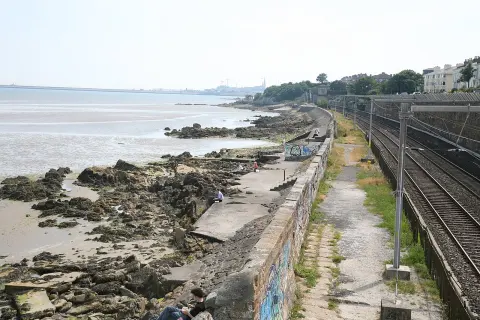
Blackrock
Coastal town with a historic market and a park on the bay, well connected.
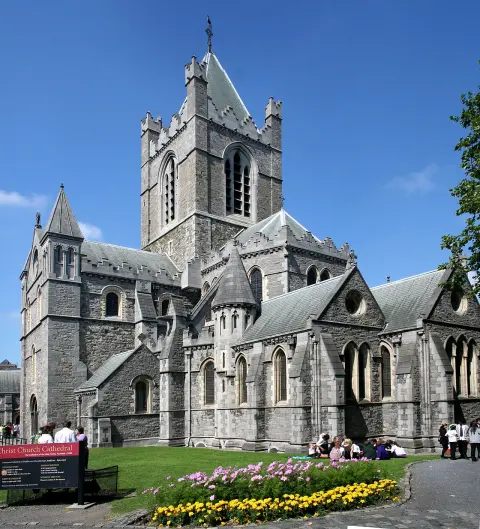
Christchurch
The medieval heart around the cathedral, between monuments and Temple Bar.
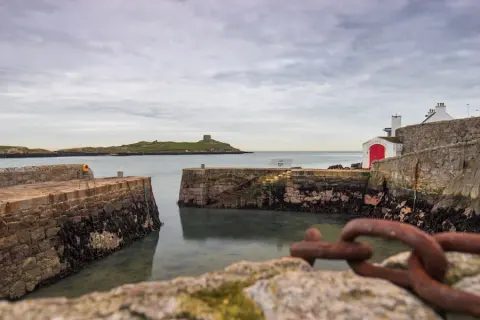
Clontarf
Coastal D3 suburb - 4.5 km seafront promenade, Bull Island, family Victorian housing, 15-min commute.
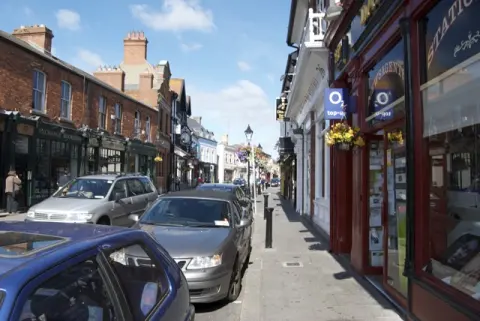
Dalkey
The sought-after coastal village, between castle, views and the sea.
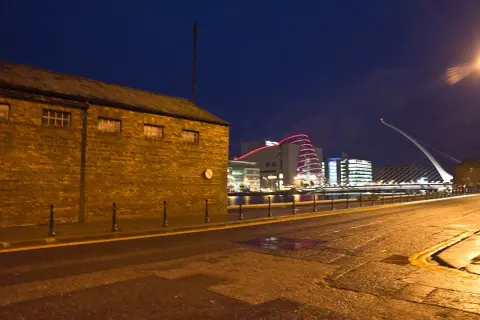
Docklands
The IFSC and the regenerated north quays: the Dublin of finance and tech.
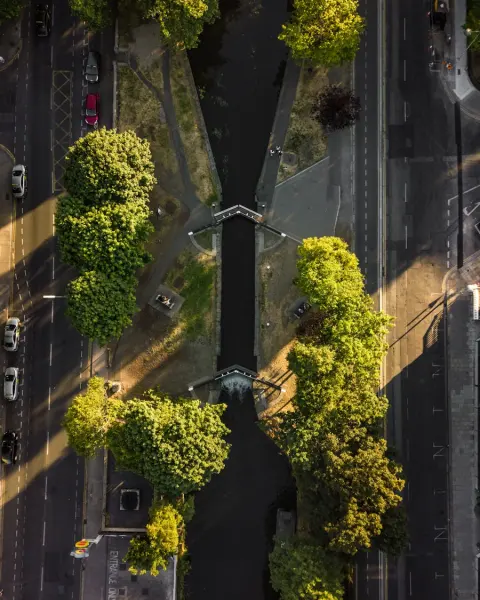
Donnybrook
Affluent D4 embassy district - tree-lined avenues, period houses, the RDS and Aviva Stadium.
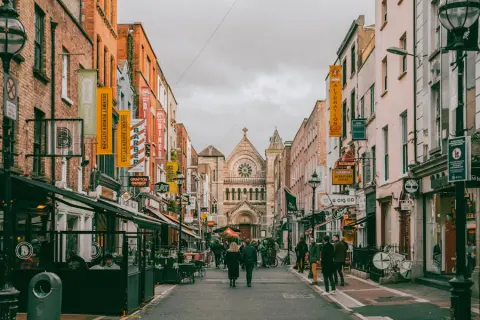
Drumcondra
Calm northside residential district - Croke Park, the Tolka River and a family-friendly character with strong transit.
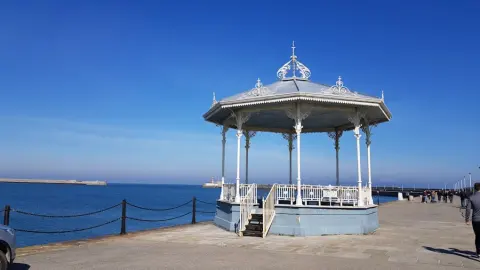
Dún Laoghaire
Victorian seaside town 12 km south - harbour, piers, period terraces, DART to town in 20 minutes and a relaxed coastal pace.
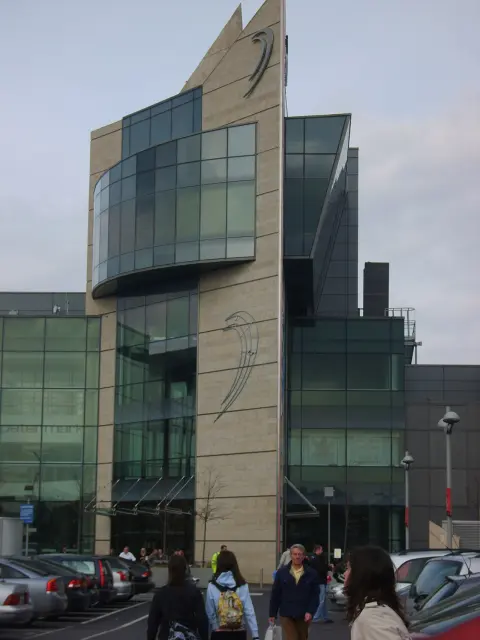
Dundrum
Ireland's largest shopping centre and a convenient residential area, with the Luas.
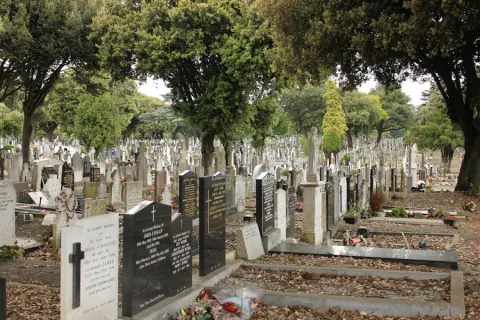
Glasnevin
Quiet, leafy Northside neighborhood - Victorian cemetery, Botanic Gardens, period housing and a strong family community.
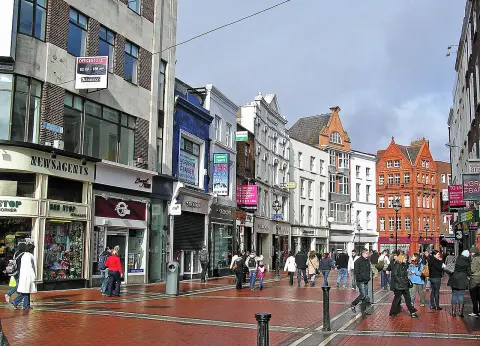
Grafton Street
The pedestrian street of shopping and buskers: the heart of Dublin.
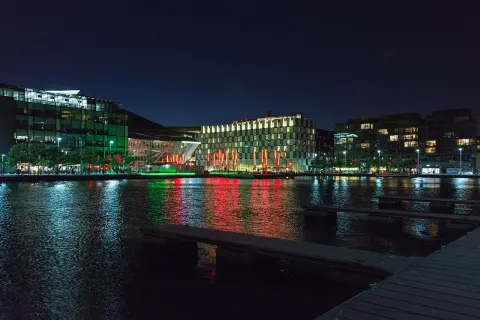
Grand Canal Dock
The Silicon Docks: Google, Meta and the glass district on the water.
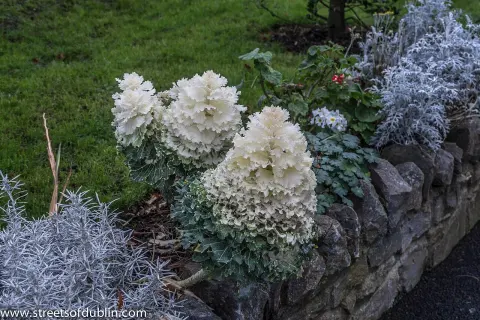
Harold's Cross
Quiet residential neighbourhood on the Grand Canal, near the centre.
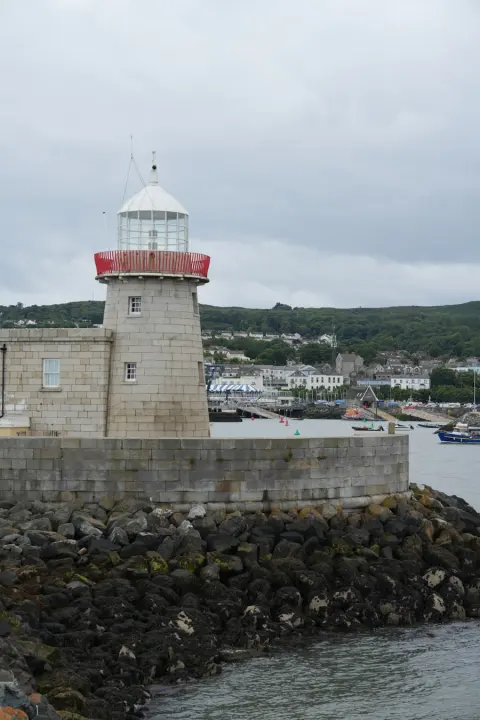
Howth
Peninsula fishing village - working harbour, cliff walks, seafood restaurants, end of the DART.
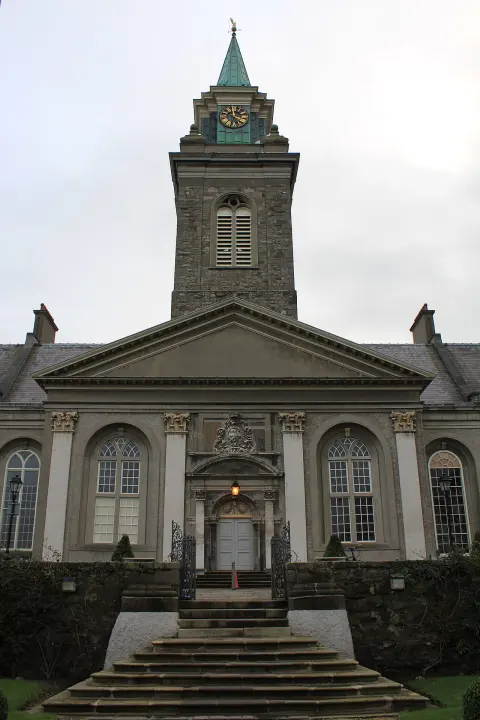
Kilmainham
The historic Gaol and the IMMA museum: culture and greenery near the centre.
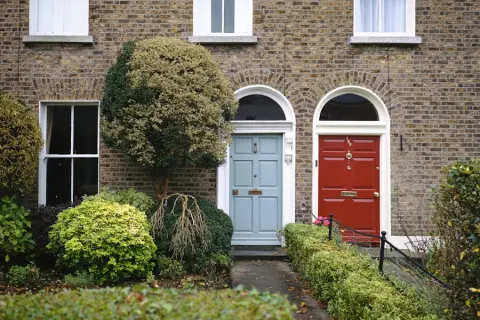
Phibsborough
Working-class-turned-bohemian inner northside - Royal Canal, Phibsborough Library and a creative-class character.
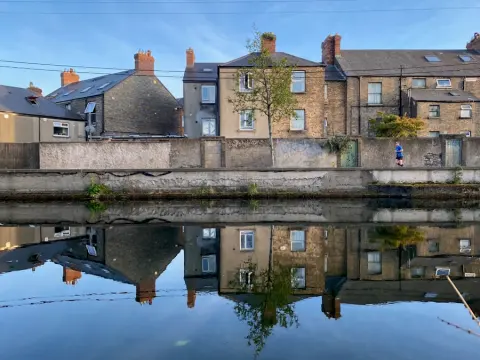
Portobello
Bohemian southside along the Grand Canal - Victorian terraces, Camden Street pubs and a young creative profile.
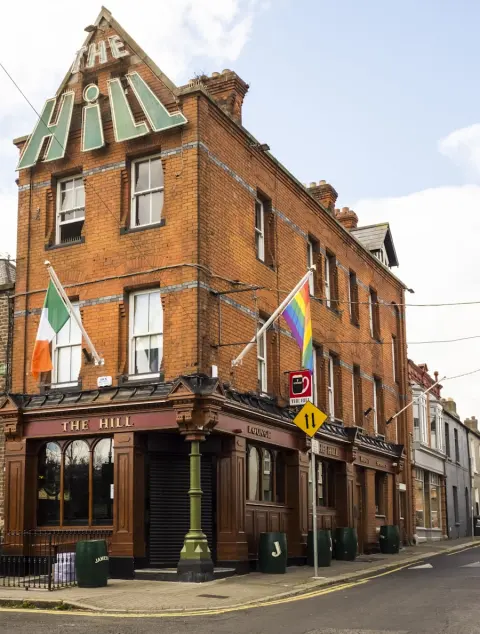
Ranelagh
Leafy gentrified village - red-brick Victorian, foodie high street, Luas Green Line and young professional crowd.
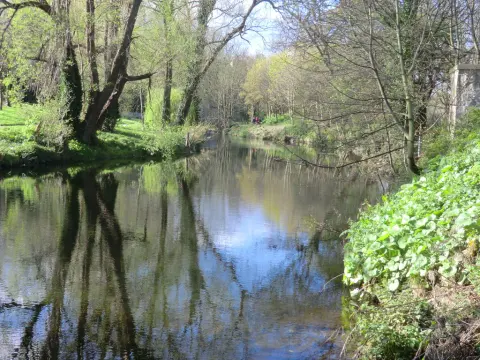
Rathgar
Victorian red-brick houses and a quiet village: elegant D6.
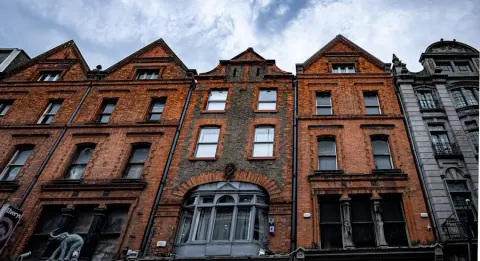
Rathmines
Student-heavy red-brick Victorian - busy high street, cheap south-city rents, walking distance to town.
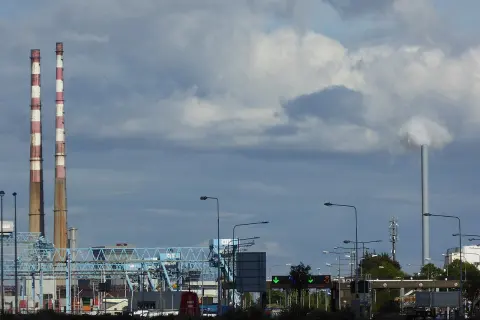
Ringsend
The old seafaring village at the mouth of the Liffey, next to the tech docks.
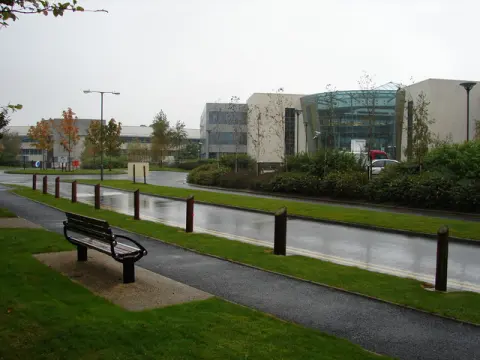
Sandyford
The office and tech hub of the south, served by the Luas Green line.
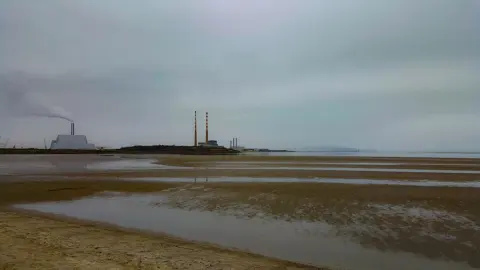
Sandymount
Elegant southside coastal village - Georgian houses, Sandymount Strand and a strong family-bourgeois character.
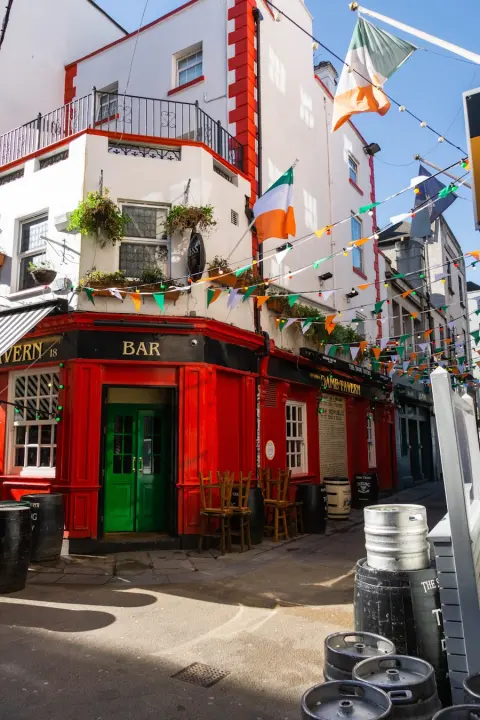
Smithfield
Redeveloped market square district - Smithfield Square, the Jameson Distillery, the Cobblestone and a young creative-class profile.
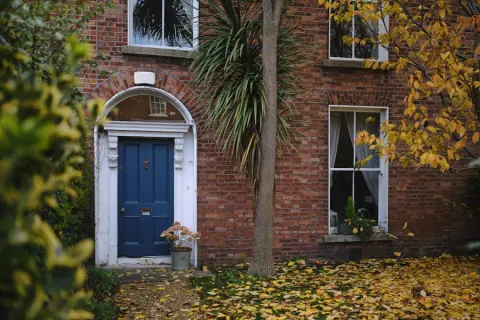
Stoneybatter
Gentrified inner-northwest - Victorian cottages, the Cabbage Market and a strong village feel.
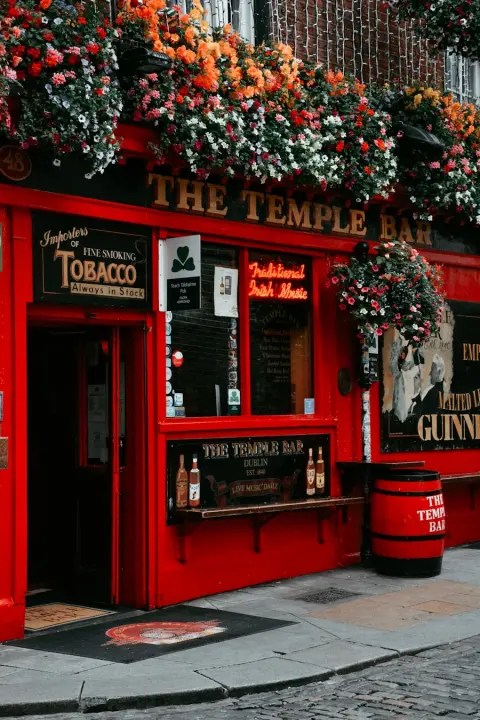
Temple Bar
Central pub and cultural quarter - cobbled lanes, traditional pubs, galleries and a very limited residential life.
Terenure
Family residential neighbourhood in D6, quiet and tree-lined.
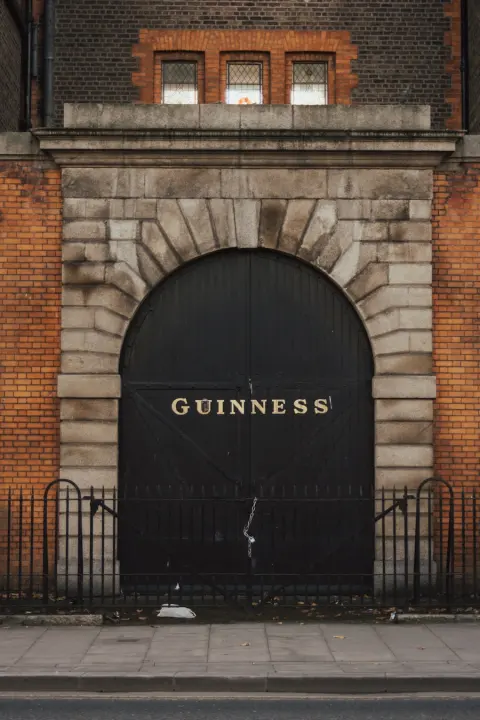
The Liberties
Medieval and Georgian heart west of the center - St Patrick's, Christchurch, Guinness and a working-class neighborhood with deep history.
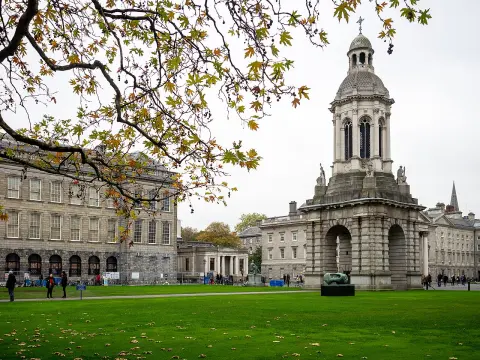
Trinity College
The ancient university in the heart of the city: the most central Dublin.