
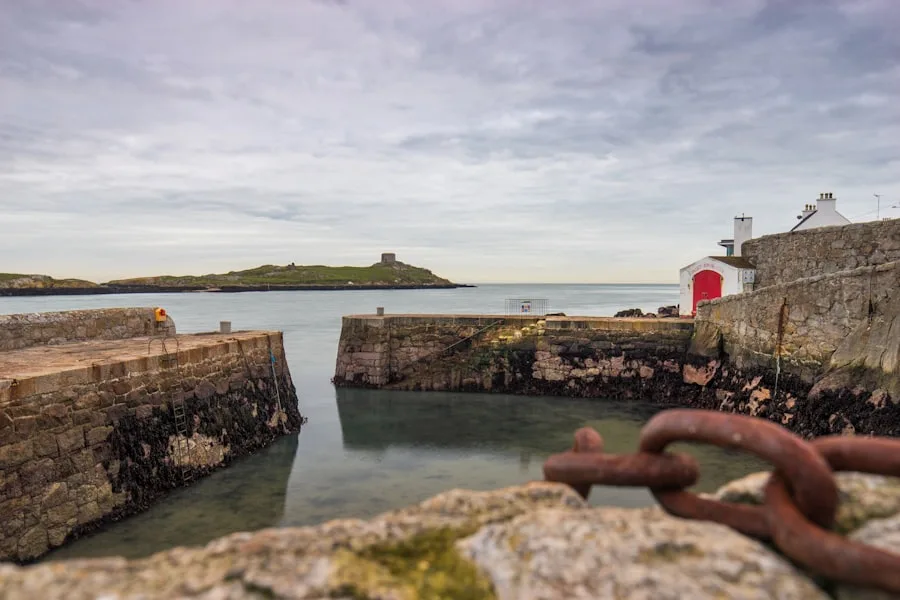
Photo Unsplash
Living in Clontarf, Dublin
Room to rent from private landlords Living in Clontarf, Dublin - no agency fees - Dublin
Dublin 3's northern coastal suburb running along the bay from Fairview east to Dollymount - a 4.5 km seafront promenade with a continuous cycle path, Bull Island and Dollymount Strand on the doorstep, leafy Victorian and Edwardian housing on the inner streets and a 15-minute commute into the city centre by bus or DART.
Clontarf takes its name from the Cluain Tarbh - "meadow of the bull" - and was the site of the 1014 Battle of Clontarf in which Brian Boru defeated the Dublin Vikings. The modern suburb grew from a coastal hamlet in the late 18th century into a wealthy Victorian and Edwardian seaside development, with grand red-brick and stucco terraces facing the bay along Clontarf Road and Castle Avenue, and quieter residential streets running back inland towards Marino and Fairview. The 4.5 km seafront promenade - a continuous bay-facing footpath and protected two-way cycle lane from the Alfie Byrne Road roundabout east to the Wooden Bridge at Dollymount - is the defining piece of public space and one of the longest uninterrupted seafront paths in any European capital. Bull Island, the long sandbar across the bay shared with Raheny, hosts two championship golf courses, a UNESCO biosphere reserve and the Dollymount Strand beach.
What it is
A linear coastal district running roughly 3 km along the north bay, divided into three distinct zones. Lower Clontarf (the western end, closer to Fairview) is denser, more mixed-use, with the older terraces, the Clontarf Road DART halt nearby, and the bus corridor towards town. The central village around Vernon Avenue and the Clontarf Castle Hotel provides the local high street with cafés, restaurants, a Tesco, Centra, butcher, deli, pharmacies and the Clontarf Baths (a Victorian sea-water bathing complex recently renovated as a restaurant and seasonal swimming pool). Upper Clontarf (towards Dollymount and the Wooden Bridge) is leafier and more residential, with the Royal Dublin Golf Club and St Anne's Park (a 240-acre Victorian-era park shared with Raheny) close by.
Who lives here
Predominantly families and older Dubliners. Clontarf has the highest owner-occupier ratio of any of Dublin's inner suburbs, with most large houses on the seafront and inner streets held by the same families for decades. Younger first-time buyers and renters cluster in the apartment blocks along the Clontarf Road and in the older terraces north of Castle Avenue. The schools are strong (Belgrove, Holy Faith, St Paul's, Mount Temple, Marino College) and the family weight in the demographic is heavier than in any of the central southside districts. Tech and finance professionals who work in the docklands (IFSC, Grand Canal Dock) increasingly choose Clontarf for the combination of waterside living and a 15-minute commute. A small but visible cohort of retirees with bay views completes the picture.
What it's like during the day
Family-paced and outdoor. The promenade is in constant use from early morning - runners, walkers, the heavy cycling commute towards the docklands, dog walkers, parents with prams. Dollymount Strand (accessed via the Wooden Bridge to Bull Island) fills with kite-surfers, kite-flyers, picnickers and swimmers in summer; in winter it remains a serious walking destination. The village around Vernon Avenue runs a steady café and brunch trade (The Lighthouse Café, Pizza da Piero, Nolan's) but is significantly quieter than equivalent south-city villages. St Anne's Park hosts the long-running Saturday St Anne's Park Farmers' Market and large summer events. School-run traffic is heavy on the Clontarf Road and Howth Road in both directions.
What it's like in the evening
Quiet and family-oriented. The pubs (The Sheds, Connolly's, Kennedy's, The Clontarf Castle bar) run a steady but unremarkable evening trade. The Baths and several seafront restaurants offer waterside dining. There is no late-bar or club scene - for nightlife residents go to the city centre. The streets are quiet by 11 p.m. on most nights. The most lively evenings are summer weekends along the promenade, when the seafront fills with extended-daylight walkers and the Baths terrace operates as an open-air bar until 10-11 p.m.
Getting around
The Clontarf Road DART station sits at the western end of the district with frequent trains to Connolly (8 minutes) and Howth (20 minutes). The Dollymount (closed for years, sometimes proposed for reopening) and Killester stations bracket the eastern end. Multiple high-frequency Dublin Bus routes (1, 14, 15, 27, 27b, 29a, 31, 31a, 32, 32x, 130) run along the Clontarf Road and Howth Road into town. The protected cycle lane on the promenade is the standout commuting asset - a flat, traffic-free 4.5 km run into the docklands in 12-15 minutes. Cars are practical and the Port Tunnel gives quick access to the airport and the M1/M50. Parking is permit-controlled on inner streets.
Eating and shopping
A practical neighborhood offer. The Tesco and Centra on Vernon Avenue handle daily groceries; Nolan's of Clontarf (a long-established family supermarket with deli and butcher) is the local institution and one of the best independent supermarkets in Dublin. The Baths, Pizza da Piero, Fish Shop Clontarf, Pigeon House and several smaller spots make up the restaurant offer. For larger shopping, the Northside Shopping Centre in Coolock or the Pavilions at Swords are 10-15 minutes by car. The St Anne's Park Farmers' Market on Saturday is a destination beyond the local catchment.
When NOT to pick it
Clontarf's main practical issue is the limited variety of evening and weekend social life on the doorstep. If you want a buzzing high street with multiple late bars and restaurants - the Rathmines / Portobello / Ranelagh model - Clontarf will feel quiet. The Clontarf Road itself is a busy 4-lane arterial with heavy traffic and air-quality complaints from residents on the seafront side; sleeping on the seafront with the window open is not as idyllic as the view suggests. The DART line and the bus corridor cover most of the district well but residents on the inner streets at Marino / Killester edges are several minutes from public transport. Rents are higher than the equivalent northside districts further inland (Drumcondra, Phibsborough) but lower than the southside coastal districts (Sandymount, Ballsbridge).
Clontarf is the right pick for families and older renters who want coastal living, the promenade and the beach on the doorstep, a fast commute into town and the docklands, and a quiet civilised evening atmosphere. For a livelier village feel with restaurants and bars: Ranelagh or Portobello on the southside, Stoneybatter on the northside. For a smaller, more village-like coastal alternative on the same line: Howth or Sutton further east. For southside coast: Sandymount.