
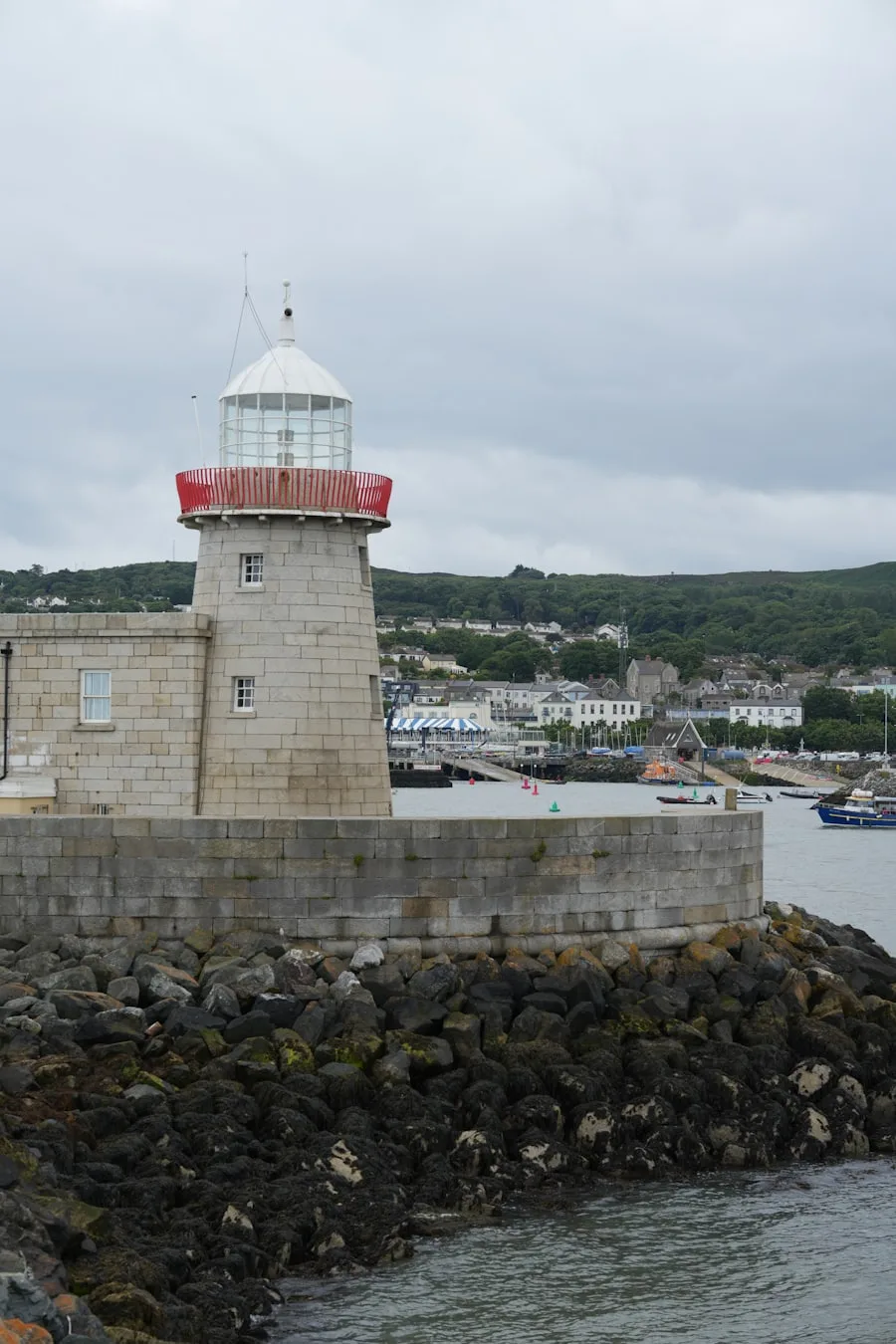
Photo Unsplash
Living in Howth, Dublin
Room to rent from private landlords Living in Howth, Dublin - no agency fees - Dublin
Dublin's northeast peninsula fishing village at the end of the DART line - a working harbour with daily landings, dramatic Howth Head cliff walks, half a dozen serious seafood restaurants, and the unusual feeling of genuine coastal village life within a 35-minute train commute of the city centre.
Howth (from Binn Éadair in Irish) is the rocky peninsula that closes the northern arm of Dublin Bay, a former Viking trading post and one of Ireland's oldest continuously inhabited settlements. The modern village sits around the working harbour on the north side of the peninsula, with residential streets climbing the slopes south and east towards the Howth Head summit and the Bailey Lighthouse. The peninsula is connected to mainland Dublin only by a narrow neck of land at Sutton, and although it has been part of the city's transport system since the 19th-century railway, Howth retains a strong distinct identity as a separate village. Daily life is built around the harbour, the cliff walks and the DART line, which terminates at Howth station beside the harbour with a 35-minute ride into Connolly in the city centre.
What it is
A peninsula village of perhaps 8,000 residents structured around three main zones. The harbour and West Pier (working trawlers, the RNLI station, the Asgard memorial, the seafood restaurants and fish shops) anchor the commercial centre. The village high street climbs gently uphill from the harbour with cafés, pubs, butcher, deli, Centra, SuperValu, churches and a small Howth Library. The residential streets climb further uphill towards Howth Head with a mix of Victorian villas (Balscadden Road, Thormanby Road), 20th-century detached houses on large plots, and a layer of 1990s-2000s apartment blocks closer to the harbour. The northern side of the peninsula faces Lambay Island and Ireland's Eye; the southern side overlooks the long sandbar of Bull Island and Sutton.
Who lives here
Three main groups. Long-tenured families - many of whom go back several generations and remain connected to the fishing industry or harbour trades - form the village core. A second wave of well-off professionals and retirees moved out from south Dublin from the 1980s onwards, attracted by the dramatic setting, the village character and the DART. A third more recent cohort of younger families and remote-working professionals settled during the 2020-22 housing pressure, prioritising space, view and outdoor lifestyle over walking distance to the office. There is a small student presence from DCU and Trinity taking advantage of cheaper room rentals than the south-city districts. Tourists - Howth is one of Dublin's most popular day-trip destinations - pass through in large numbers on weekends but are not residents.
What it's like during the day
Quiet on weekdays, busy on weekends. The harbour runs early - trawlers land at the East Pier between 4 and 6 a.m. and the fish shops (Wright's of Howth, Nicky's Plaice, Doran's) are open from breakfast. The village cafés (The Bookshop Café, Octopussys, Beshoffs) fill from mid-morning with a mix of locals, school-run parents and the steady trickle of cliff-walk visitors. The cliff walk itself is in constant use from late morning onwards - the Howth Cliff Path Loop (signed as five colour-coded routes from 6 to 12 km) is one of the most heavily walked trails in Ireland. School and office traffic out of the peninsula on the DART or the R105 coast road runs from 7:30 to 9 a.m.
What it's like in the evening
Genuinely village. The pubs (The Bloody Stream under the DART arches, The Abbey Tavern, Ye Olde Abbey Tavern, The Anchor, Findlater's) run a steady evening trade with a mix of locals and visitors who came for an early-evening pint after the cliff walk. The restaurant scene is centred on seafood - Aqua on the West Pier, King Sitric near the lighthouse, Octopussys in the village, Crabby Jo's and several others - with bookings essential at weekends. The village is quiet by 11 p.m. on weeknights and 1 a.m. on weekends; there is no real club scene. Howth Castle (now mostly residential conversion and event spaces) and the Deer Park hotel host occasional larger events.
Getting around
The DART (Dublin's electrified suburban train) is the lifeline - Howth station is the northern terminus, with trains every 10-15 minutes in peak and a 35-minute ride to Connolly in the city centre, continuing through to Pearse and the southside coast. The 31 and 31a Dublin Bus routes run from the Abbey Street terminus in town via Clontarf and Sutton into the village. Cycling on the peninsula is dramatic but exposed - the Howth Road climb is serious - and into town along the coast is a 55-minute ride. Cars are practical for the peninsula and the coast road into Clontarf, but the Sutton Cross bottleneck slows the morning commute. Parking in the village is metered and tight on summer weekends.
Eating and shopping
The seafood scene is the headline. Wright's, Nicky's, Doran's and the smaller harbour stalls sell daily-landed fish and shellfish at prices well below the city centre. The Sunday Howth Market (under the DART bridge at the harbour) runs all year and combines food stalls, crafts and live music. Daily groceries are well covered by a large SuperValu and a smaller Centra. For larger weekly shopping or non-food retail, residents drive to Sutton Cross (Tesco, smaller shops), the Pavilions shopping centre at Swords (15 minutes by car) or the city centre.
When NOT to pick it
Howth is not for everyone who works in Dublin city centre. The 35-minute DART each way is workable but adds up over the year; if your office or college is on the southside (UCD, Belfield, Sandyford) the commute easily exceeds an hour. The peninsula's weather is genuinely more exposed than the city - wind, sea fog and winter storms are noticeably stronger than in central Dublin, and the cliff walks become impassable for several weeks each winter. Tourist weekends (especially summer and bank-holiday Mondays) crowd the village high street and pack the DART back into town. Rents - once cheap by Dublin coastal standards - have caught up significantly since 2020, and the village is no longer a budget option.
Howth is the right pick for those who genuinely value coastal village life - daily walking on the cliffs, swimming at Balscadden or the Cove, fresh seafood as a real part of the weekly shop - and who can absorb a 35-minute commute. For a similar coastal feel with shorter commute: Sandymount or Clontarf. For more developed transport and shopping: Sutton on the same DART line one stop earlier. For dramatic but more isolated coastal life: Dalkey or Killiney on the southside.