
Photo Unsplash
Living in Temple Bar, Dublin
Room to rent from private landlords Living in Temple Bar, Dublin - no agency fees - Dublin
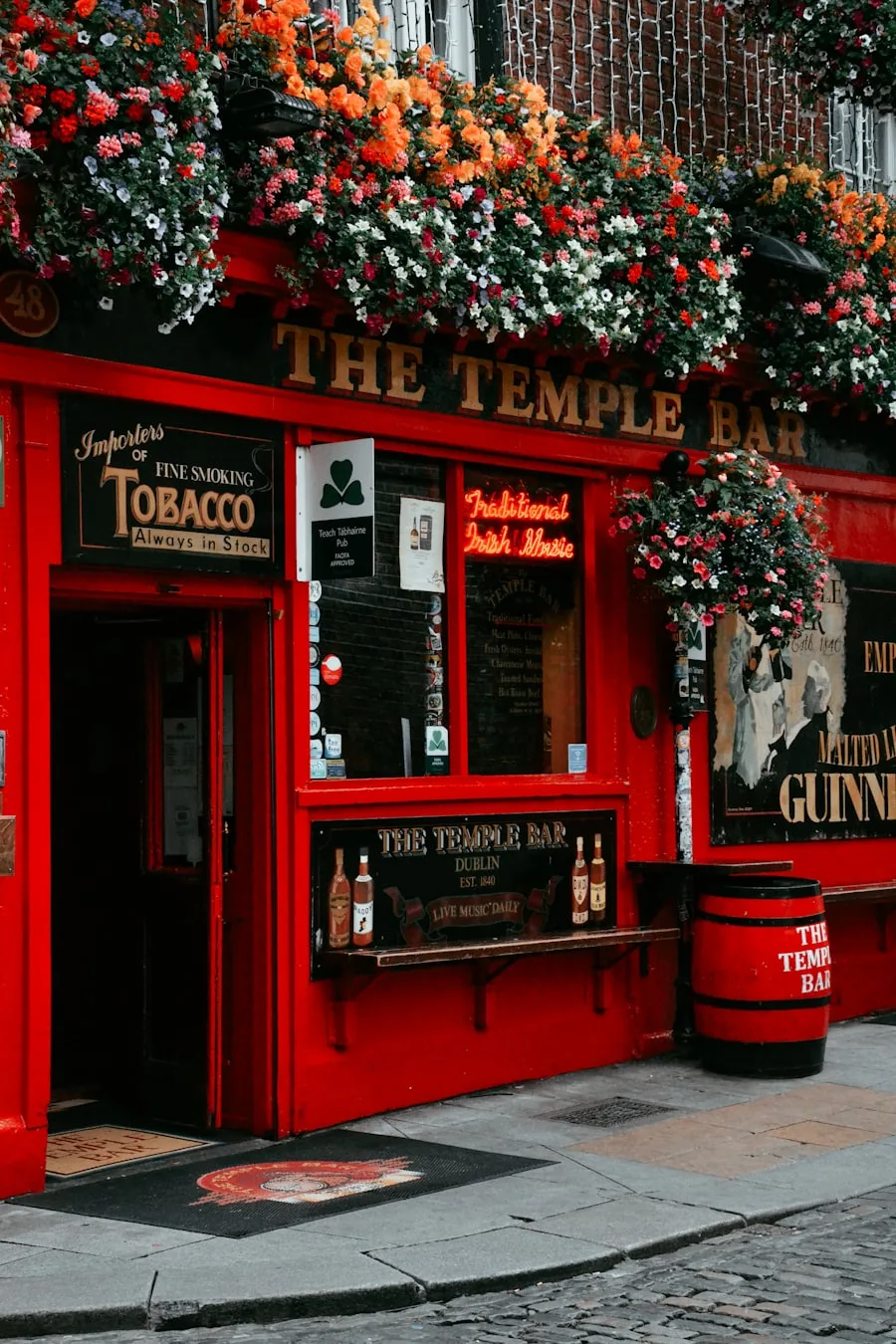
Dublin's central pub and cultural quarter on the south bank of the Liffey - cobbled lanes, traditional pubs, galleries, the Project Arts Centre and a very limited residential life among the constant tourist crowds.
Temple Bar is the tightly-defined district on the south bank of the Liffey between O'Connell Bridge to the east, Christchurch to the west, the river to the north and Dame Street to the south. Once a run-down medieval and Georgian quarter facing demolition in the 1980s, it was preserved through community campaigns and transformed during the 1990s and 2000s into Dublin's official Cultural Quarter - a pedestrian-prioritized network of cobbled lanes hosting Project Arts Centre, the Irish Film Institute, Gallery of Photography, Temple Bar Gallery + Studios, the Button Factory music venue, and a high density of traditional pubs. The combination of cultural offer and tourist density has made Temple Bar both one of the most visited and most photographed parts of Dublin, and one of the least practical for daily residential life.
What it is
A small district of perhaps fifteen blocks, with cobbled lanes (Crown Alley, Temple Lane, Eustace Street) running between Dame Street and the river. Most buildings are 3-5 storey 18th and 19th-century blocks, with some medieval foundations and a layer of 1990s-2000s preservation-respecting infill. Major institutions include the cultural venues already mentioned plus the Meeting House Square, the Designyard and the Cow's Lane fashion district. The eponymous Temple Bar pub and the surrounding pub cluster around Fleet Street, Temple Bar Square and Anglesea Street form the area's iconic tourist core.
Who lives here
A very small resident population. The strict Temple Bar boundary has perhaps a few hundred residential apartments, mostly above commercial ground floors. Residents include a small number of long-tenured Dublin families, some artists and arts-workers connected to the cultural institutions, restaurant and pub workers in nearby short-term housing, and a thin layer of well-placed expats in serviced apartments. No real student community, almost no families with young children. The neighborhood is too small and the tourist density too high for a normal residential life.
What it's like during the day
Tourist-dominated. The cobbled lanes and pub frontages fill with international visitors from mid-morning to evening, with peak crowds on weekends and during the major events (St Patrick's Day, the rugby weekends, the various festival days). The Meeting House Square hosts food and produce markets on Saturday, drawing a more local crowd. The galleries and Irish Film Institute maintain steady cultural traffic; Project Arts Centre hosts daytime workshops and rehearsals. The pace is one of the most relentlessly visitor-oriented in Ireland.
What it's like in the evening
The most concentrated pub-and-tourist scene in Dublin. The Temple Bar pub, the Quays, Foggy Dew, Auld Dubliner, Oliver St John Gogarty's and dozens of others operate as Dublin's main international party district, with traditional music acts (often genuinely talented), Guinness flowing, and prices well above the city average. The cultural venues run evening programs - concerts at the Button Factory, late films at the IFI, theater at Project Arts Centre. Weekend nights are very loud, with the streets full into the small hours.
Getting around
Central. Walking distances are short - Trinity College is five minutes east, Dublin Castle is five minutes south, O'Connell Bridge is two minutes north. The Luas Red Line stops at Jervis to the north and Four Courts to the west. Multiple Dublin Bus routes serve the surrounding streets. Connolly and Tara Street DART stations are 10 minutes' walk. Cycling works in daylight but the cobbles and pedestrian crowds make Temple Bar slow.
Eating and shopping
Daily groceries are surprisingly limited inside the strict boundary - a few small Spar and Centra branches, the Saturday market at Meeting House Square. For real grocery shopping, residents walk to the Tesco or Dunnes Stores in adjacent areas. Restaurants run from tourist-trap (set-menu pubs charging premium prices for standard food) to genuinely excellent - The Pig's Ear, Klaw, Bunsen and several others maintain quality at sensible prices. Shopping is mostly tourist-oriented along the main lanes, with a few independent design and fashion boutiques on Cow's Lane.
When NOT to pick it
Almost everyone who actually moves to Dublin will prefer to live somewhere else. Temple Bar's tourist density is overwhelming for a residential life - the noise on weekend evenings, the crowds during the day, the lack of practical grocery shopping and the absence of a normal neighborhood community make it impractical. If you are sensitive to crowd noise, drinking culture or constant pedestrian traffic, the area will exhaust you.
Temple Bar is the right pick for a very small number of residents - those working in the cultural institutions and benefiting from being able to walk to work, those connected to the pub and hospitality scene, and those who specifically want the energy of a tourist-cultural quarter for a short city-center stay. For everyone else, treat Temple Bar as a place to visit rather than to live, with The Liberties, Portobello and Smithfield offering more practical inner-south residential options.