
Photo Unsplash
Living in Portobello, Dublin
Room to rent from private landlords Living in Portobello, Dublin - no agency fees - Dublin
A bohemian southside district along the Grand Canal - Victorian and Edwardian terraces, the canal towpath, the Camden Street corridor of independent food and pubs, and a young creative residential profile that has made Portobello one of the most identifiable inner-Dublin addresses.
Portobello sits on the south bank of the Grand Canal in inner-south Dublin, between Rathmines to the south, Harold's Cross to the southwest, The Liberties to the west and Stephen's Green/Camden Street to the north. The neighborhood takes its name from the Portobello Harbour (a former canal harbor on the Grand Canal) and is bounded by Lower Clanbrassil Street to the west and Synge Street to the east. Historically a mostly Jewish district in the late 19th and early 20th centuries - Dublin's main Jewish community lived here for several generations, with the Irish Jewish Museum in a former synagogue on Walworth Road - Portobello has gentrified comprehensively over the past two decades and is now one of the most identifiable young-creative-class addresses on the inner-southside.
What it is
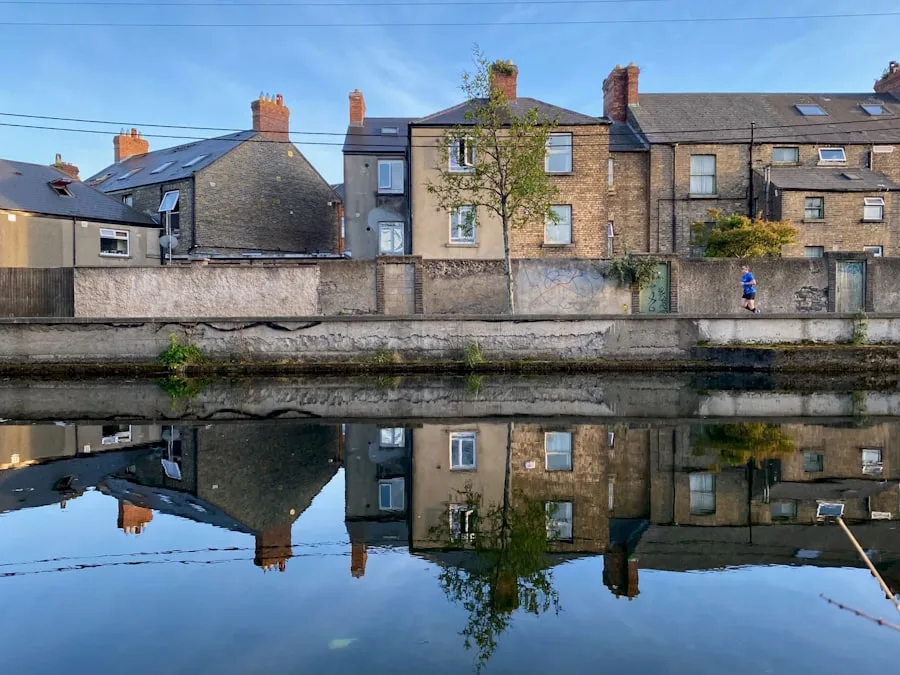
A dense residential district built mostly between 1860 and 1910, with two- and three-storey red-brick terraces along the streets running off the Lennox Street, South Richmond Street and Lower Clanbrassil Street spines. The Grand Canal and its towpath form the southern boundary; the Bleeding Horse corner where Camden Street meets Charlemont Street is the traditional gateway. Major landmarks include the Irish Jewish Museum, the Portobello Bridge (one of Dublin's most photographed canal bridges), and the Bernard Shaw (the iconic pub that was originally on Richmond Street South, moved north a few years ago, but the Portobello connection remains in the local memory).
Who lives here
A young, creative-class and notably international profile. Many residents are professionals in their 20s through 40s - designers, writers, journalists, software engineers, restaurant industry workers - and a steady international expat presence, particularly from continental Europe, Brazil and India. The Jewish community has largely moved to other Dublin districts but a small presence remains. Long-tenured Dublin families in protected leases hold many of the older flats. Family share is moderate; student presence is meaningful given the proximity to Trinity College, St James's Hospital nursing school and the surrounding institutions.
What it's like during the day
Lively along the spines. Camden Street (the corridor running north from Portobello toward Stephen's Green) is one of the busiest restaurant-and-shop streets on the inner-southside, with cafés, independent food shops, butchers, fishmongers and a continuous flow of foot traffic. Lower Clanbrassil Street hosts the Lovely Food Co. and other independent food specialists. The Grand Canal towpath sees runners, cyclists and walkers year-round. Cafés along Lennox Street, South Richmond Street and Richmond Hill fill with regulars and laptop workers. The pace is markedly faster than the Stoneybatter or Phibsborough equivalents on the northside.
What it's like in the evening
One of Dublin's strongest inner-southside going-out districts. Camden Street and its surroundings concentrate a notable density of pubs (The Bleeding Horse, Anseo, Whelan's - the music venue at Wexford Street, Devitt's, Cassidy's), restaurants (Pichet, Etto, Locks, Bastible across in the Liberties), and bars (The Brickyard, Dublin Wine Co., the natural-wine and craft-beer venues that have multiplied over the past decade). The Whelan's music venue is one of Dublin's main live-music addresses. Closing times run to standard pub hours; weekend nights are very busy.
Getting around
Good transit. The Luas Green Line serves the area at Harcourt and Charlemont (the latter just on the northern edge). Multiple Dublin Bus routes (14, 15, 16, 65, 122 and others) along the spines. The Grand Canal cycle path is one of the city's most-used commuter routes. Cycling to Trinity College takes 10 minutes; to the central docklands, 15. Walking to Stephen's Green is 10 minutes; to the city center proper, 15.
Eating and shopping
Daily groceries are well covered: Tesco, SuperValu, Lidl and Aldi branches along the spine, plus a strong concentration of independent food shops along Lower Clanbrassil Street, the small artisanal bakeries, and the Camden Quarter Food Market events. The restaurant scene around Camden Street is one of the strongest in central Dublin for independent kitchens. Shopping is creative and small-scale, with vintage, design and bookshops along the spines.
When NOT to pick it
If you want quiet residential life, Portobello's central streets are loud through the evening, particularly on weekends - bar noise from the Camden Street corridor, the steady flow of evening foot traffic, the Whelan's gig crowds. If you want a calm family-oriented neighborhood, the area skews younger and more nightlife-oriented than Sandymount or the more residential southside districts. And rents at the lower end are tight - small affordable rooms turn over quickly.
Portobello is the right pick for residents who want a dense, creatively-charged inner-Dublin neighborhood with one of the best restaurant and bar scenes south of the Liffey, who appreciate the Grand Canal on the doorstep and the Victorian terrace streetscape, and who don't mind paying central rents for the most identifiable bohemian address on the southside. For young professionals, designers, journalists and a particular kind of internationally-minded resident, it's the natural choice on the inner-south.