
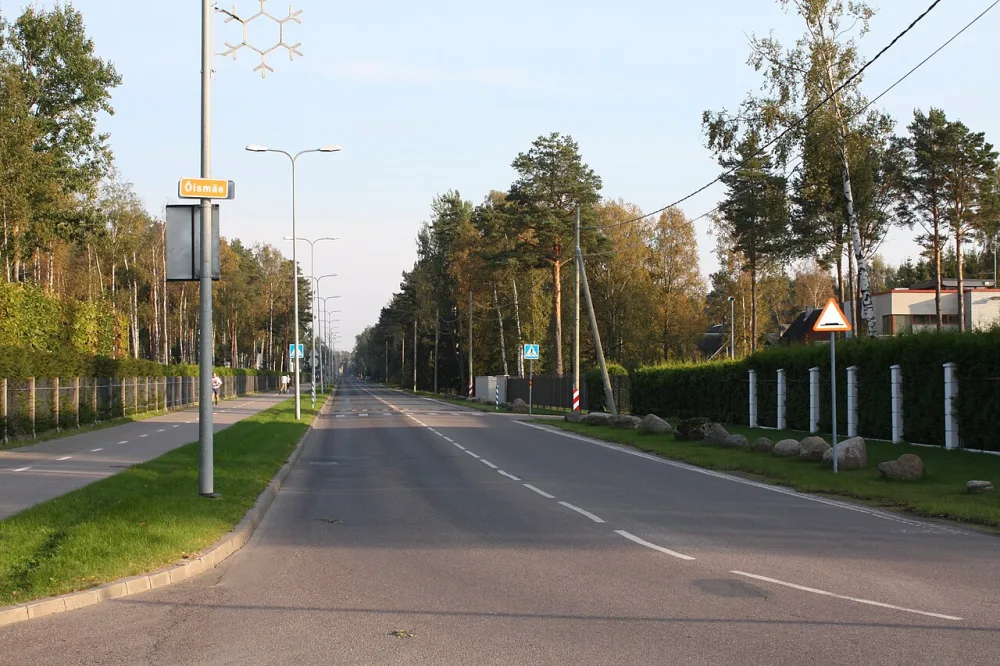
Photo Wikimedia Commons
Living in Haabersti, Tallinn
Tuba üürile Living in Haabersti, Tallinn - otse omanikult, vahendustasuta - Tallinn
Tallinn's western district along the bay and Lake Harku. Around forty-five thousand residents, an iconic ring-shaped Soviet housing scheme at Väike-Õismäe, the city's zoo, an open-air museum and a coastline that pulls Tallinners west on weekends.
Haabersti is the linnaosa (district) that stretches west from the inner city to the Baltic shore and Lake Harku. On the map it looks like a deliberately mixed plate: a textbook Soviet-era panel-block scheme at Väike-Õismäe, single-family streets at Pikaliiva and Tiskre, the Tallinn Zoo in its woods, the Estonian Open Air Museum on the cape, and the seaside enclave of Rocca al Mare with the mall and the sailing club. Most of the district is residential, the rest is forest, water and visitor attractions.
Who lives here
Around forty-five thousand people. The largest block - about half the population - lives in the ring-shaped Väike-Õismäe estate, two hundred and forty-five panel apartment buildings arranged in concentric arcs around a central artificial pond. Demographically Väike-Õismäe is the typical post-Soviet large estate: stable older population that bought during privatisation, a Russian-speaking majority, plus a layer of younger families who couldn't afford Kesklinn. The western strip - Kakumäe, Tiskre, Pikaliiva - is the opposite: detached and semi-detached houses, higher incomes, more cars, more Estonian-speaking households. The two halves do not really mix day to day.
What it's like during the day
Day-to-day Haabersti is split between the panel-block routine of Õismäe - schools, kindergartens, courtyards, the Õismäe keskus mall at the centre of the ring - and the leisure pull of the Rocca al Mare side: families heading to the zoo, joggers and dog walkers on the coastal promenade between Stroomi and Kakumäe beaches, weekend visitors at the Open Air Museum. The big Rocca al Mare shopping centre at the northern edge anchors most of the district's larger retail and is one of the most visited malls in the country. Lake Harku at the southern edge is shallow and bird-rich, with a swimming spot at the Harku järve supluskoht.
What it's like in the evening
Quiet, with two qualifications. Õismäe is straightforwardly residential after dark, with light traffic on Õismäe tee and the inner ring road and very few late-night venues. The seaside strip around Rocca al Mare and Kakumäe has a different evening rhythm: the Vesilennuki marina and the small cluster of restaurants near the shopping centre attract a slightly older, well-off Tallinn crowd in summer; in winter it empties almost entirely. For nightlife proper, residents take a bus or drive twenty minutes to Kesklinn or Telliskivi.
Getting around
Buses are the backbone - frequent service along Paldiski maantee and Ehitajate tee connects Õismäe to Vabaduse väljak in about twenty-five minutes, with the Haabersti ristmik intersection (now grade-separated since the 2018 rebuild) as the main hub. The tram does not reach Haabersti. Cars are easier here than in central Tallinn: parking outside Õismäe is generally not a problem, and the new ring infrastructure means a quick exit to the E20 / Paldiski maantee west. Cycling along the coast is excellent - the seaside promenade is continuous from Stroomi through Rocca al Mare to Kakumäe - but everyday cycling inside the panel-block area is less developed.
Eating and shopping
Rocca al Mare shopping centre covers everything from groceries (Selver, Prisma equivalents) to clothing, cinema and a busy food court. Järveotsa Rimi and the Õismäe keskus mall serve the panel-block ring. Restaurants worth a detour are mostly clustered on the seaside side: classic Estonian and Nordic kitchens in Rocca al Mare, fish at the marinas, and seasonal café-bistros along the coastal path. The Kakumäe marina has a small but growing food scene tied to the harbour.
When NOT to pick it
If you want walkable density, restaurants on every corner and a short walk to bars - Haabersti is suburban and almost every evening out requires a bus or car. If you specifically want Old Town views or a short walk to Kesklinn - at twenty-five minutes by bus, it's noticeably further than Mustamäe or Kristiine. If you find Soviet ring-estate aesthetics actively unappealing and your budget for Tallinn does not stretch beyond Õismäe - that is what the affordable option here looks like. If you do not drive and you want a single-family house - the western strip is built for car-owning households.
Haabersti is the right pick if you want sea, forest and lake within walking distance of home and don't need urban density. The Õismäe ring is one of the most distinctive pieces of Soviet residential planning in Northern Europe - strange to outsiders, completely normal to its residents - and offers some of the cheapest larger flats in Tallinn. The Kakumäe / Tiskre side is the closest thing the city has to a coastal villa suburb. Families weighing space against commute time consistently end up here.