
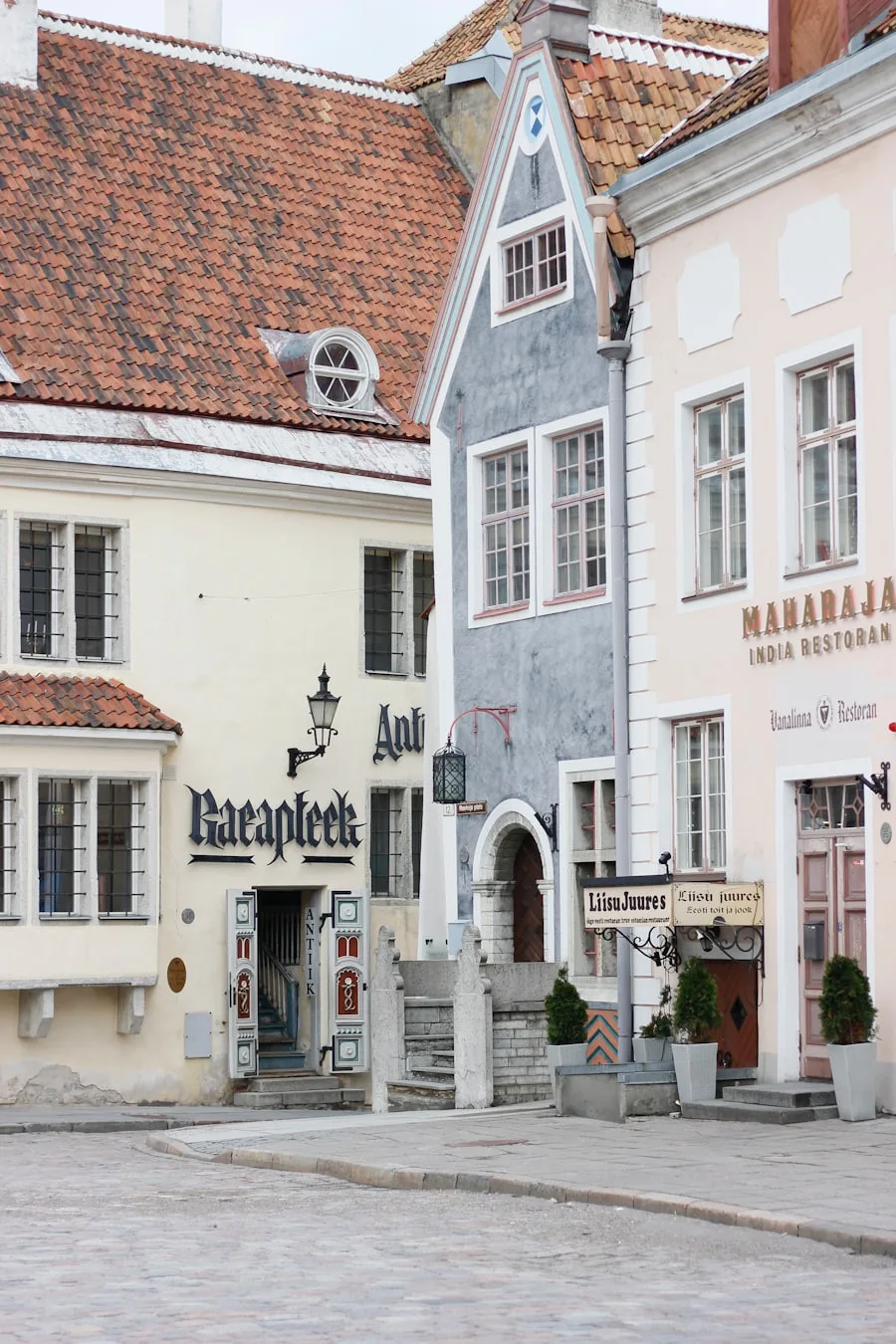
Photo Unsplash
Living in Tallinn, Estonia
Tuba üürile Tallinn - otse omanikult, vahendustasuta
What you need to know if you're about to move to Tallinn - the üürileping and deposit, the isikukood that unlocks every digital service, Tervisekassa coverage, free trams and buses for registered residents, and the distinct character of Vanalinn, Kalamaja, Kadriorg and the other districts.
Tallinn isn't just the postcard medieval skyline of Vanalinn. For people actually moving here, it's a small capital where almost everything happens on a phone or a card - taxes, prescriptions, voting, signing a lease - and where a fifteen-minute tram ride takes you from a UNESCO old town to a forest by the Baltic Sea. This guide pulls together what you'll want to know before you sign an üürileping, from the personal code that switches your life on, to the tram that costs nothing if you're a registered resident, to how the districts differ from each other.
The city in a few sentences
Tallinn is Estonia's capital and by far its largest city, with around 460,000 inhabitants - roughly a third of the country's population. It sits on the southern shore of the Gulf of Finland, two hours by ferry from Helsinki and a six-hour bus ride from Riga. Despite the small numbers, it punches well above its weight: the EU's IT agency is here, Skype was born here, and Estonia's reputation as e-Estonia, the most digital state in Europe, was largely built out of offices in the Maakri and Ülemiste districts.
The historical layers are visible at a glance. Vanalinn (the Old Town) is one of the best-preserved medieval centers in Northern Europe, with intact city walls and Hanseatic merchant houses. Around it, nineteenth-century wooden suburbs, Tsarist-era stone tenements, Soviet-era housing estates and recent glass towers sit next to each other within twenty minutes' walk. The climate is the harder edge of Baltic: long, dark winters with reliable snow from December to March, short and intense summers when the sun barely sets in June.
The language: Estonian, English everywhere among the young, Russian common
Estonian is the official language. It belongs to the Finno-Ugric family, related to Finnish, with no link to the Slavic or Germanic languages most newcomers compare it to - which means it can feel impenetrable at first, but also that Estonian speakers tend to be unusually good at other languages. English is widely spoken in Tallinn, especially in offices, cafés, shops and public services in the center; younger Estonians often have near-native fluency. With older shopkeepers, Hausmeister equivalents and some clerks at the Maksu- ja Tolliamet (tax office), things can switch to Estonian or to gestures.
A quieter linguistic layer: about a quarter of Tallinn's residents are Russian-speaking, a legacy of Soviet-era migration concentrated in districts like Lasnamäe and parts of Põhja-Tallinn. Russian remains common in daily life, in some workplaces, and in older generations. It's a politically sensitive topic, especially since 2022, and recent education reform is moving Russian-language schools toward Estonian-language instruction. Newcomers don't need to take a position - just know that the linguistic landscape isn't a single layer.
Renting a room: how it works
Tallinn's rental market is smaller and a bit calmer than Helsinki or Stockholm, but in the central areas demand still moves quickly. ee, and through Facebook groups for international students and newcomers. The standard rental contract is the üürileping, regulated by Estonia's Law of Obligations Act, and it can be open-ended (tähtajatu) or fixed-term (tähtajaline) - fixed-term is common for one-year arrangements aligned with the university year.
The depos (tagatisraha) is typically one to two months of rent. By law it cannot exceed three months, and it must be returned at the end of the contract if there is no damage and no unpaid bills. Kommunaalkulud (utilities - heating, water, electricity, building maintenance) are usually paid on top of the base rent and can swing dramatically between summer and winter; heating costs in a Soviet-era panel block in January are a serious item.
A few practical signals: many listings will say möbleeritud (furnished) or möbleerimata (unfurnished); central-heating buildings (kaugküte) are easier to live in during winter than buildings with electric heating; and a room in a wooden house in Kalamaja can be charming and cold in the same week.
The isikukood: the document that unlocks everything
The isikukood is Estonia's personal identification code, an eleven-digit number that you receive when you register your residence. It is the single most important piece of paperwork: without it you cannot get a digital signature, you cannot open a bank account easily, you cannot register at a GP, you cannot sign most contracts online, and you cannot use the things Estonia is famous for - voting electronically, paying taxes in three minutes, accessing your medical records on a phone.
For EU citizens, you obtain the isikukood by registering your residence at the rahvastikuregister (population register) at the local linnaosa valitsus (district office) once you have an address. For non-EU citizens, the code is issued together with the residence permit, the D visa or the e-Residency card. Estonia's famous e-Residency programme gives a digital identity to non-residents who want to run a company here remotely - useful for freelancers, but it does not give you the right to live in Tallinn. For physical residence you need a separate residence permit.
Once you have the isikukood and the ID-kaart (national ID card with chip) or Mobile-ID, almost everything is online. Filing taxes takes minutes. Renewing a prescription takes seconds. Estonians joke that the only thing you still have to do in person is get married, and even that has been reformed.
Estonia: EU vs non-EU
Estonia is an EU member, in the Schengen area, and uses the euro. For EU/EEA/Swiss citizens, moving to Tallinn is straightforward: arrive, find an address, register your residence within three months, and you are effectively a resident. There is no separate work permit, no salary threshold, no immigration interview.
For non-EU citizens the path is the elamisluba (residence permit), issued by the Politsei- ja Piirivalveamet (PBA, Police and Border Guard Board). The most common routes are qualified employment (with a registered Estonian employer), study at an accredited institution, family reunification, and the Startup Visa - Estonia was the first EU country with a dedicated startup visa, used heavily by tech founders. The Estonian system is famously process-driven: documents must be precise, translations notarised when required, but once submitted the response time is among the fastest in the EU.
Healthcare: Tervisekassa
Estonia has a public health insurance system run by the Eesti Tervisekassa (Estonian Health Insurance Fund, renamed from Eesti Haigekassa in 2023). Coverage is automatic for residents who are employed (the employer pays the contribution as part of social tax), for registered self-employed people who pay social tax, for students up to age 24, and for several other categories including parents on parental leave.
Once you have an isikukood and Tervisekassa coverage, you choose a perearst (family doctor / GP), and that GP becomes the entry point for everything - referrals to specialists, repeat prescriptions, basic care. Waiting times to see specialists in the public system can be long; many residents use private clinics in parallel, paying out of pocket or through employer insurance. Prescriptions are largely digital - your GP issues an electronic prescription, you collect it at any apteek (pharmacy) with the ID-kaart.
For EU citizens, the EHIC from your home country covers emergencies in the early weeks; for non-EU arrivals, private insurance is usually required for the residence permit and bridges the gap until employment-based Tervisekassa kicks in.
Transport: free trams and buses for residents
Tallinn has a small but well-run public transport network - trams, trolleybuses (until recently), buses - operated by TLT (Tallinna Linnatranspordi AS). The system has a quirk that surprises every newcomer: public transport is free for residents officially registered in Tallinn. Once your address is in the population register and you have validated a free Roheline kaart (Green Card) on board, trams and city buses cost you nothing for the entire time you remain a registered resident. Non-residents and visitors pay normal fares - a single ticket is around two euros via the app or contactless.
Tram lines are the backbone for the center: trams 1 and 3 run east to leafy Kadriorg, trams 3 and 4 cut through Kristiine and the western districts toward Tondi, and trams 1, 2 and 5 serve the central Balti jaam hub beside the Old Town. Tallinn Airport (TLL) sits inside the city, around fifteen minutes from the Old Town by tram 4 - almost certainly the most convenient capital-city airport in Europe.
Regional and long-distance trains are run by Elron (the Estonian Railway passenger operator) from the Balti jaam station next to Vanalinn - useful for Tartu, Pärnu, Narva. Ferries to Helsinki leave from the Vanasadama (Old Port) several times a day; Tallink, Viking Line and Eckerö all run the route.
The bicycle is increasingly common in summer; in winter, snow and ice make it a minority sport. Tallinn is flat and compact - many people simply walk.
Working and studying
Estonia has a disproportionately large tech sector for its size. Tallinn hosts the headquarters of Wise, Bolt and dozens of smaller startups; the so-called Estonian Mafia of ex-Skype engineers has seeded a generation of founders. Most tech jobs are in Maakri (the small business district of glass towers next to Vanalinn) and Ülemiste City, a planned business park near the airport with thousands of employees. Salaries are lower than Helsinki or Stockholm but the cost of living is also markedly lower, and the income tax is a flat rate that simplifies planning.
For students, the two main institutions in Tallinn are TalTech (Tallinn University of Technology) in the Mustamäe district, with strong engineering and IT programmes, and Tallinn University (TLÜ) in the city center, broader in humanities and social sciences. The University of Tartu, Estonia's oldest, is in the city of Tartu two hours south, but operates a Tallinn campus. Tuition for EU students is modest; for non-EU students it varies by programme but tends to be lower than in Western Europe. English-language degree programmes are common, especially at master's level.
Daily life: schedules, rhythms, seasons
Tallinn runs on Nordic-Baltic hours. Supermarkets generally open from 8 or 9 in the morning until 22 or 23 at night, every day of the week including Sundays - unlike Germany, Sunday is not a closed day, and Maxima, Rimi, Selver and Coop are reliable. Restaurants tend to open for lunch around midday and serve dinner from 18 onward; kitchens often close by 22.
The seasonal swing is the central fact of daily life. In December and January the sun rises around 9 and sets before 16; many residents take vitamin D and book a sauna once a week to compensate. Sauna culture is shared with Finland - most apartment buildings have a communal sauna in the basement, and the question "do you go to sauna?" is a real social opener. In June the sun barely sets at all; the Jaanipäev (Midsummer, around 23-24 June) is one of the year's two big holidays, traditionally celebrated outside the city around bonfires and lakes. The other anchor is Iseseisvuspäev, Independence Day, on 24 February - a public holiday marking the 1918 declaration of independence.
Outdoor life starts the moment the snow goes. Pirita beach, the forests of Nõmme, the bog walks at Viru raba and Kõrvemaa are all within forty minutes of the center. Public saunas, ice swimming and kümblustünn (hot tubs in the snow) are not eccentric pursuits - they are normal weekend activities.
The neighborhoods
Tallinn is officially divided into eight city districts (linnaosa), but daily life happens at the level of smaller named areas - the asum. Picking the right one shapes everything: how long your tram ride is, whether you live in a wooden house from 1910 or a panel block from 1972, whether you see the sea from your window or a forest.
There's the central district Kesklinn that contains most of what newcomers imagine when they think of Tallinn, the new business spine of Maakri with its glass towers, the medieval upper town of Toompea on its limestone cliff, the wooden-house asum of Pelgulinn just west of the railway, the UNESCO Old Town of Vanalinn, the post-industrial northern stretch of Põhja-Tallinn, the family-residential western district of Kristiine, the high-rise core of Südalinn, the small inner-city pocket of Kitseküla, the quiet streets of Kelmiküla, the embassy-and-park area of Tõnismäe, the small asum of Tatari, the central residential strip of Sibulaküla, the harbour-side pocket of Kompassi, and the leafy Kassisaba just west of Vanalinn.
The neighborhood guides below go into detail: who lives there, what days are like, what evenings are like, and when the area might not be the right pick for you.
Tallinn neighborhoods
Each neighborhood has its own character. Read the guides to pick the right one for you.
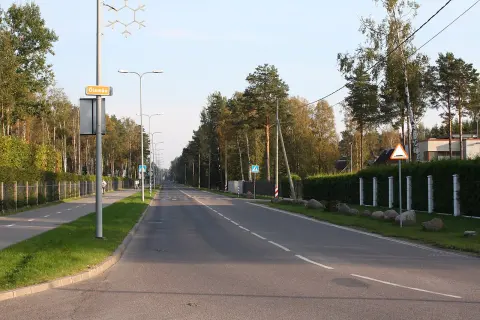
Haabersti
The western district. Lake, zoo, sea promenade and the unique circular Õismäe estate.
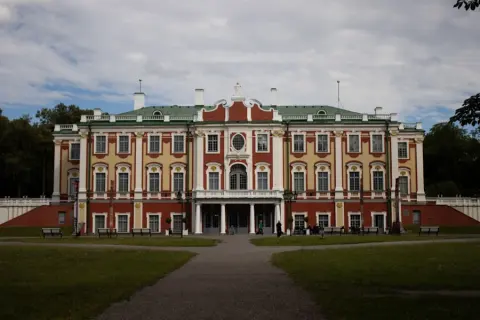
Kadriorg
Palace, park, wooden mansions. The most prestigious address in Estonia.
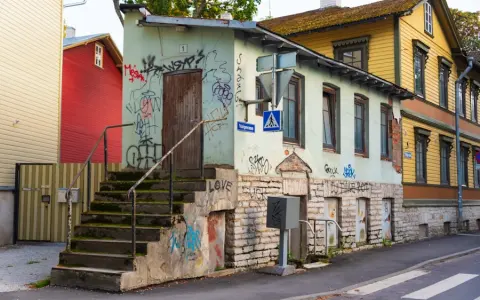
Kalamaja
Wooden houses and the post-industrial Telliskivi. The most-wanted address for under-forties in Tallinn.
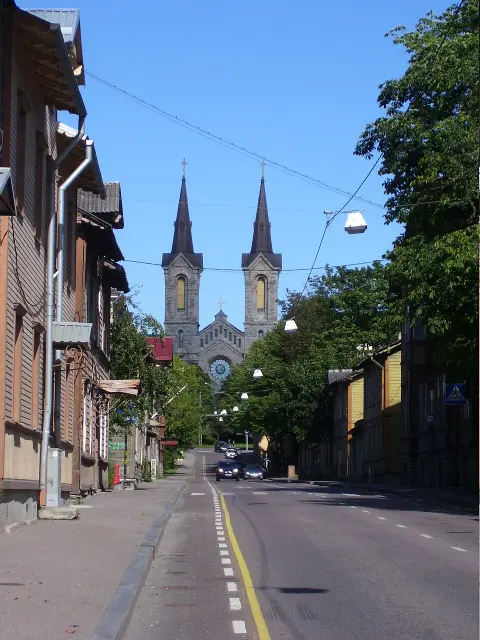
Kassisaba
Leafy central asum west of Vanalinn. Wooden tenements, small parks, residential calm.
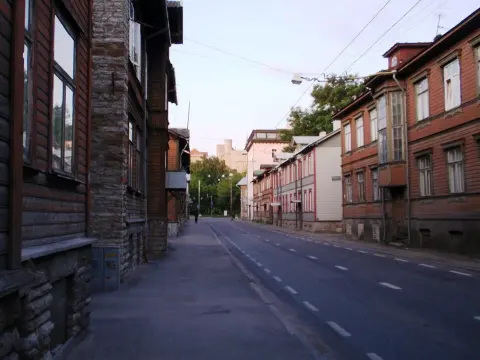
Kelmiküla
Small wooden-house asum just west of Toompea. Quiet, central, walkable.
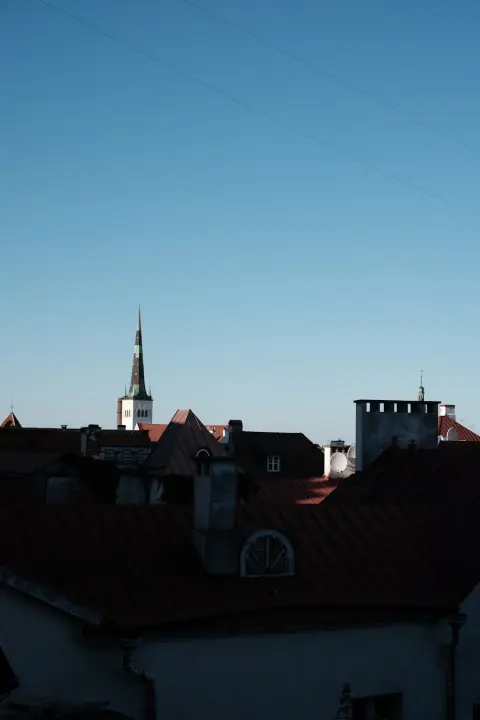
Kesklinn
Tallinn's central district - Old Town, business spine, embassies. Where most newcomers actually look.
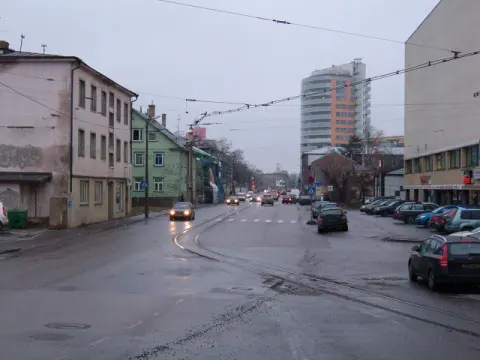
Kitseküla
Small residential pocket south of the centre. Quiet streets, mixed building stock.
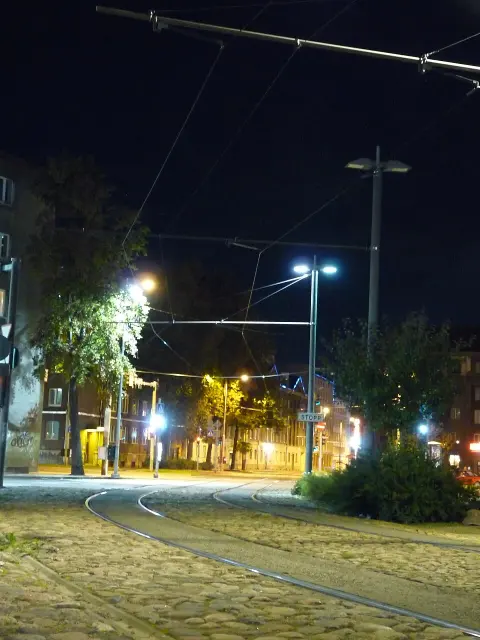
Kompassi
Central asum behind the Viru shopping cluster. Mixed wooden, stone and new-build residential.
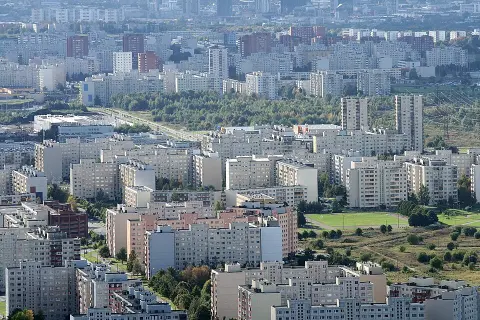
Laagna
The big Soviet-era panel-housing district east of the centre. Around 120,000 residents.
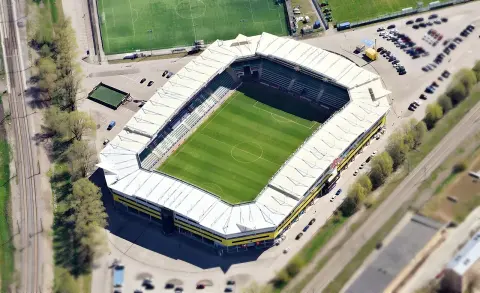
Lilleküla
Family-residential district west of centre. Trams, schools, Lilleküla Keskus mall.
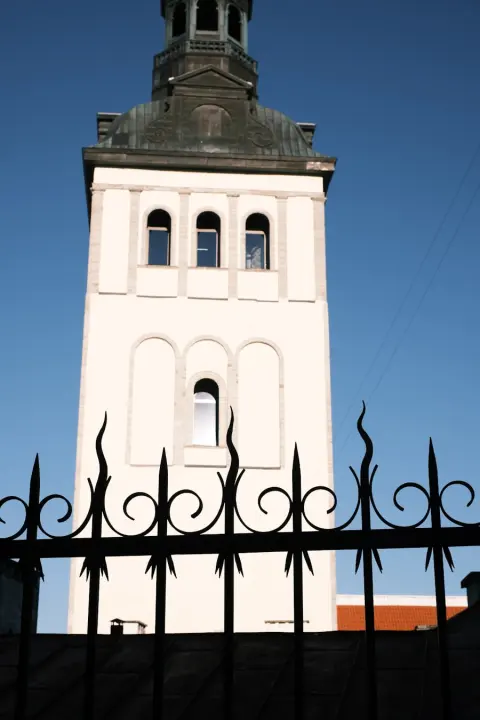
Maakri
Glass towers, banking, Bolt and Wise. Office-led by day, quiet at night.
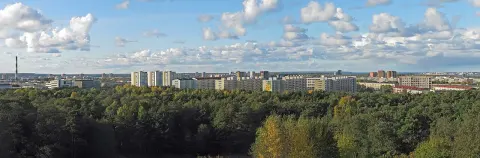
Mustamäe
The original Soviet panel-block district. Tree-lined avenues, the technical university, value for money.
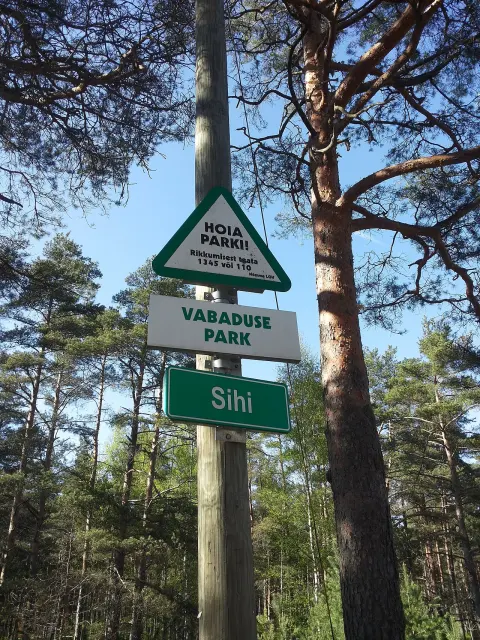
Nõmme
Pine forest, wooden villas, garden-town atmosphere. Tallinn's quiet south-west.
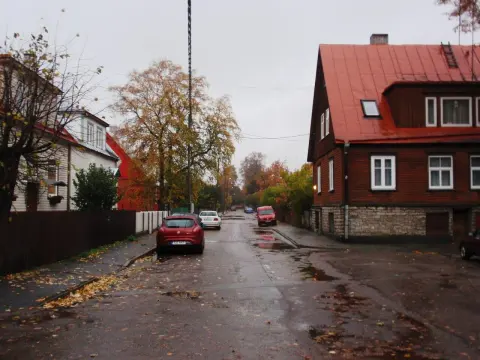
Pelgulinn
Wooden houses, vegetable gardens, residential silence. Kalamaja's quieter sibling.
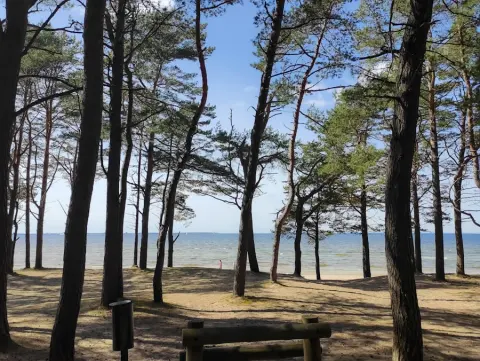
Pirita
Beach, marina, monastery ruins. The seaside detached-house district of Tallinn.
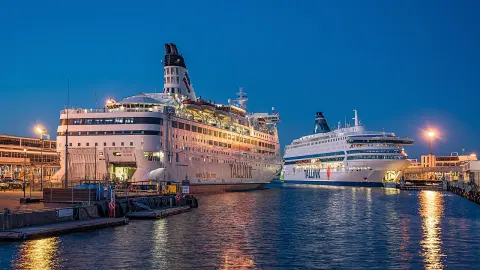
Sadama
Tallinn's passenger port, the ferries to Helsinki and Stockholm, and a new area growing in front of the water.
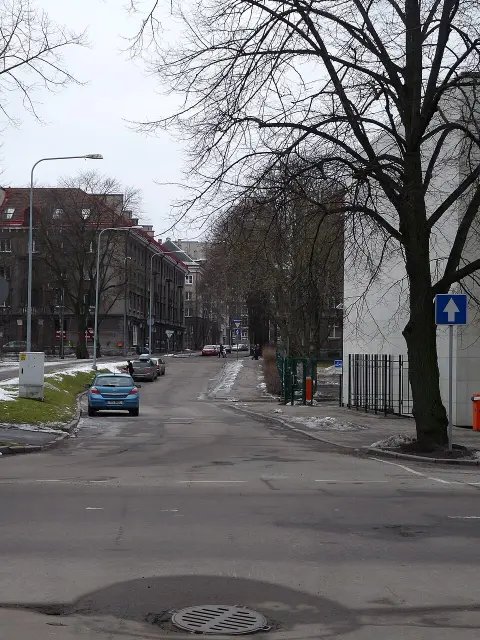
Sibulaküla
Small central asum south of Vanalinn. Quiet residential streets, central location.
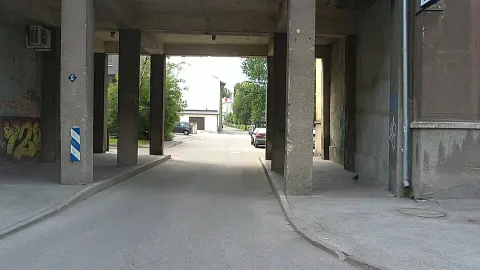
Tatari
Small central asum south-east of Vanalinn. Russian Theatre, wooden houses, calm streets.
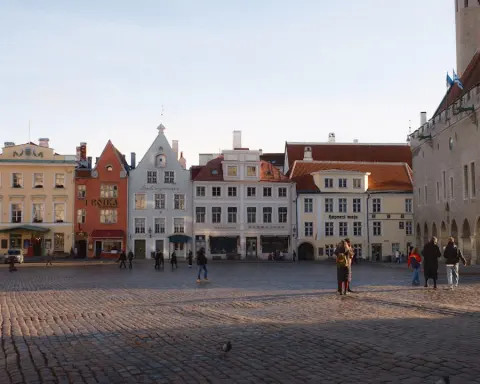
Tõnismäe
Central asum below Toompea. Embassies, National Library, residential calm.
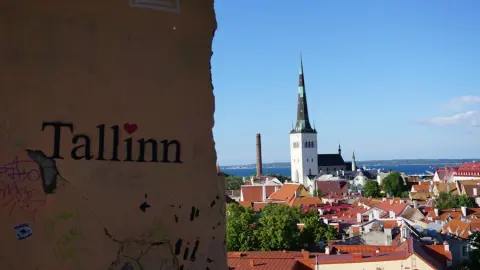
Toompea
The upper town. Parliament, Alexander Nevsky Cathedral, very few residents, very high rent.
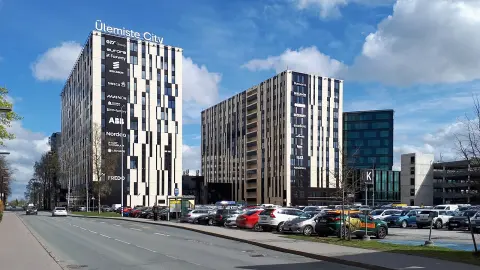
Ülemiste
The airport, the Ülemiste City tech campus and the lake: Tallinn's hub of work and transit.
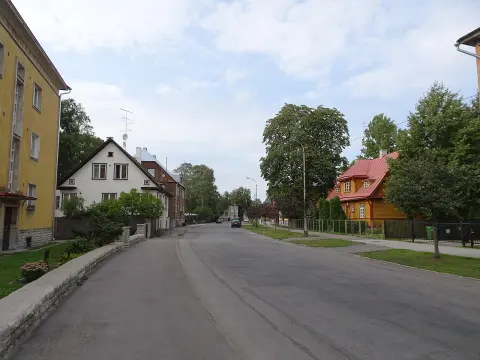
Uus Maailm
Wooden houses, the America streets and a close-knit community: the most bohemian district in Tallinn, a short walk from the centre.
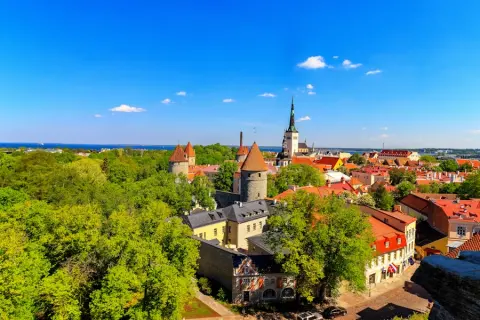
Vanalinn
The walled medieval Old Town. A real neighbourhood inside a UNESCO site.
Veerenni
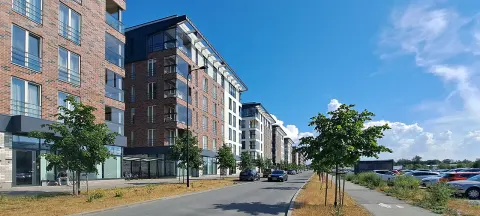
The former industrial area turned into a new-build neighbourhood five minutes from the centre: the contemporary face of Tallinn.