
Photo Wikimedia Commons
Living in Nõmme, Tallinn
Tuba üürile Living in Nõmme, Tallinn - otse omanikult, vahendustasuta - Tallinn
The forest-and-villas district south-west of the centre. A pre-war independent town absorbed into Tallinn, built into pine forest, with wooden houses, a market square and a railway running through the middle.
Nõmme sits eight kilometres south-west of the Old Town, on a sandy ridge of pine forest. Its identity is its own: from 1926 to 1940 Nõmme was a separate town with its own mayor and city plan, only absorbed administratively into Tallinn during the Soviet era. The development pattern reflects that history. Where the rest of Tallinn was built dense - Old Town, Kalamaja, Soviet panel districts - Nõmme grew as a garden town of detached and semi-detached wooden villas in pine forest, threaded by the Tallinn-Keila commuter railway and centred on the small Nõmme turg square.
Who lives here
Old Estonian families. Nõmme has the most stable population of any Tallinn district - many of the houses have been in the same family for two or three generations, and the village-within-the-city texture has been carefully protected through planning rules and resident associations. The newer layer is professional couples and returning Estonians in their thirties and forties who specifically wanted a house with a garden and a school catchment but didn't want the long commute from Viimsi or Saue. Russian-speaking population is small - historically Nõmme was a culturally Estonian district and remained so through the Soviet period. Kids are everywhere: the schools are excellent and family infrastructure is dense.
What it's like during the day
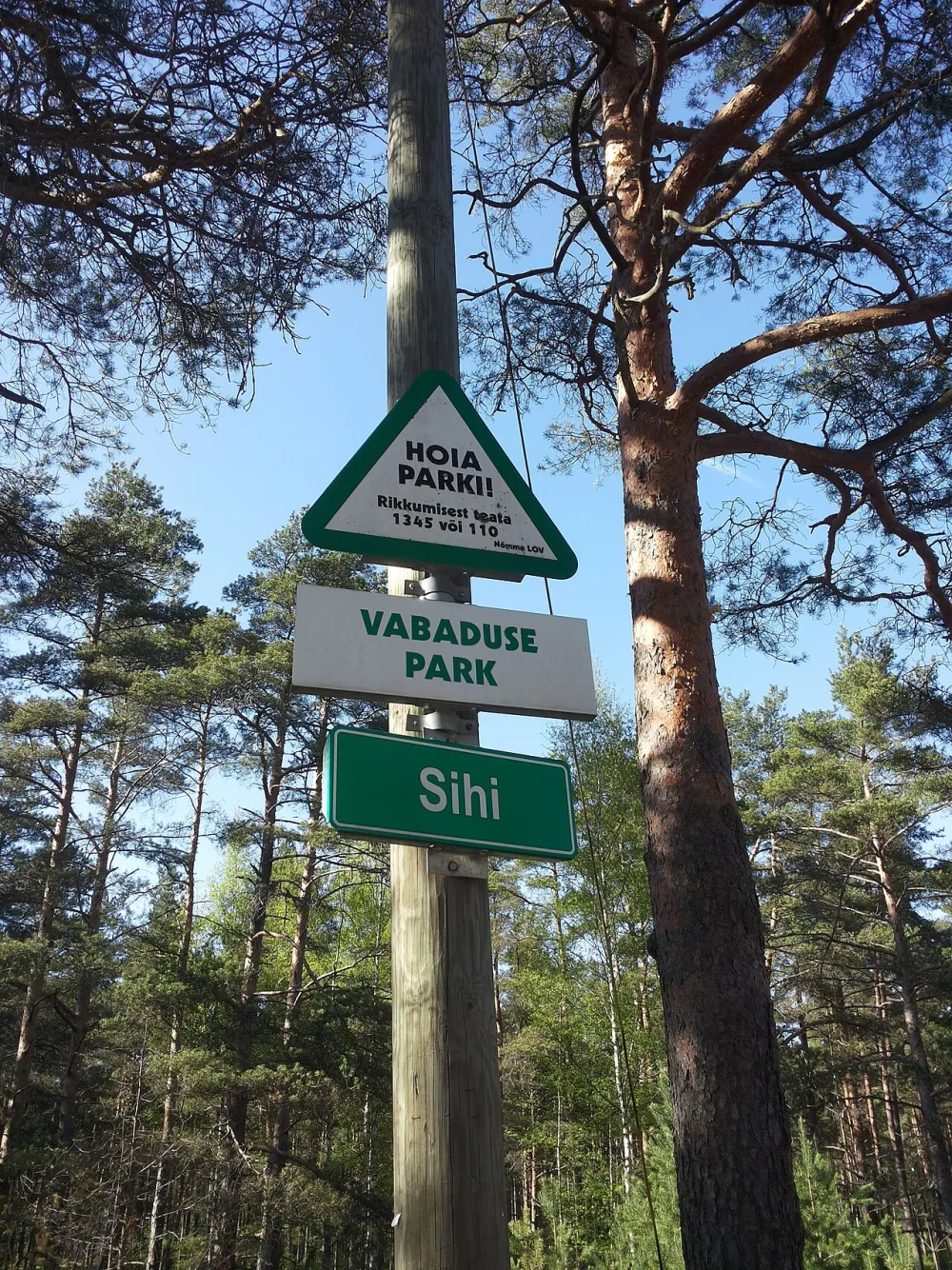
Quiet. Nõmme during the day feels like a small Estonian town with a Tallinn postcode. The Nõmme turg - the small open-air market - has been the centre of village life since 1925. Pärnu maantee and Vabaduse puiestee are the two main commercial streets, with cafés, a library, the Glehni loss (a small park castle), the cinema Sõprus further toward the centre. Walking through the residential streets - Männiku tee, Vana-Mustamäe, Hiiu, Pääsküla - feels closer to a forest village than to a capital city. Many properties have direct access to forest paths; Vabaduse parkmets and Pääsküla raba (the raised bog) are both inside or on the edge of the district.
What it's like in the evening
Very quiet. Nõmme essentially has no nightlife - a few neighbourhood pubs, a couple of restaurants near the market, the cinema, the Hiiu park bandstand for occasional summer concerts. The expectation is that you cook at home, eat dinner with family, and go to bed early. For drinks people drive or take the train to the centre. After ten o'clock the streets are empty and dark - there's less street lighting than in the centre and many residential streets have no through traffic at all. The evening atmosphere is genuinely rural at the edges; you can hear owls.
Getting around
The Elron commuter trains are Nõmme's defining transport. Trains run every fifteen to twenty minutes from Balti jaam to Nõmme, Hiiu, Kivimäe, Pääsküla and onward - fifteen minutes door to door from central Nõmme to the Old Town. The trains and the Hiiu and Pääsküla park-and-rides are the practical commute. Buses 18, 20A and 36 fill in the gaps. By car the Pärnu maantee arterial reaches the centre in fifteen to twenty-five minutes depending on traffic, and parking everywhere in Nõmme is free and easy. Cycling is excellent inside the district on the quiet forest streets but the routes to the centre cross a couple of busy arterials.
Eating and shopping
Nõmme turg - the market - is the social and food centre. Open-air stalls Wednesday to Sunday, with fish, vegetables, mushroom and berry sellers in season, plus a small covered hall. Selver and Rimi supermarkets cover the rest. Restaurant offer is small but loved - Mooste Pubi, Nõmme Hubi, Vana Posti, Karjase saun, a couple of pizza and Asian places. Coffee shops on Vabaduse puiestee are quiet weekday options. For a wider restaurant offer everyone takes the train or drives to the centre. The Saturday-morning market-and-coffee ritual is the district's signature shared moment.
When NOT to pick it
If you want walkable street life and bars within five minutes - Nõmme has none of that and is not pretending. If you don't have a car and the train schedule doesn't suit your hours - the connection is good but it is a schedule, not a metro. If you're single, in your twenties and want to socialise locally - the demographic is family-and-retiree, not urban-single. If you rent rather than own - the housing stock is mostly owner-occupied single-family houses, and the rental market is thinner than in the centre. If you don't like pine pollen in May - Nõmme is a forest district and you'll know about it.
Nõmme is the right pick if you want a garden, fresh air, a school catchment that beats almost anywhere else in Estonia, and a train into the city centre in fifteen minutes. For families with children and for anyone who values quiet over density, it is consistently named the most desirable family district in Tallinn. The trade-off is that it asks you to like silence and accept a small-town rhythm. Many of the people who actually like it have lived here for thirty years and have no intention of moving.