
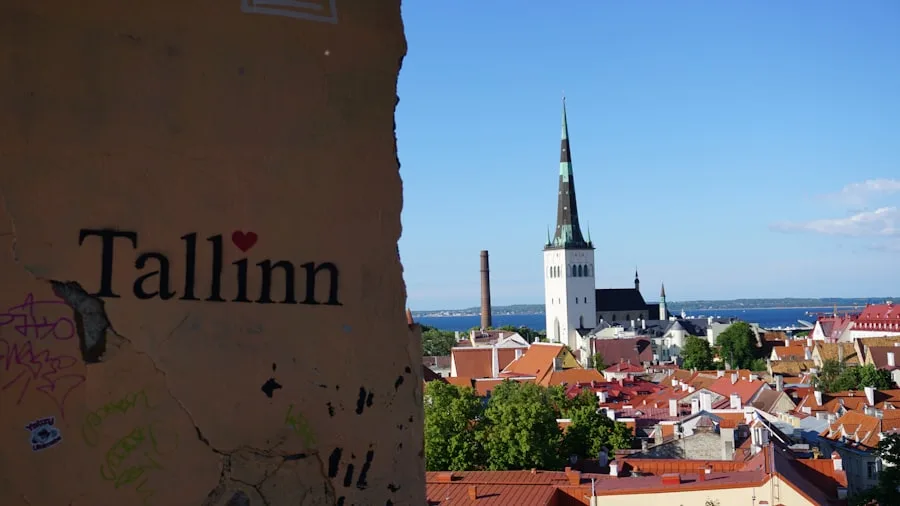
Photo Unsplash
Living in Toompea, Tallinn
Tuba üürile Living in Toompea, Tallinn - otse omanikult, vahendustasuta - Tallinn
The medieval upper town on the limestone cliff above Vanalinn. Parliament, the Russian Orthodox cathedral, embassies and a few hundred lucky residents in cobbled silence.
Toompea - literally "Cathedral Hill" - is the limestone outcrop that rises 20-30 metres above the rest of Vanalinn. For most of Tallinn's history this was where the rulers lived, separately from the merchants down in the lower town: first the Danes, then the Teutonic Order, then Sweden, then Tsarist Russia. Today Toompea Castle houses the Estonian Parliament (Riigikogu), the pink Baroque assembly building and the green-domed Alexander Nevsky Cathedral sit a hundred metres apart on the same square, and the surrounding cobbled lanes are mostly embassies, government residences and a small number of private apartments.
Who lives here
Almost nobody, by neighbourhood standards. Diplomats and Estonian government officials in service apartments, a handful of long-term Tallinn families in old townhouses, and a thin layer of expats and entrepreneurs who can afford the few private apartments that come on the market. The resident population of the entire upper town is in the low hundreds. Hotels, embassies and offices outnumber homes.
What it's like during the day
Quiet, formal, and full of tourists in the warm months. Coach buses unload at the bottom of Pikk jalg and Lühike jalg (the two old gateway streets) and visitors climb to the viewing platforms at Patkuli and Kohtuotsa for the postcard view of red rooftops. Outside the viewpoint clusters, the side streets - Toompea, Pikk, Toomkooli - are calm. Police presence is steady around the parliament. Office life is government, diplomatic and a few law firms.
What it's like in the evening
After the tour groups leave, Toompea becomes one of the quietest places in central Tallinn. Few restaurants, almost no bars. Sunset light on the limestone walls and the Orthodox domes is one of the city's particular pleasures. Residents tend to walk down into the lower town for dinner and back up afterwards. Winter evenings are dark, icy and beautiful.
Getting around
Walking, mostly. The upper town is small enough to cross in five minutes. Two ramps and one set of stairs connect it to the lower town. Vehicles are tightly restricted - most streets are residents-only or service-only. The nearest tram stops are at Vabaduse väljak (Tram 2) and Toompuiestee (Trams 3, 4, by the railway station). Cycling up is hard work in any direction.
Eating and shopping
Limited to a few hotel restaurants, a handful of cafés aimed at tourists, and one small grocery. For serious shopping, residents walk down to the Vanalinn supermarkets (Rimi at Aia, Selver at Solaris) or take the tram to Kristiine Keskus. The Balti jaama turg is ten minutes' walk away at the foot of the hill on the western side.
When NOT to pick it
If you want active street life - Toompea is residential silence by design. If you want practical access to everyday services - the closest GP, gym, school and proper supermarket are all in the lower town. If your budget is anything other than substantial - private rentals here are rare and priced for the location. If you depend on a car - restricted vehicle access makes drop-offs and deliveries complicated.
Toompea is the right pick if you have the means to choose it, if you value walking out of your door into one of the most atmospheric historic quarters in Europe, and if you understand that practical life will involve walking down the hill at least once a day. For diplomats, senior expats and people who measure their commute in minutes from the parliament, it is the address. For everyone else, the lower-town parts of Vanalinn - All-linn - make more sense.