
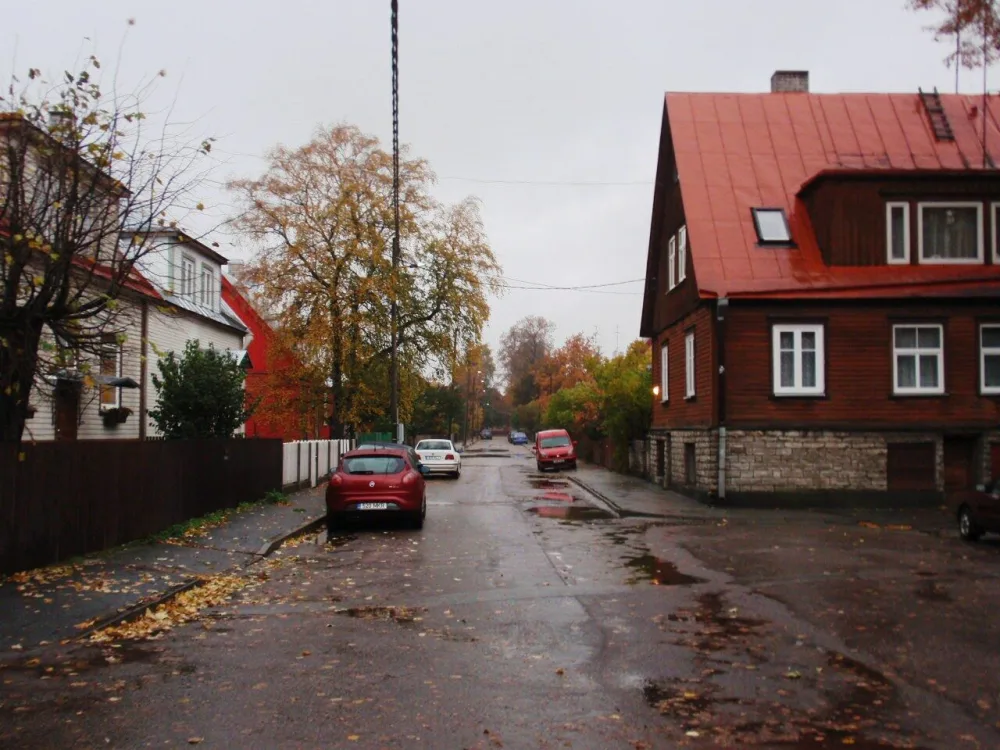
Foto Wikimedia Commons
Living in Pelgulinn, Tallinn
Tuba üürile Living in Pelgulinn, Tallinn - otse omanikult, vahendustasuta - Tallinn
A wooden-house residential pocket west of the railway, with the same Tsarist-era timber architecture as neighbouring Kalamaja but quieter, cheaper and less hipsterised.
Pelgulinn sits just west of the main railway line, in the larger Põhja-Tallinn district. It's one of the wooden-house asum that ring central Tallinn - built between roughly 1880 and 1940 to house factory workers and railway employees, abandoned through much of the Soviet period, and slowly rediscovered in the last twenty years. Architecturally it's almost identical to Kalamaja next door: two-storey wooden tenements with tall windows, internal staircases, small gardens. Socially it's a step quieter.
Who lives here
A long-time Estonian working-class population still dominates much of the housing stock, particularly in the rougher streets toward the rail yards. Layered on top: young families and remote workers priced out of Kalamaja, some artists, a slow trickle of expats. Several of the wooden houses have been renovated into smart split apartments; others still have wood stoves and shared bathrooms in the basement. The mix on any given street can shift block by block.
What it's like during the day
Residential. Kids on bicycles, vegetable allotments still in use, a few small cafés that have opened in the last few years and feel slightly like community projects. The streets - Ristiku, Tehnika, Sõle - are mostly low-traffic and quiet. The Telliskivi creative complex is a fifteen-minute walk east into Kalamaja, but daytime here is residential, not commercial. The local park is small but used.
What it's like in the evening
Calm. A handful of neighbourhood bars and restaurants exist; for serious evening options people walk to Telliskivi (15 min) or to Vanalinn (25 min). Streets are quiet by 22. Winters are dark and silent; summers stay light until almost midnight and the gardens become outdoor living rooms.
Getting around
Bus and tram. Trams 1 and 2 along Telliskivi street, fifteen minutes' walk east. Multiple bus lines along Sõle and Ristiku. The Balti jaam railway station is fifteen minutes east - useful for trains to Tartu, Pärnu and Narva, and as the launching point for the trams. Vanalinn is twenty-five minutes on foot, less by tram. Cycling is comfortable; the network of small streets is bike-friendly and traffic is light.
Eating and shopping
A small Rimi and a few smaller groceries cover the basics. For bigger weekly shopping, residents head to the Balti jaama turg (Baltic Station Market) fifteen minutes east, or to the bigger Selver and Rimi stores at Kristiine Keskus. The local food scene is thin but growing - a few specialty coffee shops, a couple of bakeries, an Asian restaurant or two. For variety, Kalamaja and Telliskivi next door are the obvious destinations.
When NOT to pick it
If you want a thick local food and bar scene - Pelgulinn is residential, and you'll be walking to Kalamaja for variety. If you need a tram or metro directly outside your door - the trams run on the eastern edge, not through the area. If you're sensitive to old building issues - many wooden houses have heating quirks, sound carries between flats, and renovations vary widely in quality. If you want a single visual identity - Pelgulinn is patchier than Kalamaja, with renovated stretches next to neglected ones.
Pelgulinn is the right pick if you want the wooden-house aesthetic and the quiet of a residential asum at a calmer pace than Kalamaja, if you don't mind a fifteen-minute walk to the nearest serious café cluster, and if you appreciate that the neighbourhood is still mid-transition rather than fully arrived. For people who would have picked Kalamaja three years ago and find it too busy now, this is often the next move west.