
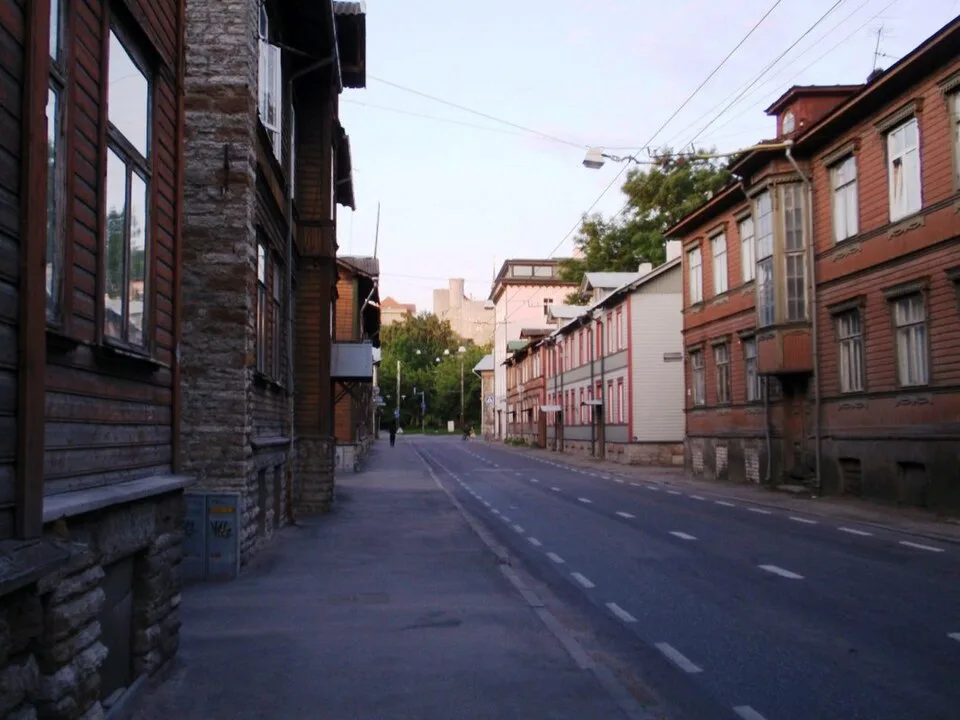
Foto Wikimedia Commons
Living in Kelmiküla, Tallinn
Tuba üürile Living in Kelmiküla, Tallinn - otse omanikult, vahendustasuta - Tallinn
A pocket of wooden tenements and small stone houses west of Vanalinn, between the railway, the Toompea cliff and the busier streets of central Tallinn.
Kelmiküla sits in a triangle between the western foot of Toompea, the railway line and the larger streets that lead toward Kalamaja. It's one of central Tallinn's smaller asum, a handful of streets dominated by Tsarist-era wooden tenements and a few inter-war stone houses. The name suggests "rogue village" - a hint at the area's nineteenth-century reputation as a slightly rough outskirt. Today it's quiet and central.
Who lives here
A small, settled population. Older Estonian residents in long-owned apartments, some Russian-speaking households, a thin but visible layer of younger professionals who have renovated wooden flats. The neighbourhood feels more local than expat. There is no student concentration, no major institution. The streets are quiet enough that people recognise their neighbours.
What it's like during the day
Residential. Light foot traffic, occasional delivery vans, retired residents on benches in the small green spaces. The most active edge is the bottom of Toompea where stairs and ramps connect down to Kelmiküla - used regularly by walkers from the upper town. There are no flagship cafés, but a handful of small bakeries and coffee shops have opened along Toompuiestee and the larger feeder streets.
What it's like in the evening
Quiet. A couple of neighbourhood restaurants, otherwise residential silence. For evening variety, Vanalinn is a five-minute walk east and Telliskivi is fifteen minutes north-west. The wooden houses are well sound-insulated in some renovations and not at all in others, and which side you fall on can matter.
Getting around
Walking covers most needs. Vanalinn is five to ten minutes east depending on which street you live on. The railway station is five minutes north-west. Trams 1, 2 and 5 stop at the Balti jaam hub on Toompuiestee. Buses fill in. The terrain is slightly uphill toward Toompea, otherwise flat. Cycling is comfortable.
Eating and shopping
Limited inside the asum - a few small groceries, a bakery or two. Most weekly shopping happens at the Balti jaama turg (5-10 min walk), the Rimi at Aia inside Vanalinn, or Solaris Keskus. Restaurants are mostly across the line in Vanalinn or in Kalamaja. The Telliskivi cluster is fifteen minutes north.
When NOT to pick it
If you want a recognisable neighbourhood identity - Kelmiküla is too small and too tucked-in to project one. If you want lively evenings - they are in Vanalinn and Kalamaja, not here. If you want a single architectural style - Kelmiküla mixes pre-war wooden with inter-war stone with later infills, and renovations vary block to block. If you depend on a car - parking is limited and the surrounding traffic patterns are awkward.
Kelmiküla is the right pick if you want central walkability with the wooden-house aesthetic, at slightly lower prices than directly inside Vanalinn, and you don't mind that the asum itself is essentially residential. For people who want to be within walking distance of the railway station, Telliskivi and Vanalinn at the same time, this is one of the better-positioned addresses in central Tallinn.