
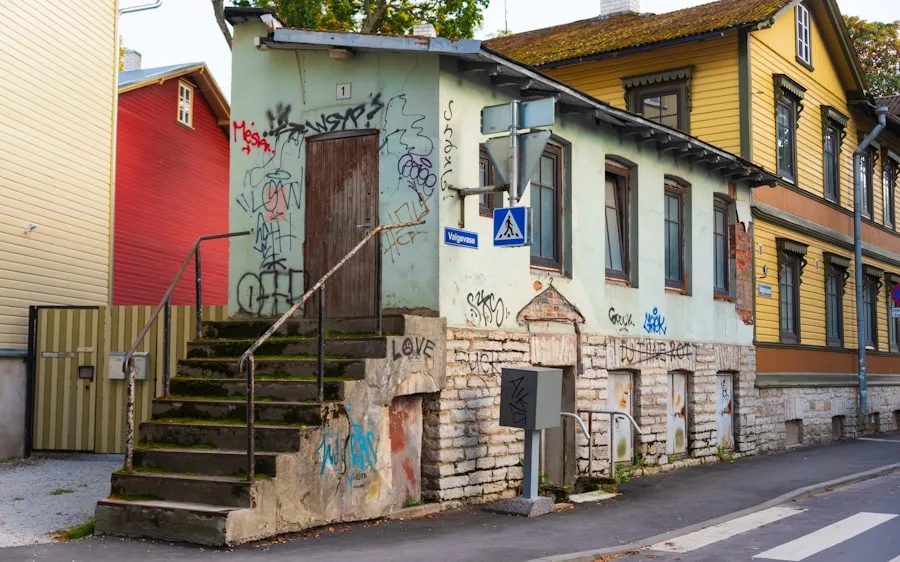
Photo Unsplash
Living in Kalamaja, Tallinn
Tuba üürile Living in Kalamaja, Tallinn - otse omanikult, vahendustasuta - Tallinn
The wooden-house neighbourhood north of the Old Town. Former fishermen's quarter, decade-long darling of Tallinn's gentrification, and the place anyone under forty wants to live in if they can pay for it.
Kalamaja - literally "fish house" - sits immediately north of the Old Town, between the Balti jaam railway station and the sea. It is the most discussed neighbourhood in Tallinn of the last fifteen years: a working-class quarter of nineteenth-century wooden tenements that, since around 2010, has become the city's primary stage for gentrification. Telliskivi Loomelinnak - the creative quarter built into the old railway workshops on Kalamaja's southern edge - is both the trigger and the symbol of the change.
Who lives here
The mix is in motion. The older Estonian and Russian families who bought their wooden flats during the Soviet privatisation are still here, and many are choosing to stay rather than sell at the prices on offer. Around them has formed the predictable new layer: tech workers, designers, foreign couples, returning Estonians who left in their twenties. Demographically Kalamaja is younger than the city average and more diverse than the upper-middle Tallinn norm - the long-term population is genuinely working-class and Russian-speaking in parts, the incoming population is mostly Estonian or international in the under-forty bracket.
What it's like during the day
Kalamaja during the day is busy in a soft way. The wooden streets - Kungla, Vana-Kalamaja, Salme, Soo - are residential and quiet, with very little through traffic. Activity concentrates on the edges: at Telliskivi (cafés, the Fotografiska photography museum, the F-hoone and Sfäär restaurants, the Saturday flea and food market), at Balti jaama turg (the renovated covered market, possibly the best food shopping in Tallinn), and along Kalaranna on the seafront where new apartment blocks have changed the waterfront completely. The Saturday morning rhythm - market, brunch, walk, coffee - is the district's signature pattern.
What it's like in the evening
Evenings split between Telliskivi and home. Telliskivi has Tallinn's densest concentration of independent bars, late-night restaurants and small venues - F-hoone, Pudel, Saun, the Telliskivi 60 outdoor terrace in summer, Frenchy. On weekends the courtyard fills. Two blocks north into Kalamaja proper, almost nothing - wooden houses, a few neighbourhood pubs, kitchen lights through net curtains. It's the unusual combination of "real nightlife two streets away" with "very quiet at home" that defines the area's appeal.
Getting around
Walking and biking. The Old Town is ten minutes on foot through Balti jaam; Vanasadam (the port) is fifteen minutes the other way. Tram lines 1 and 2 run along the southern edge along Telliskivi and Sõle. The railway station gives commuter trains to Pärnu, Tartu and the suburbs. Cars work but parking pressure in the wooden streets is high and getting worse; many residents have given up theirs. Cycling is genuinely useful here - Kalaranna and Kopli liinid have continuous bike paths along the sea.
Eating and shopping
Balti jaama turg is the centre of gravity for everyday shopping - fresh produce, fish, meat, deli, a Selver hypermarket in the basement. Beyond it, Telliskivi covers cafés, brunch, dinner and weekend specials. Inside Kalamaja proper: Klaus, Sõsar, Lendav Taldrik, plus the long-running Boheem on Kopli. Coffee shops are dense - RØST, Renard, Reval Café. Two Coop and Rimi supermarkets cover basics within walking distance. The wooden-house aesthetic photographs well, so several of the streets have become low-key social media sets - expect to share corners with phones on tripods.
When NOT to pick it
If you need a lift and modern building amenities - the wooden houses are mostly stair-only and the renovations vary in quality. If you want silence in the streets - the weekend rhythm on Telliskivi reaches several blocks inwards. If you're allergic to the gentrification debate - Kalamaja is the central case study and the conversation comes with the territory. If you have a car and need parking - the wooden streets are narrow and competition is constant. If your budget is tight - Kalamaja has caught up with central Tallinn prices and is moving past them.
Kalamaja is the right pick if you like wooden architecture, walkable density and being three minutes from a Saturday market that's actually used by locals. The trade-off is that you've arrived after the discovery phase and the rent reflects it. For a few years in your twenties or thirties it remains one of the most enjoyable bits of urban Estonia. As a long-term family neighbourhood it is workable but loud at the edges, and many people eventually move to Nõmme or Kadriorg for the gardens.