
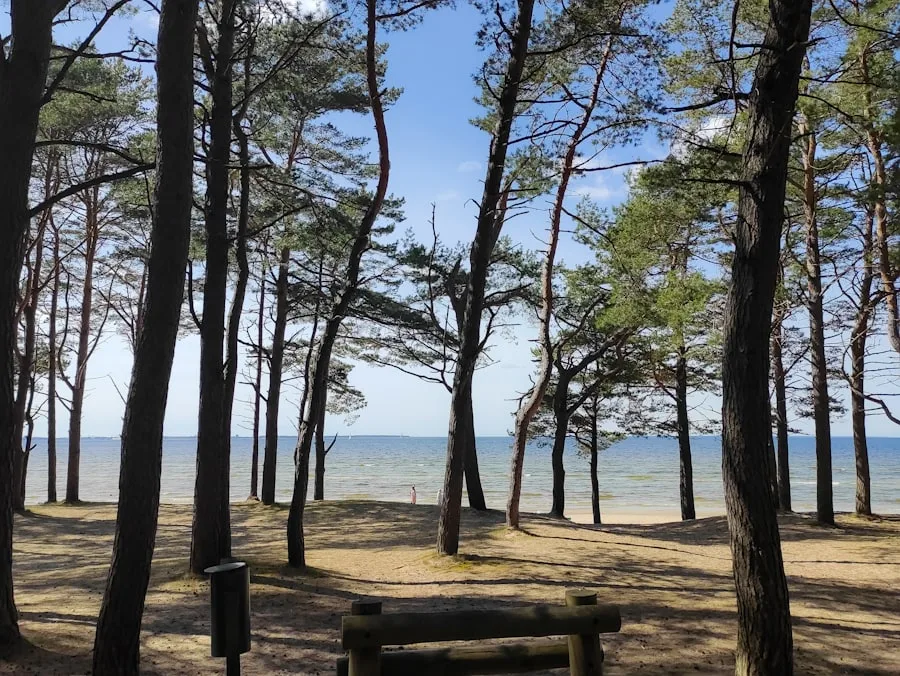
Photo Unsplash
Living in Pirita, Tallinn
Tuba üürile Living in Pirita, Tallinn - otse omanikult, vahendustasuta - Tallinn
The seaside district north-east of the centre. Tallinn's main beach, a Gothic convent ruin, a yacht marina from the 1980 Olympics, and several square kilometres of detached-house Estonian suburbia.
Pirita lies six kilometres north-east of the Old Town along the coast, between Kadriorg and the Viimsi peninsula. The district is built around three things: the two-kilometre sandy Pirita rand - the largest beach in Tallinn - the early fifteenth-century Pirita klooster convent ruins on the south bank of the Pirita river, and the Pirita jahisadam marina built for the sailing events of the 1980 Moscow Olympics. Outside of those landmarks, Pirita is mostly low-density detached houses, terraced villas, pine forest and the Maarjamäe slope down to the sea.
Who lives here
Pirita is the lowest-density district in Tallinn and one of the wealthiest. The dominant household type is "Estonian family in a detached or semi-detached house with a garden and one or two cars". A meaningful share of households commute into the centre five days a week and treat Pirita as a green dormitory; the rest are retirees, returning Estonians with kids, and a small foreign professional layer. Population is about eighteen thousand spread over nineteen square kilometres - for comparison, Kalamaja fits roughly the same number of people into less than a square kilometre. The atmosphere is closer to a coastal suburb than to a Tallinn neighbourhood.
What it's like during the day
Two rhythms. Summer: the beach absorbs the entire district. On a sunny Saturday in July the Pirita rand sees up to thirty thousand visitors, the bike path along Pirita tee is continuous traffic, the convent ruins host wedding photos, and the marina restaurants fill at lunch. Winter: most of that disappears. The beach is empty, the marina freezes, the convent stands quiet, and the residential streets feel rural. Through both seasons, the Pirita SPA hotel, the Tallinn TV Tower (just inland), the Botaanikaaed botanical garden and the Kloostrimetsa health trail through the pine forest stay busy as everyday local destinations.
What it's like in the evening
Mostly silent. Pirita is a residential district and after dark the streets, even on summer weekends, are empty. The marina has two or three restaurants - Lounge 24, NOA Chef's Hall a little south - that draw a Tallinn-wide crowd for dinner with sea views. For drinks and bars people drive or taxi to the centre. The TV tower's viewing platform and restaurant operate late on summer Fridays. In winter the only evening light comes from house windows and the marina lamps.
Getting around
A car helps. Bus 1A, 8, 34A and 38 connect Pirita to the centre along Pirita tee - eighteen to twenty-five minutes to the Old Town depending on traffic. Tallinn's bike network includes the Reidi tee and Pirita tee path the whole way into the centre, which is the fastest non-car commute in good weather. There's no tram and no train. Distances inside the district are large by Tallinn standards - from Maarjamäe to Merivälja is six kilometres - so a bike or car is the practical mode. Parking is plentiful everywhere; this is a district built for cars.
Eating and shopping
A Selver on Rummu tee and a Rimi near Merivälja cover supermarkets. Pirita Selver is the main grocery destination; locals also drive to Viimsi Keskus just across the district boundary. Restaurants are split between marina and a small cluster around the Pirita SPA. The NOA group restaurants on the Maarjamäe cliff are the destination dining for the whole city. For coffee and weekday food the offer is limited - most residents buy at home or in the centre.
When NOT to pick it
If you don't have a car or can't afford regular taxis - Pirita is workable without a car but the district was built for them and you'll feel the friction. If you want street life, bars and walkable density - there is none of that here. If you're single or new to the city and want spontaneous socialising - Pirita is the wrong scale and the wrong demographic. If you rent rather than own - the dominant building type is single-family houses; long-term rentals exist but are fewer and pricier per square metre than the centre. If you're sensitive to seasonality - winter Pirita is a different (and quieter) place than summer Pirita.
Pirita is the right pick if you have a family or want one, value a garden and direct walking access to a Baltic beach, and don't mind that "going out" means a drive or a tram. For a certain stage of life - late thirties, kids, two incomes, a car - it is one of the most comfortable parts of Tallinn to live in. For an early-career arrival in the city or for anyone who wanted urban density when they moved to Estonia, the centre and Kalamaja make far more sense.