
Living in el Fort Pienc, Barcelona
Alquiler de habitación en piso compartido Living in el Fort Pienc, Barcelona - sin agencia - Barcelona
The northeast corner of the Eixample, around the Auditori and the Estació del Nord. Residential, well connected, no tourists.
History and identity
Fort Pienc takes its name from an old nineteenth-century military fortress that dominated the area. When Cerdà's Eixample began swallowing the lands to the north, the fort was dismantled and replaced by the regular grid of blocks that still shapes the neighborhood. For most of the twentieth century Fort Pienc remained a somewhat marginal area, squeezed between the bourgeois Eixample and the industrial neighborhoods of El Clot and Sant Martí.
Over the last twenty years the area has been reshaped by some major interventions: Rafael Moneo's Auditori, the Teatre Nacional, the Estació del Nord turned into the city's main bus terminal, and the renewal of Plaça Fort Pienc with its municipal market and public library. These have become the neighborhood's center of gravity and brought in a new audience - students, cultural workers, families looking for a cheaper Eixample.
What to expect
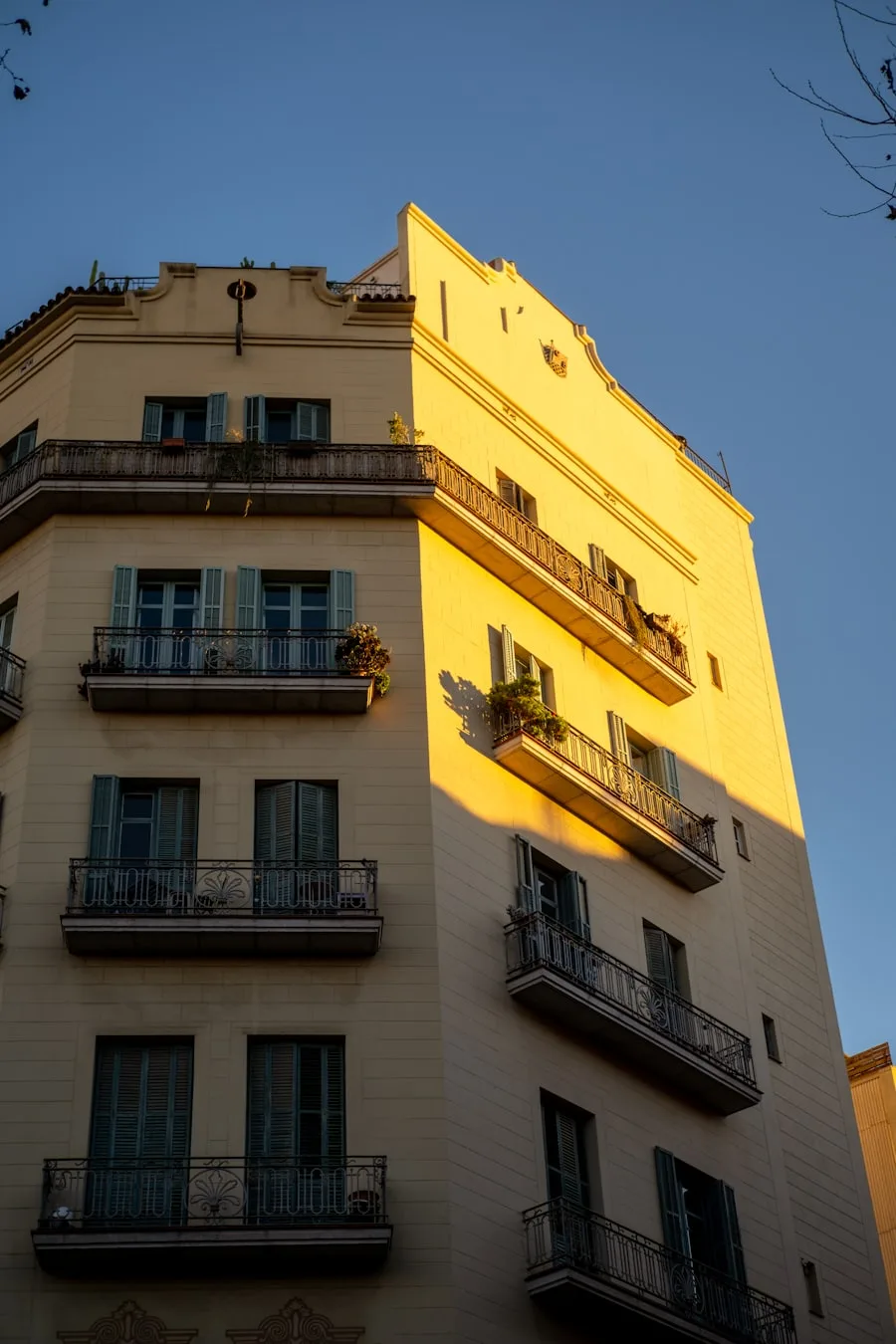
Fort Pienc is one of the quietest neighborhoods in the Eixample. Wide tree-lined streets, modernista buildings mixed with fifties and sixties blocks, little tourist noise. Rents are around the city average - not cheap, but noticeably lower than the Dreta de l'Eixample or Gràcia. The population is mixed: long-time Barcelona residents, professionals working downtown, students from the nearby UPC, and a small Chinese community with shops and restaurants around Plaça Fort Pienc.
The lifestyle is that of a residential neighborhood that works. People do the shopping at the market, take the kids to the park, have coffee at the same bars they have used for twenty years. It's not a neighborhood seeking attention.
Getting around
Three metro stations cover the edges of the barri: Marina (L1) to the east, Arc de Triomf (L1) to the south, Tetuan (L2) and Monumental (L2) to the west. Arc de Triomf is also a Rodalies station (regional trains) and a hub for the airport via the R2. The Estació del Nord is the long-distance bus terminal for national and international routes. 15 minutes on foot to Plaça Catalunya, 10 to the Sagrada Família.
What to do in the neighborhood
The Mercat del Fort Pienc is the daily hub: fresh produce, tapas counters, neighborhood crowd. Next to it, the public library and municipal gym form a busy civic complex. The Auditori hosts the OBC symphonic season and contemporary music concerts; the Teatre Nacional runs Catalan and international programming. The Parc de l'Estació del Nord, sitting on top of the bus station, is one of the most underrated parks in the city - wide lawns, the Beverly Pepper sculptures, room to run. For eating, Carrer Sicília concentrates bistros, Chinese restaurants (Wukong and others), and traditional tapas. The Arc de Triomf with its tree-lined promenade is at the edge of the barri.
Who it's ideal for
For those who want to live in the Eixample without paying Dreta prices and without the tourist noise of the Sagrada Família. It works well for students, young professionals, and couples working downtown. A good choice also for frequent travelers - the Estació del Nord and the Rodalies stop make life easy. Less suited for those after nightlife or a fashionable scene: Fort Pienc is deliberately low-key.