
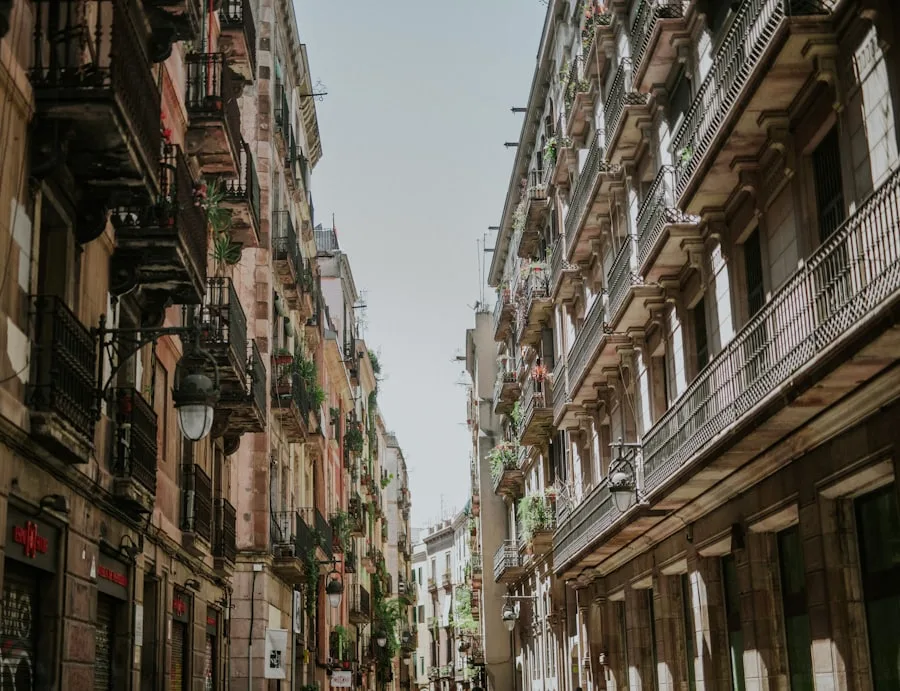
Living in l'Antiga Esquerra de l'Eixample, Barcelona
Alquiler de habitación en piso compartido Living in l'Antiga Esquerra de l'Eixample, Barcelona - sin agencia - Barcelona
The northern half of the "left" Eixample, between Carrer d'Aragó and Diagonal. Bourgeois, comfortable, schools and hospitals next door.
History and identity
L'Antiga Esquerra is the historic and most refined part of the left half of the Eixample. When Cerdà designed his grid in the mid-nineteenth century, the first areas built were those closest to the center: the Dreta to the east, l'Antiga Esquerra to the west. The difference between the two halves of the Esquerra is sharp: the Antiga, from Carrer d'Aragó toward the Diagonal, has the more important modernista buildings, historic schools, the University of Barcelona, the Hospital Clínic. The Nova, from Aragó toward Sants, is more working-class and less ornate.
For most of the twentieth century l'Antiga Esquerra remained a quiet middle- and upper-class neighborhood. Over the last twenty years the area has opened up - more short-term rentals, more international professionals, more contemporary restaurants - but without losing its residential character.
What to expect
This is one of the most desirable Eixample neighborhoods and also one of the most expensive in the city. Well-kept modernista buildings, carved wooden doorways, vintage elevators, wrought-iron balconies. Large apartments, high ceilings, classic period layouts. Rents sit among the highest in Barcelona - comparable to the Dreta. The population is a mix of long-time residents, professionals, doctors and Hospital Clínic staff, well-off university students, and expats with serious spending power.
The lifestyle is that of an Eixample "lived well": coffee at the corner café, shopping at the Mercat del Ninot, dinner out a couple of times a week, weekends out of town. It's not a party scene or a trendy spot - it's simply one of the most pleasant and orderly slices of the city.
Getting around
Covered by several lines. Hospital Clínic (L5) at the center of the barri, Provença (L3, L5) and Diagonal (L3, L5) along the northern edge, Universitat (L1, L2) and Passeig de Gràcia (L2, L3, L4) toward downtown. Buses everywhere. 15 minutes on foot to Plaça Catalunya, 5 to Diagonal. The FGC Provença station runs to Sarrià, Bonanova, and all the way up to Tibidabo.
What to do in the neighborhood
The Mercat del Ninot, renovated a few years ago, is the daily hub for groceries and quick counter lunches. The strip along Carrer Aribau, Enric Granados, Muntaner concentrates many restaurants - from classic Catalan kitchens to contemporary spots. Carrer Enric Granados in particular is a semi-pedestrian street that's lovely to walk. Cines Verdi Park shows films in original version. Casa Macaya, Casa Golferichs and many smaller modernista buildings are scattered through the barri - quieter architecture than the Dreta but just as beautiful. The Hospital Clínic is the city's main teaching hospital.
Who it's ideal for
For those who want to live in the classic Eixample, in an orderly, well-served neighborhood with easy access to the whole center. Works very well for professionals, doctors, university teachers, families with kids (many schools nearby, including international ones). Also good for UB students or those working at the Clínic. Less suited for tight budgets: l'Antiga Esquerra is expensive, and for that price you often find better value in places like Sant Antoni or Poble-sec.