
Living in Dahlem, Berlin
WG-Zimmer Living in Dahlem, Berlin - direkt von privat, ohne Makler - Berlin
Berlin's university quarter par excellence. Home to the Freie Universität, academic villas, museums and the Botanical Garden. Green and culturally dense.
History and identity
Dahlem started as a medieval farming village on Teutonic Order lands. From 1898, Emperor Wilhelm II decided to turn it into a new scientific-residential pole for Berlin, a kind of "Prussian Oxford". Research institutes of the Kaiser-Wilhelm-Gesellschaft (today Max Planck) and villas for the academics were built. In 1948, at the height of the Cold War, the Freie Universität Berlin (FU) was founded here as an alternative to the Humboldt, which had ended up in the Soviet zone. In the 50s-70s Dahlem also hosted the major state museums (Museen Dahlem) before they moved back to the centre after 2000. Today it's a high-end academic and residential neighbourhood, part of the Steglitz-Zehlendorf district.
What to expect
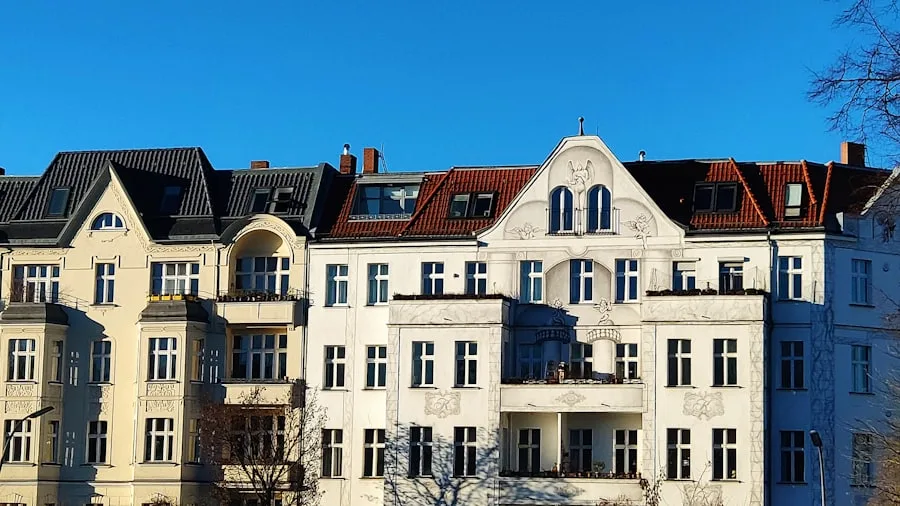
Art-nouveau and rationalist villas, research institutes behind fences, well-kept university campuses, tree-lined avenues. Low density, total calm in the inner streets. The population is mostly linked to the university: faculty, researchers, PhD students (FU has 33,000 students, but many live elsewhere), scientific staff, a few long-standing families. Intellectual, international, but very understated. No tourism, no nightlife.
Transport
U-Bahn U3 (Dahlem-Dorf, Thielplatz, Podbielskiallee, Freie Universität). Buses M11, X11, X83, 110, 285. Mitte reachable in 30 minutes. Cycling is excellent: wide avenues, flat terrain, continuous bike lanes. S-Bahn stations (S1) on the southern edge.
What to do in the neighbourhood
Freie Universität Berlin - open campus, with the Henry-Ford-Bau (1953-54) and the "Brain" (Norman Foster's Philologische Bibliothek). Botanischer Garten und Botanisches Museum, one of the world's largest botanical gardens (43 hectares, 22,000 species) - magnificent in every season, especially the tropical greenhouses in winter. Domäne Dahlem, historic teaching farm with a weekly organic market. Brücke-Museum, dedicated to German expressionists (Kirchner, Heckel, Schmidt-Rottluff). St-Annen-Kirche, a small medieval church (14th c.) reconstructed. Grunewald, forest walkable from here. University cafés around Thielplatz.
Who it's ideal for
PhD students and FU researchers, academics, Max Planck scientists, visiting scholars. Affluent families seeking calm and good schools. Diplomats. Less suited to those wanting daily neighbourhood life, varied restaurants, or nightlife - Dahlem goes to bed early and weekends are nearly empty.