
Living in Gropiusstadt, Berlin
WG-Zimmer Living in Gropiusstadt, Berlin - direkt von privat, ohne Makler - Berlin
Large modernist satellite neighborhood in southern Neukölln, designed on the plans of Walter Gropius: towers, lawns and plenty of greenery, served directly by the U7.
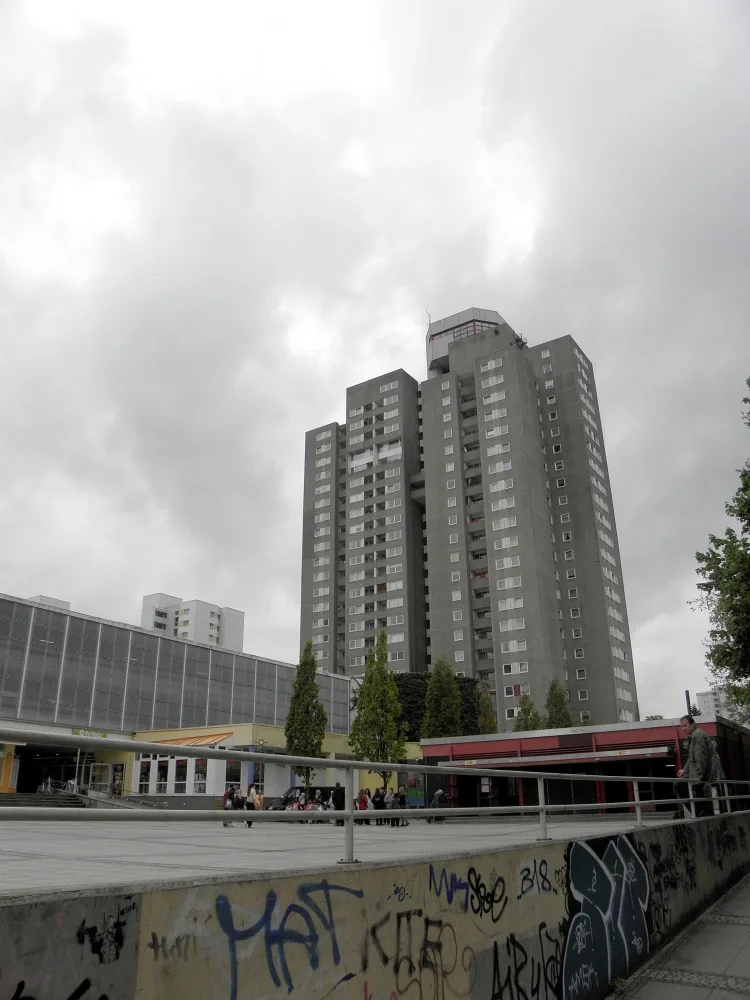
Gropiusstadt is a large Großsiedlung in the south of the Neukölln district, on the border with Brandenburg: towers and tall blocks set in greenery, built between the 1960s and 1970s on the urban designs of Walter Gropius, the founder of the Bauhaus. It's modernist architecture conceived on paper, with open spaces, lawns and pedestrian paths between the buildings. The neighborhood is also famous beyond Berlin for the book and film "Christiane F. - Wir Kinder vom Bahnhof Zoo": the author grew up here in the 1970s. A strong identity and a difficult reputation, but very green and excellently served by the metro.
Who lives here
A working-class, multicultural neighborhood. Families with children, many residents of Turkish and Arab origin, Eastern European communities, elderly people who have lived here for decades and a growing share of those seeking an affordable rent outside the expensive center. Students and young workers are around, but fewer than in the central Kieze. It's a down-to-earth population of everyday life, far from hipster poses.
What it's like during the day
Plenty of greenery and plenty of sky. Between the blocks run lawns, trees and play areas, and the nearby Britzer Garten gives one of the most beautiful parks in southern Berlin. The shopping center is Gropius Passagen, large and covered, where much of the practical life is concentrated. The Ideal-Hochhaus on Fritz-Erler-Allee, almost ninety meters tall, is one of the tallest residential buildings in Germany.
What it's like in the evening
The evening is quiet and residential. No nightlife, no rows of bars: people head home, the neighborhood empties and stays silent. For venues, concerts and nightlife you head toward northern Neukölln or the center, easy by metro. Those after calm find it easily.
Getting around
The backbone is the U-Bahn U7, with four stops inside the neighborhood: Johannisthaler Chaussee, Lipschitzallee, Wutzkyallee and Zwickauer Damm. The U7 connects directly to Hermannplatz and the heart of Neukölln, and continues to Rudow in the south and Rathaus Spandau in the north-west. Several bus lines round out the local connections. Getting to the center requires transfers, but the network is reliable.
Eating and shopping
Shopping is easy and cheap: supermarkets like Rewe, Edeka, Aldi and Lidl, plus the shops of Gropius Passagen. On food the offering is simple and honest, with döner, Turkish and Middle Eastern cuisine, bakeries and the odd neighborhood restaurant. It's not a gastronomic destination, but for everyday it's more than enough.
When NOT to pick it
If you love period buildings and postcard streets: here the aesthetic is that of 1970s towers and concrete, which not everyone likes. If you want nightlife and a cultural scene downstairs, you're far away. And if the neighborhood's reputation makes you uneasy, weigh it calmly: better to visit in person before deciding.
Gropiusstadt is the right pick if you're after plenty of greenery, space, a good metro connection and a more affordable rent, and you're not put off by a modernist neighborhood with a working-class soul and a complicated story to tell.