
Photo Unsplash
Living in Uranus, Bucharest
Închiriez cameră în apartament Living in Uranus, Bucharest - direct de la proprietar - Bucharest
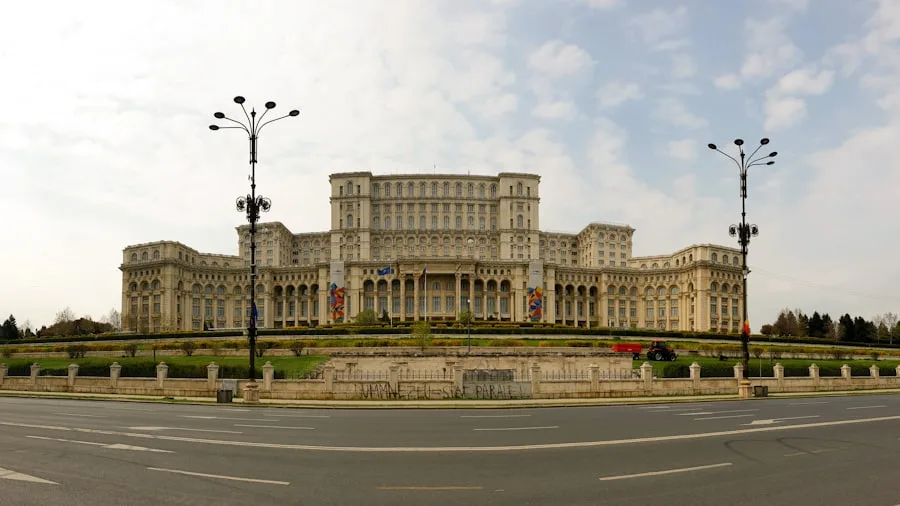
The neighborhood at the immediate foot of the Palace of Parliament - once one of Bucharest's most charming historic quarters, almost entirely demolished and rebuilt in the 1980s. Today a strange, monumental, evolving area.
Uranus - the name comes from the Uranus hill, on which the original neighborhood stood - was once one of Bucharest's most distinctive historic quarters, with narrow winding streets, 19th-century houses and the kind of organic city texture that took centuries to develop. Between 1984 and 1989, the entire neighborhood was demolished to make room for Ceaușescu's Palace of the People (now the Palace of Parliament) and the Centrul Civic. The hill itself was partly leveled. What stands today is essentially a Communist-era invention - large boulevards, monumental buildings, the Palace of Parliament's massive presence - with a small fringe of surviving pre-war fragments at the edges.
Who lives here
A demographic shaped by the unusual setting. Government and ministry staff in the buildings around the Palace, a layer of professionals and expats in the renovated apartments, long-time residents in the smaller surviving pre-war pockets at the edges. The area is not heavily residential; much of the building stock is institutional. International turnover is moderate. Families with very young children are rare - the streets are oversized and the playground infrastructure is limited.
What it's like during the day
Striking and unusual. The Palace of Parliament dominates every view - it's literally the largest administrative building in the world after the Pentagon. The streets are wide, the architecture late-Communist monumental, and walking through the area can feel like crossing a stage set. A few small parks (Parcul Izvor, the gardens around the Palace) provide green space. Tourist foot traffic for the Palace is high during the day; in the surrounding streets, much quieter.
What it's like in the evening
Quiet. The institutional buildings empty out, the boulevards become nearly deserted, and the bar and restaurant scene is essentially zero on the district itself. The Palace lights up impressively after dark - a popular evening walk for residents and visitors. For dining and nightlife, residents walk 15 minutes east into Centru Vechi.
Getting around
Metro M1 and M3 at Izvor sit at the northern edge. Metro M5 at Eroilor is on the western edge. Trams and buses on the surrounding boulevards. The walk to Centru Vechi is 15-20 minutes east. The wide streets make cycling unusually pleasant in summer.
Eating and shopping
Limited. A few mid-range restaurants in the ground floors of the larger buildings, mostly oriented toward office lunch and visitor flow. For broader options, residents walk into Centru Vechi. The Carrefour hypermarket is a short distance west; small Mega Image and Carrefour Express handle daily groceries.
When NOT to pick it
If the weight of the area's history is hard to live with on a daily basis - the demolished neighborhood under the Palace is a difficult layer to ignore. If you can't live with monumental Ceaușescu-era architecture as your daily visual backdrop. If you want a residential neighborhood feel with cafés and shops on every corner. If you want pre-war architecture - almost none survives here.
Uranus is the right pick if you can engage with the area's unusual history, want large central apartments at relatively manageable rents, and value direct metro access on multiple lines. It's a strong option for people who work in or near the ministries clustered around the Palace, and for tenants who specifically want to live inside one of Europe's most distinctive Communist-era urban projects.