
Living in Cologne, Germany
WG-Zimmer Cologne - direkt von privat, ohne Makler
What you need to know if you're moving to Cologne - how Mietverträge and the Kaution work, the Anmeldung within fourteen days, the Steuer-ID and Krankenversicherung, the KVB monthly pass and the Deutschlandticket, and how Ehrenfeld, the Südstadt, the Belgisches Viertel and the more central Veedel really differ from one another.
Cologne (German: Köln) isn't only the cathedral and Kölsch beer. For people actually moving here, it's the fourth-largest city in Germany, a Roman foundation along the Rhine, with a media and insurance industry, a strong music and television scene, the most-celebrated Karneval of the German-speaking world, and a tight cluster of small village-like neighbourhoods locals call Veedel. This guide pulls together what you'll want to know before signing a Mietvertrag, from the Anmeldung to the Deutschlandticket, and the personality of the eighty-six Veedel.
The city in a few sentences
Cologne is Germany's fourth-largest city, capital of the Rhineland in cultural terms (though not in administrative ones - that's Düsseldorf, the rival 40 kilometres downriver, an enduring source of joking and not-joking rivalry). The city has Roman origins: it was founded as Colonia Claudia Ara Agrippinensium in AD 50 by Agrippina the Younger, mother of Nero, and pieces of the Roman wall and the Roman-Germanic Museum are visible today next to the cathedral.
The metropolitan area holds about 3.6 million people. The city sits on both sides of the Rhine: the historic centre (Altstadt, Innenstadt) is on the left bank, while the right bank, around Deutz and Mülheim, was a separate town until the early twentieth century and still feels distinct. The climate is mild oceanic, the wettest of the big German cities - short winters, often grey but rarely snowy; warm but not extreme summers; long mild shoulders in spring and autumn. The Rhine floods every few years and the embankments are designed for it.
Two enduring symbols: the Kölner Dom (cathedral), a 157-metre Gothic mass that took six centuries to finish and now dominates every postcard, and the Karneval, the days-long pre-Lenten festival peaking on Weiberfastnacht and Rosenmontag (Rose Monday), when the entire city wears costumes, parades fill the streets, and the Kölsch glasses don't stop.
The language: German with a strong dialect, plus a lot of English
German is the official language. The Cologne dialect (Kölsch, the same word as the beer) is genuinely distinct - older locals still speak it, younger ones use bits of it. International residents pass in English in inner-city bars, agencies, media offices and universities. With Bürgeramt officials, with older Hausmeister, with the corner Büdchen (kiosk) owner, German is expected. A basic German level makes the Mietvertrag readable and life with the Hausverwaltung much smoother.
Renting a room: how it works
Cologne's rental market is tight, particularly in the central Veedel (Innenstadt, Südstadt, Ehrenfeld, Nippes, Sülz, Lindenthal). WGs (Wohngemeinschaften, shared flats) are common throughout the centre and absorb most of the student housing demand.
The standard contract is the Mietvertrag, normally unbefristet (open-ended) but sometimes befristet (fixed-term with a legal reason). The deposit (Kaution) is capped by law at three months of cold rent (Kaltmiete) and is refundable at the end of the contract if there's no damage. Most landlords accept paying in three monthly instalments.
Listings always distinguish Kaltmiete (cold rent for the room alone) from Warmmiete (cold rent plus Nebenkosten - heating, water, common-area costs). Always check which figure is being quoted. The Mietpreisbremse applies to Cologne in designated areas: new rents cannot exceed the Mietspiegel (local reference index) by more than ten per cent, though enforcement varies.
The Anmeldung: the first step
The Anmeldung is the mandatory registration of your address at a Bürgeramt. It must be done within fourteen days of moving in. It's the foundational document: without it you cannot obtain a Steuer-ID, sign a regular employment contract, open most bank accounts, or join statutory health insurance.
Cologne's Bürgerämter are notoriously busy - slots fill within hours of being released. The appointment itself takes a few minutes; you usually leave with the Meldebescheinigung. The Steuer-ID arrives by post a few days later.
Germany: EU and non-EU
EU passport holders can live and work in Germany without a residence permit; the Anmeldung is enough. From outside the EU, you need an Aufenthaltstitel (residence permit) to stay beyond ninety days, granted by the Ausländerbehörde (in Cologne, the Amt für Ausländische Angelegenheiten). Common categories: qualified employment, the Blaue Karte EU (Blue Card) for salaries above the federal threshold, study, research, Freiberufler (freelance) and the Chancenkarte introduced in 2023 for qualified job seekers.
German bureaucracy is exacting. Every document must be in German or accompanied by a certified translation, and a missing line in a form usually costs you weeks. Prepare the full file before the appointment.
Krankenversicherung: health insurance
Health insurance is legally compulsory. The gesetzliche Krankenversicherung (GKV) is the public system: if you're an employee earning below the federal threshold (around 77,400 € gross per year in 2026), enrolment in a Krankenkasse is mandatory. Main funds: TK, AOK Rheinland/Hamburg, Barmer, DAK. Contributions are roughly fifteen per cent of gross salary, split between employee and employer. Coverage is broad - GP, specialists, hospital, prescriptions, maternity, mental health.
The private Krankenversicherung (PKV) is available for higher earners, freelancers and most non-EU students. EU students can lean on their EHIC during initial months.
Transport: KVB, Stadtbahn, S-Bahn and the Deutschlandticket
Local transport is run by KVB (Kölner Verkehrs-Betriebe) and the regional VRS consortium. The Stadtbahn is a hybrid metro-tram system: underground in the inner city, on the surface in outer districts. There are twelve Stadtbahn lines (1, 3, 4, 5, 7, 9, 12, 13, 15, 16, 17, 18) plus S-Bahn lines for regional travel. The hubs are Hauptbahnhof (next to the cathedral), Neumarkt, Friesenplatz, Rudolfplatz, Deutz/Messe on the right bank.
The KVB monthly pass covers the city, but almost every resident uses the cheaper Deutschlandticket instead - unlimited public transport on all local and regional networks across Germany. Cologne-Bonn airport is connected by S-Bahn S13 from Hauptbahnhof in fifteen minutes. Long-distance ICE trains stop at the Hauptbahnhof beside the cathedral, with Frankfurt one hour away, Brussels two hours, Paris three.
Cycling is popular. The city is flat, the bike network is decent though not yet at Dutch or Danish standards, and the Rhine embankments offer long traffic-free routes.
Working and studying
Cologne is a media and insurance capital. Public broadcaster WDR (Westdeutscher Rundfunk) is the largest of the regional broadcasters and shapes a constellation of production companies, freelance journalists, sound studios and post-production houses. RTL television has its main offices here. Major insurers (DEVK, AXA, Gothaer, Generali) cluster in Köln-Deutz and the Innenstadt. The chemical, automotive (Ford has a huge plant in the north) and biopharma sectors are also present.
The Universität zu Köln is one of Germany's largest, with around 50,000 students. The main campus is in Lindenthal (Albertus-Magnus-Platz). Other higher-education institutions: the Technische Hochschule Köln, the Deutsche Sporthochschule (Germany's main sports university), the Hochschule für Musik und Tanz. Tuition is symbolic for EU citizens - a Sozialbeitrag of around 300 € per semester, including a Semesterticket covering all regional transport.
Daily life: schedules and rhythms
Shop hours follow the German pattern: most supermarkets open until 10 PM, some midnight (Rewe, Edeka). Sundays are closed by law for almost all retail - only stations, bakeries, kiosks (Büdchen) and petrol stations stay open. Cologne's Büdchen are an institution: corner kiosks open late selling beer, snacks, tobacco, postage stamps, and act as local meeting points.
Cologne drinks Kölsch, a light top-fermented beer served in tall thin 0.2-litre glasses (Stange). The Köbes (waiter) keeps refilling automatically until you put your coaster on top of the glass. Don't try to order a Pils without a smile - it's a small ritual joke that doesn't really land.
The food is hearty Rhenish: Himmel un Ääd (potato and apple purée with blood sausage), Halve Hahn (rye roll with Gouda - not chicken), Rievkooche (potato pancakes). Restaurants vary widely; the Brauhäuser (brewery taverns) remain the most distinctive evening venue.
Karneval is the year's main event. The "fifth season" runs nominally from 11 November at 11:11 to Ash Wednesday, but the real festivities concentrate in the tolle Tage (mad days) before Lent: Weiberfastnacht (women's carnival, the Thursday before Lent), the Rosenmontagszug parade on Rose Monday, and Karnevalsdienstag the day after. The whole city wears costumes, drinks Kölsch in the streets, and shouts Alaaf! Be prepared if you're moving in for a winter - your office may shut on these days, your tram may be diverted, and your Veedel may be unrecognisable.
A note on safety: the New Year's Eve incidents of 2015 at the Hauptbahnhof, when groups of men assaulted hundreds of women on the cathedral plaza, were a real and traumatic event. The response since has reinforced police presence on big-event nights, and the city is overall safe. The episode is part of Cologne's recent history, and the discussion about integration, gender violence and public space that followed it is still alive.
The neighborhoods (Veedel)
Cologne is divided into nine boroughs (Stadtbezirke) and eighty-six statistical districts (Stadtteile), but locally what matters is the Veedel - the Kölsch word for a neighbourhood, a near-village inside the city. Each Veedel has a strong identity, its own pubs, its own Karneval group (Karnevalsgesellschaft) and its own loyalty.
There's media-rich Ehrenfeld with its converted factories, family-rich Nippes with the weekly market, the right-bank Deutz with the trade fair and the Messe-side towers, working-class Kalk east of the river, riverside Poll further south, gritty Vingst, the long Südstadt with its café culture, expat-rich Riehl near the zoo, leafy Neuehrenfeld, and the inner-city Viertel - the Andreasviertel, the Martinsviertel, the Ursulaviertel, the Kunibertsviertel and the Kapitolviertel - each named after a Romanesque church and each occupying a few blocks. Bourgeois Lindenthal holds the university and the Stadtwald city forest; the Humboldt-Gremberg eastern stretch is residential and working-class.
The neighborhood guides below go into detail: who lives there, what days and evenings are like, what's within Stadtbahn reach, and when you might want to pick somewhere else.
Areas in Cologne
Each area has its own character. Read the guides to choose the right one for you.

Altstadt-Nord
A compact inner-city Viertel of Cologne between the Hauptbahnhof and the Komödienstraße - Romanesque Sankt Andreas church, post-war reconstruction, central Innenstadt-Nord position and a small but real residential population.

Altstadt-Süd
Cologne's most beloved Veedel south of the centre - Severinstraße and Bonner Straße cafés, Chlodwigplatz, the Severinstorburg medieval gate, the Volksgarten, Wilhelminian Altbau and a strong café culture.

Bayenthal
A dense former industrial Veedel in the Rodenkirchen district, between the Südstadt and Marienburg - Goltsteinstraße as the high street, tram lines 16 and 17 and a fifteen-minute ride to the Neumarkt.

Bickendorf
A working-class Veedel in the Ehrenfeld district, beyond Ehrenfeld itself - 1920s social housing, the Rosenhof estate, the Venloer Straße, lines 3 and 4 and some of the lowest inner-belt rents in Cologne.

Braunsfeld
A compact working and residential Veedel in the Lindenthal district, west of the Gürtel - Aachener Straße as the spine, Stadtbahn line 1 through the middle and Melaten cemetery just across the ring road.

Buchforst
A small right-bank Stadtteil in the Mülheim district - the listed Blauer Hof and Weiße Stadt estates, an S-Bahn station on lines S6 and S11, Stadtbahn line 3 and low rents for the connection.

Deutz
Cologne's right-bank district facing the cathedral - the Koelnmesse trade fair, the Lanxess Arena, the Hyatt Regency on the Rhine, the Deutz/Messe station, plus a small but real residential pocket inside it.
Ehrenfeld
Cologne's media and creative Veedel west of the centre - Venloer Straße spine, converted factories, music studios, multicultural population and an Altbau stock under steady gentrification pressure.
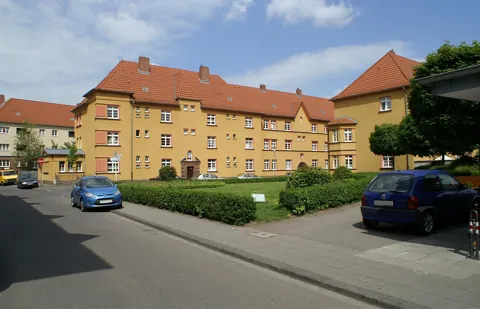
Höhenberg
A right-bank Stadtteil in the Kalk district - the 1920s Germaniasiedlung, the Sportpark with Viktoria Köln's stadium, Stadtbahn line 1 to the centre in about a quarter of an hour, and some of the lowest rents in Cologne.

Humboldt/Gremberg
Cologne's quiet right-bank district east of Kalk, part of the Humboldt/Gremberg-Gremberg statistical Stadtteil - post-war and reform-era apartment buildings, multicultural population, affordable rents and Stadtbahn line 1 to Deutz/Messe in five minutes.

Kalk
Cologne's right-bank working-class district transforming around the Kalker Hauptstraße - the Köln-Arcaden mall, a TH Köln campus (with the engineering Campus Deutz one stop west), working-class Turkish and Balkan communities, and rents still well below the left bank.

Klettenberg
A small planned residential Veedel in the Lindenthal district, south of Sülz - early 1900s houses, the Klettenbergpark, line 18 on Luxemburger Straße and about two kilometres to the university.

Lindenthal
Cologne's bourgeois western district - Universität zu Köln main campus, the Stadtwald city forest, the Decksteiner Weiher lake, Wilhelminian and 1920s villas, the Dürener Straße spine and one of the most established residential addresses in town.
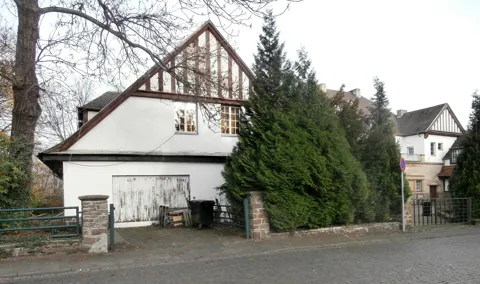
Marienburg
Cologne's villa quarter on the Rhine in the Rodenkirchen district - Gründerzeit and Jugendstil mansions, the Südpark, tram lines 16 and 17 along the river, and one of the smallest rental markets in the city.

Neuehrenfeld
Cologne's quieter residential sister to Ehrenfeld - leafy streets, the Lenauplatz market, Wilhelminian Altbau, a family-rich rhythm and a moderate gentrification path.
Neustadt-Nord
The northern half of Cologne's Wilhelminian belt in the Innenstadt district - Belgisches Viertel, Agnesviertel, Mediapark, walking distance to the centre, and some of the highest rents in the city.
Neustadt-Süd
Cologne's student-heavy inner belt in the Innenstadt district - Kwartier Latäng, Zülpicher Straße, the Volksgarten, twelve Stadtbahn lines within reach and the highest population density in the city.

Nippes
A family-rich Veedel north of the centre - Wilhelmplatz market, Neusser Straße spine, Wilhelminian Altbau on quiet streets, Nippes Stadtbahn hub, and one of the strongest neighbourhood identities in Cologne.

Poll
A quiet right-bank district south of Deutz - small village core around the Poller Kirchweg, Rhine embankment with Pollerwiesen meadow, lower rents than the left bank and good Stadtbahn link to Severinsbrücke.
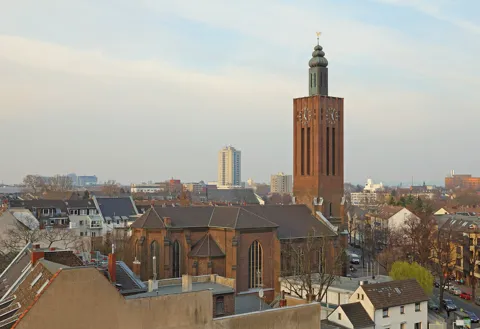
Raderberg
A small, dense, quiet Stadtteil in the Rodenkirchen district, south of the Südstadt - the Vorgebirgspark on one side, Bonner Straße on the other, and buses rather than trams inside the boundaries.

Rathenauviertel
The Veedel around Rathenauplatz inside Neustadt-Süd - the core of the Kwartier Latäng, small theatres, dense Altbau, four Stadtbahn stops on the rim and noise as a permanent condition.

Riehl
Cologne's quiet northern district between Nippes and the Rhine - the Kölner Zoo, the Flora botanic garden, the Rheinpark on the riverside, leafy residential streets and good Stadtbahn access to the centre.

Sülz
The student and young-professional Veedel in the Lindenthal district - next to the university campus, three Stadtbahn lines, the Beethovenpark and a proper local high street on Sülzburgstraße.

Vingst
Cologne's eastern working-class district - Höhenberg-Vingst Stadtbahn corridor, post-war social housing estates, low-rise apartment blocks, a multicultural population and rents well below the left bank.