

Photo Unsplash
Living in Hamburg, Germany
WG-Zimmer Hamburg - direkt von privat, ohne Makler
What you need to know if you're moving to Hamburg - how Hanseatic-flavoured German rental contracts and the Kaution work, the Anmeldung within fourteen days, the HVV ProfiCard or the Deutschlandticket, and how Sternschanze, Eimsbüttel, HafenCity and the rest of the Stadtteile feel different from each other.
Hamburg isn't only the Hafen and the Reeperbahn. For people actually moving here, it's a city where Hanseatic-flavoured German bureaucracy is precise and understated, where the rental market has tightened sharply, and where the Stadtteil you pick can shape whether your days feel like a port-and-trade hub, a media-and-startup capital, or a leafy Hamburg-bourgeois neighborhood. This guide pulls together what you'll want to know before signing a Mietvertrag, from the Anmeldung to the HVV ProfiCard, and the personality of Hamburg's most-asked-for central neighborhoods.
The city in a few sentences
Hamburg is Germany's second-largest city by population, with around 1.91 million inside the city-state boundary (Hamburg is one of Germany's three city-states or Stadtstaaten, alongside Berlin and Bremen) and roughly 5.4 million in the wider metropolitan area. It sits on the Elbe river in the north of Germany, about 100 km from the North Sea coast, with the Elbe flowing through the city as a tidal estuary. Hamburg is Germany's most important port and one of the largest in Europe - the Hamburger Hafen is visible across most of the city skyline, and the port economy still shapes the city's character. Beyond shipping and logistics, Hamburg is the headquarters of major media houses (Der Spiegel, Die Zeit, Gruner + Jahr publishing, Axel Springer's northern operations, NDR the regional public broadcaster), aerospace (Airbus has its second-largest plant here, at Finkenwerder across the Elbe), aviation, banking and insurance, and one of Germany's strongest tech and startup ecosystems.
The climate is maritime and famously wet. The North Sea proximity keeps winters mild (rarely below freezing) and summers cool (rarely above 25 °C), with persistent moderate rainfall year-round and persistent low cloud cover. Hamburg averages around 770 mm of rainfall annually, spread evenly. Spring is short and beautiful; autumn is grey but pleasant. The Föhn wind that affects southern Germany doesn't reach this far north. Newcomers from southern Europe often describe the climate as "constantly mild and constantly drizzly."
The language
German is the official language. Northern German is spoken with the Hanseatic accent - flatter, more measured, less inflected than Bavarian, with the moin greeting (the all-purpose Hanseatic hello, used morning to evening) as a regional marker. Older residents in the working-class quarters of Wilhelmsburg, Veddel and parts of St. Pauli speak some Hamborger Platt (Low German dialect), now rare among the younger generations. English passes very high in Hamburg - among the highest in Germany after Berlin. The international media and shipping sectors operate substantially in English, the universities run dozens of English-language master's programmes, and the substantial expat community in the central neighborhoods makes English service genuinely common.
For bureaucracy and daily life, German still matters. The Bürgeramt, the Hausarzt's surgery, the Hausmeister, the Hausverwaltung default to German. Affordable German courses run at the Hamburger Volkshochschule (VHS) network, at the Goethe-Institut Hamburg, and at every university's language centre.
Renting a room
Hamburg has one of the tightest rental markets in Germany - comparable to Munich and Berlin. Demand outstrips supply, prices have risen sharply over the past decade, and the September student rush plus the consistent inflow of media and corporate professionals from across Germany and abroad tighten things further. Real-estate agencies (Maklerinnen) handle a substantial share, with the Bestellerprinzip limiting tenant-side commission.
The standard residential contract is the Mietvertrag, regulated by the federal Bürgerliches Gesetzbuch. Most contracts are unbefristet (open-ended), occasionally befristet (fixed-term, with legal justification). For rooms in shared flats the Untermietvertrag (sublease) is standard. The Kaution is regulated by law: maximum three months of rent net of utilities (the Kaltmiete), must be held in a separate interest-bearing account, refundable at the end less documented damage.
Always check whether listings quote Kaltmiete (cold rent - just for the apartment) or Warmmiete (warm rent - including Nebenkosten, the utility and service charges). The Mietspiegel (the official reference index of average local rents) sets the legal benchmark; the Mietpreisbremse (rent brake) applies to Hamburg and caps new contracts at 10% above the local Mietspiegel in designated areas. The law has practical workarounds but is real.
Documents: Anmeldung, Steuer-ID, residence
The Anmeldung is the mandatory registration of your residence at Hamburg's Bürgeramt (also called Kundenzentrum in some districts). It must be done within fourteen days of arrival. For the appointment you need a Wohnungsgeberbestätigung (signed by the landlord), passport and the Anmeldung form. Without an Anmeldung you cannot get a Steuer-ID, cannot open a traditional bank account, cannot sign an employment contract, and cannot enrol in public health insurance.
The Steuer-ID is issued automatically by Bundeszentralamt für Steuern a few days after the Anmeldung and arrives by mail. The Sozialversicherungsausweis follows when you start work.
Germany: what changes if you're EU or non-EU
EU, EEA and Swiss citizens can move to Hamburg without any visa. The Anmeldung alone is sufficient. After three months you're a full resident with all rights to work, study, healthcare and social systems.
Non-EU citizens need a residence permit (Aufenthaltstitel) from the Ausländerbehörde in Hamburg, applied for through the German consulate before arrival. The most common types are the Aufenthaltserlaubnis zum Zweck der Erwerbstätigkeit (employment), the EU Blue Card (highly skilled workers above an income threshold), the Aufenthaltserlaubnis zum Studium (study), the Chancenkarte (qualified-job-seeker permit, new in 2024), and the Aufenthaltserlaubnis für selbständige Tätigkeit (self-employed). Hamburg's Ausländerbehörde has a reputation for being marginally faster than Berlin's but still slow by international standards - six months or more for many permits is normal.
Healthcare: gesetzliche Krankenversicherung
In Germany, health insurance is legally mandatory. You have two options.
The gesetzliche Krankenversicherung (GKV) is the public system. If you're an employee with gross annual salary below the Versicherungspflichtgrenze (around 73,800 € in 2025), you're required to enrol. The main public funds are TK (Techniker Krankenkasse, headquartered in Hamburg and the largest fund), Barmer, AOK Nordwest, DAK Gesundheit (also headquartered in Hamburg). Contributions are about 14.6% plus a small Zusatzbeitrag, half paid by the employer. The GKV card (Versichertenkarte) gives access to GP, specialists, hospital, prescriptions, maternity, mental health.
The private Krankenversicherung (PKV) is private, available to those above the income threshold, civil servants, freelancers, and non-EU students. For most non-EU students arriving without a job, a PKV (or studentische Krankenversicherung) is required for visa purposes. For EU students the EHIC covers basic care during the first months.
Transport: HVV, the ProfiCard and the Deutschlandticket
Hamburg's public transport is run by the HVV (Hamburger Verkehrsverbund) - a regional transport association coordinating the U-Bahn (run by Hochbahn), the S-Bahn (run by Deutsche Bahn), the AKN regional rail, the bus network (run by Hochbahn buses and VHH), and the Hafenfähren (port ferries, included in the HVV ticket system) including the famous Line 62 from Landungsbrücken to Finkenwerder across the Elbe - one of the most scenic public-transport rides in Europe and an everyday commute for Airbus workers.
The network includes four U-Bahn lines (U1, U2, U3, U4), the S-Bahn lines (S1, S2, S3 and S5, plus the peak-hour S7, after the December 2023 renumbering that retired the old S11/S21/S31 designations), the AKN suburban rail, dozens of bus routes including the Metrobus high-frequency lines, and the harbour ferries. Fares run from the central HVV zone AB (zones A and B, covering most of Hamburg) outward to zones up to F covering the wider region. A single ticket within zones A and B covers most of the city. The monthly HVV-Karte for AB zones is the standard commuter option. The ProfiCard is the employer-subsidised monthly pass - most Hamburg employers offer it as a benefit, at a clearly lower rate to the employee, and it covers the same network as the standard monthly pass.
For most newcomers without ProfiCard access, the Deutschlandticket is now the standard - a monthly pass at 63 € (since January 2026; it was 58 € in 2025) covering all local and regional public transport in all of Germany, including Hamburg's HVV network. The Deutschlandticket is subscription-based (cancellable monthly).
Cycling is heavily used. Hamburg's bike infrastructure is among Germany's best - dedicated lanes along most major axes, the StadtRAD Hamburg docked bike-share covering the central districts, and the topography (gently rolling, with one significant climb up the Geesthang ridge running west-east) doesn't punish the legs. In winter the rain limits usage but the lanes are maintained.
Hamburg Airport is reachable in 25 minutes from the central station via the S1 line.
Working and studying
Hamburg's economy clusters around several major sectors. Shipping and logistics - the Hamburger Hafen is among Europe's largest container ports, with the Hapag-Lloyd and Hamburg Süd shipping lines headquartered here, plus the broader logistics industry. Media - Der Spiegel, Die Zeit, Gruner + Jahr (the magazine publisher), Axel Springer's northern operations, NDR (the regional public broadcaster covering northern Germany), and a long tail of advertising and media agencies. Aerospace - Airbus has its second-largest plant globally at Finkenwerder, employing around 17,000 people across all the Hamburg sites, plus the aerospace supply chain. Banking and insurance - HSH Nordbank's successor Hamburg Commercial Bank, Signal Iduna, plus the broader Hanseatic banking tradition. Tech and startups - clustered around the Karoviertel, the Schanze, Altona and the recently-developed Stadtteile with several major scaleups (Xing/New Work SE, Tipico, mytaxi/FreeNow).
University tuition for public universities is essentially free for EU students (around 350 € per semester for Semesterbeitrag, which includes the Semesterticket for transport). Non-EU students pay between 3,000 and 5,000 € a year at most public universities. The main institutions are the Universität Hamburg (the largest university in northern Germany, in Rotherbaum), the Technische Universität Hamburg (TUHH, in Harburg south of the Elbe), the HafenCity Universität (urbanism and architecture, in HafenCity), the HAW Hamburg (university of applied sciences), the Hochschule für bildende Künste (HFBK), and the Hochschule für Musik und Theater Hamburg.
Daily life: schedules, the harbour, and Hanseatic reserve
Hamburg runs on traditional German hours. Lunch is around noon to 1 PM. Dinner is at 7 to 8 PM. Restaurants close kitchens around 10 PM; bars stay open until 2 AM most nights, with clubs in St. Pauli and the Schanze running until 5 or 6 AM at weekends.
Sundays are quiet. Almost all shops close - supermarkets, bakeries (which open briefly in the morning), and most service businesses. Only restaurants, cafés, museums, the Tankstellen (petrol stations, with a small grocery range), and the famous Fischmarkt (Sunday morning fish market at Altona, running 5 AM to 9:30 AM in summer, 7 AM to 9:30 AM in winter) remain open. The traditional Sunday is brunch followed by a walk along the Elbe at Övelgönne or the Alster lakes (the central freshwater lake the city is built around - Binnenalster in the centre, Außenalster outside, with a 7-km walking path around).
Hamburg's character is famously hanseatisch - measured, understated, professionally polite, slow to open socially. The Hanseatic merchant tradition lives on in a particular form of reserved courtesy: punctuality, understatement, suspicion of theatrical emotion, and a long road to genuine friendship. Newcomers often describe the social texture as "cold and friendly" - different from the warmer south of Germany, different again from Berlin's anything-goes openness. The compensation is the city's high quality of life: green space, water, well-organised public services, excellent schools.
The Reeperbahn - the famous red-light district running through St. Pauli - is a Hamburg specificity. It mixes legal sex work (with regulated brothels and the Herbertstraße zone), tourist bars, clubs, the Beatles-Platz (where the Beatles played the early Hamburg residencies that shaped them), and the wider St. Pauli neighborhood. The Reeperbahn is integral to Hamburg's identity and well-managed; newcomers can choose to embrace it, ignore it, or avoid the central blocks at night.
The neighborhoods
The fifteen profiles below cover the central Stadtteile most newcomers consider. From the new-build waterfront of HafenCity and the office-density of Hammerbrook, to the multicultural St. Georg and the high-end Neustadt; from the residential Hohenfelde and the post-industrial Rothenburgsort, to the bourgeois-academic Rotherbaum and the family-rich Borgfelde; from the leafy Uhlenhorst on the Alster and the multicultural Veddel, to the elegant Harvestehude and the bohemian Sternschanze; and across to the working-class Steinwerder, the family Hamm and the residential Eilbek.
Each guide below covers who lives there, what days are like, what evenings look like, transport, food and groceries, and where the neighborhood doesn't fit.
Areas in Hamburg
Each area has its own character. Read the guides to choose the right one for you.
Altona-Altstadt
The core of the old city of Altona. Mixed, unpolished, cheaper than Ottensen, Elbe at the bottom of the hill.
Altona-Nord
Around Hamburg-Altona station. Young, mixed, cheaper than Ottensen, superb transport, heavy through traffic.
Bahrenfeld
Dense blocks next to Ottensen, industry in the middle, DESY and the Volkspark in the west. The half matters.
Barmbek-Süd
Southern third of old Barmbek. Canals on three sides, three U3 stations, rents that still work for room seekers.
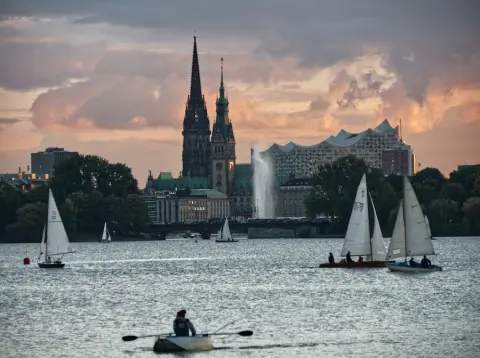
Borgfelde
East-central residential Hamburg. Gründerzeit apartments, quiet rhythm, well-priced just outside the centre.
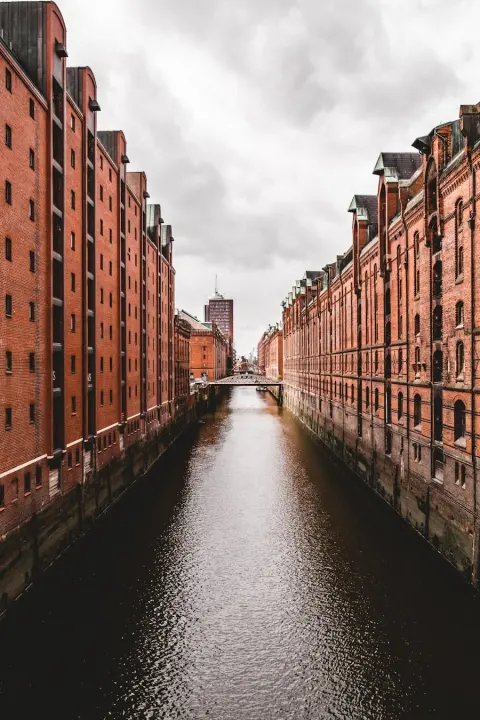
Eilbek
Family-friendly east-side Hamburg. Tree-lined streets, Eilbektal park, settled middle-class community.
Eimsbüttel
Dense Gründerzeit district on the U2 west of the university. Tree-lined streets, everyday shops, quiet blocks, high demand.
Eppendorf
Hamburg's oldest village, now one of its smartest addresses. Alster, university hospital, and no station in the west.
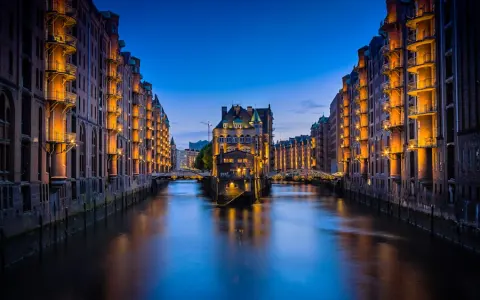
HafenCity
Hamburg's signature new urban district. Elbphilharmonie, Speicherstadt, young professional community, polished waterfront.
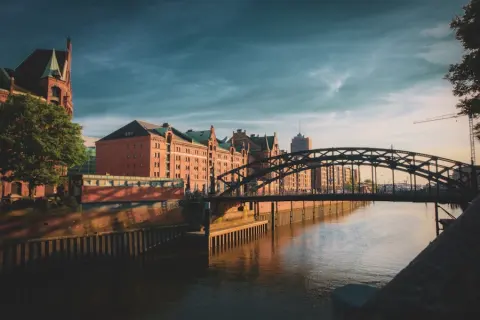
Hamm
Residential east-central Hamburg. Post-war rebuilding, family streets, three sub-Stadtteile, modest gentrification.

Hammerbrook
South-east office district. Office and warehouse density by day, thin residential life, growing apartment conversions.
Harburg
Old city south of the Elbe, with the technical university, its own centre and the lowest rents in Hamburg.
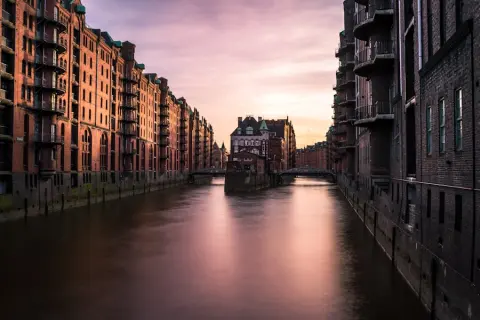
Harvestehude
Hamburg's most elegant Stadtteil. Außenalster west shore, villas, NDR studios, most expensive residential addresses.
Hoheluft-West
Hamburg's densest Stadtteil. Intact Gründerzeit blocks, no rail station of its own, a bus every few minutes.

Hohenfelde
East-side residential Hamburg. Außenalster proximity, tree-lined streets, settled middle-class community.
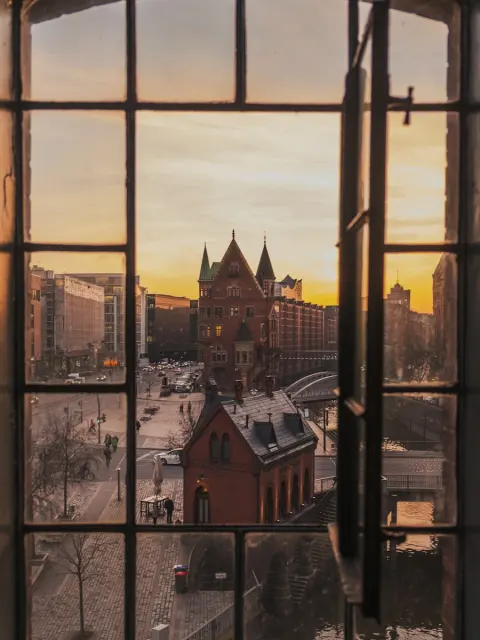
Neustadt
Hamburg's historic new town. Premium central residential and commercial density, Großneumarkt, Portuguese Quarter.
Ottensen
Old factory town west of Altona station. Converted works, courtyards, small shops, families, Elbe nearby.
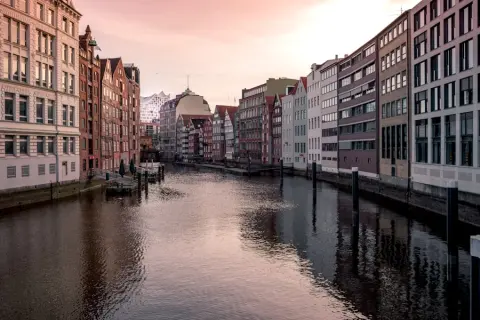
Rothenburgsort
South-east post-industrial Hamburg. Working-class history, river-bank industry, slow regeneration.
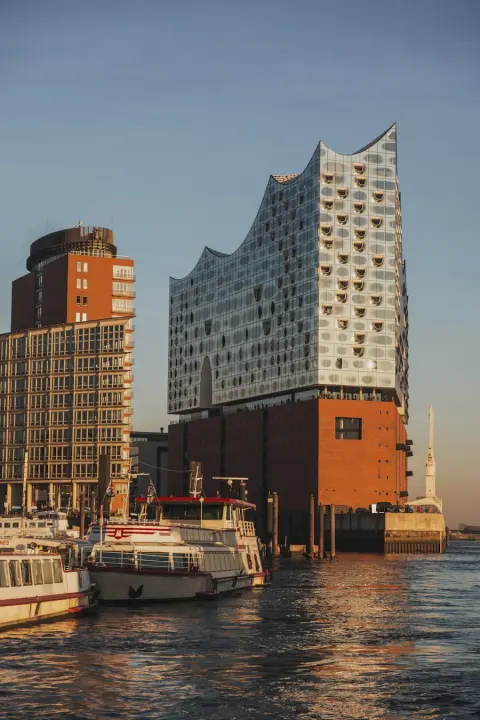
Rotherbaum
Bourgeois-and-university Hamburg. Universität Hamburg, Außenalster proximity, Gründerzeit villas, settled community.
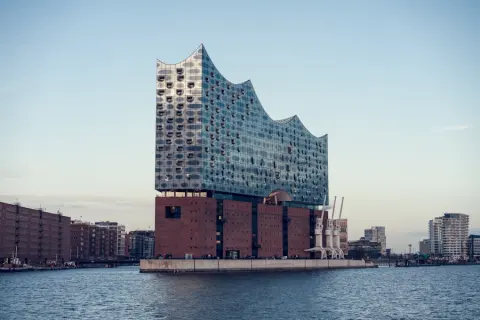
St. Georg
Central multicultural Hamburg. LGBTQ-friendly, Lange Reihe restaurant strip, dense diverse community.
St. Pauli
The Kiez between the Reeperbahn and the harbour. Young, loud, mixed, and the block decides whether you sleep.

Steinwerder
South-bank port-and-dock Hamburg. Container terminals, shipyards, very limited residential population.

Sternschanze
Bohemian Hamburg. Rote Flora, Schanzenstraße aperitivo strip, young creative community, gentrification tension.
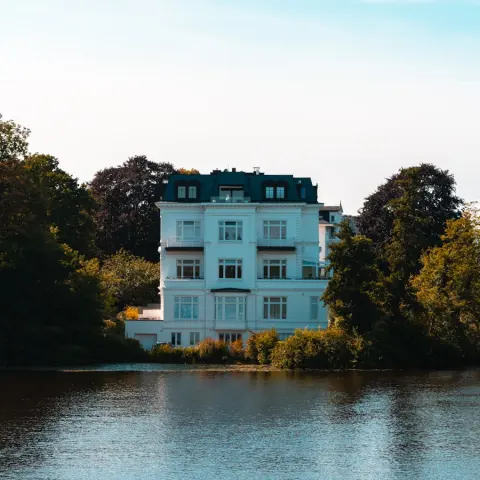
Uhlenhorst
Elegant Außenalster east shore. Villas, sailing clubs, Gründerzeit apartments, settled bourgeois community.

Veddel
South-side Elbe island. Working-class history, immigration heritage, BallinStadt museum, diverse and undiscovered.
Wilhelmsburg
The Elbe island. Largest Stadtteil by area, most mixed population in the city, cheapest rooms near the centre.
Winterhude
Between the Alster and the Stadtpark. Villas, 1920s brick estates, an office city and new blocks in the east.