

Photo: Velvet, CC BY-SA 4.0, Wikimedia Commons
Living in Lille, France
Colocation Lille - chambre à louer entre particuliers, sans agence
What you need to know if you're moving to Lille - how French rental contracts work, the caution and the dossier, registering with CPAM for healthcare, the Ilévia monthly pass, and how Vieux-Lille, Wazemmes, the Centre and the outer quartiers differ from one another.
Lille is not just the braderie, the Beffroi and the frites. For people actually moving here, it's a Franco-Flemish border city where rental dossiers are demanding, where the préfecture takes months for non-EU residence permits, and where the quartier you choose - cobbled Vieux-Lille, market-loud Wazemmes, redbrick Fives, residential Lomme - completely shapes daily life. This guide pulls together what you'll want to know before signing a bail, from the caution to the Ilévia monthly pass, and the personality of each quartier.
The city in a few sentences
Lille is the préfecture of the Nord department and the capital of the Hauts-de-France region, with roughly 240,000 people inside the municipal boundary and around 1.1 million in the wider Métropole Européenne de Lille (MEL). The city sits on the Deûle, a tributary of the Lys, about 14 kilometres from the Belgian border. Tourcoing and Roubaix to the north-east, plus the associated communes of Villeneuve-d'Ascq, Lambersart, Marcq-en-Barœul and many smaller towns, form a continuous urban area that crosses into Belgium at Mouscron and Comines.
The historical heart - the Vieille Bourse, the Grand Place, the Beffroi of the Hôtel de Ville (a UNESCO World Heritage Site since 2005), and the labyrinth of cobbled streets in Vieux-Lille - reflects a Flemish past that ended only in 1667 when Louis XIV's armies took the city. The Flemish brickwork, stepped gables and ornate facades stand alongside French classical buildings, with the Citadelle by Vauban anchoring the north-west edge of the centre and the Gare Lille-Flandres and Gare Lille-Europe stations marking the eastern boundary.
The climate is oceanic and famously grey. Winters are mild and wet, summers cool with occasional warm spells, and the bruine (drizzle) is a year-round companion. Ch'ti humour treats the weather as a regional running joke. Snow is rare and rarely sticks.
The language
French is the official language and dominant in daily life. Picard - the local Romance language, often called ch'ti in popular use - survives mainly in cultural festivals, song and family conversation among older speakers, less so on the street. The film Bienvenue chez les Ch'tis brought ch'ti expressions into the national consciousness; a handful of words (biloute, un ch'ti coup d'main) are used affectionately by locals. Dutch and Flemish are understood at the Belgian border but rarely needed inside Lille. English is increasingly accepted in central restaurants, the university quarters and the Euralille business district, but the administration - the préfecture, the CAF, the CPAM, EDF, your future landlord - operates in French and expects French.
French is harder to start with than Spanish or Italian for English speakers, but Lille has several language schools, the Alliance Française, and university-affiliated programmes. Even broken French transforms daily interactions - with the gardienne of your building, at the boulangerie, in the estaminet.
Renting a room: how it works
Lille's rental market is tighter than its mid-sized French peers thanks to the student population - around 110,000 students across the Université de Lille and the grandes écoles - and the cross-border commuter pressure from Belgium. The centre (Vieux-Lille, Lille-Centre, Wazemmes, Vauban-Esquermes) is competitive and rooms in shared flats - colocations - circulate within days during the September student rush. The outer quartiers (Lomme, Hellemmes, Lille-Sud, Faubourg de Béthune) have more availability and longer listings.
The standard residential contract is the bail d'habitation, regulated by the Loi du 6 juillet 1989. The minimum term is three years if the landlord is an individual, six if a société civile immobilière (SCI), but the tenant can leave at any time with one month's notice in a designated zone tendue - Lille qualifies. Rooms in colocations can use either a single bail solidaire shared between flatmates, or individual baux - the latter is usually preferable for short-to-medium-term stays and for students rotating through the city.
The caution (security deposit) is regulated: one month's rent net of utilities for unfurnished places, two months for furnished. It is held by the landlord and refunded within one to two months at the end of the contract if there is no damage. Beyond the caution, landlords usually require a garant - a guarantor, typically a parent or close relative - with French income and tax documents. For students and young workers without a French guarantor, the state-backed Visale scheme acts as a free guarantor and is widely accepted by Lille landlords, including the student housing operator CROUS Lille.
Most listings expect a complete dossier with payslips covering three times the rent, the last three months of bank statements, an employment contract, the previous tenancy reference, and the guarantor's complete dossier on top. Arrive prepared. CROUS rooms in student residences are the cheapest route for enrolled students; applications open in spring through the Dossier social étudiant.
Documents: numéro fiscal, attestation de résidence
Two documents matter early. The first is the numéro fiscal - the thirteen-digit tax identifier issued automatically after your first French income tax declaration (due each May for the previous calendar year). It is required for almost everything official: the compte ameli for healthcare, the CAF (housing benefit), the taxe d'habitation lookup, opening some bank accounts. The first declaration is done online at impots.gouv.fr once you have an address and a provisional or permanent INSEE numéro de Sécurité Sociale.
The second is the attestation de domicile - proof of residence. There is no equivalent to the German Anmeldung or the Spanish empadronamiento: you build proof out of bills (EDF, internet) and the rental contract. Many administrative procedures require an attestation d'hébergement signed by the hébergeur (the person hosting you), with a copy of their ID and proof of their address.
France: what changes if you're EU or not
EU, EEA and Swiss citizens can move to France without any visa. There is no compulsory registration with the préfecture - your carte d'identité or passport is enough to live, work and rent. You will, however, need to register with the Sécurité Sociale, and if you want to drive long-term you'll eventually exchange or pass a French licence. Cross-border workers commuting daily to Belgium maintain a particular status, the travailleur frontalier, with its own tax and social-security rules under the Franco-Belgian bilateral framework.
Non-EU citizens need a visa applied for at the French consulate in their country of origin. The most common routes are the visa de long séjour valant titre de séjour (VLS-TS) for students, salaried workers, passeport talent for skilled workers, and the carte de séjour pluriannuelle. Once in France you have three months to validate the VLS-TS online at the Office français de l'immigration et de l'intégration (OFII) portal. Subsequent renewals are done at the Préfecture du Nord in central Lille, which - as in most French préfectures - runs slow and demands appointments booked weeks ahead.
Bureaucracy is precise but slow. Bring originals, photocopies, and ideally traductions assermentées (sworn translations) for any non-French civil status certificates.
Healthcare: CPAM and the carte vitale
France has universal public healthcare through the Sécurité Sociale, managed by the Caisse Primaire d'Assurance Maladie (CPAM) in each department. In Lille the relevant office is the CPAM du Nord. Coverage is comprehensive: GP, specialists, hospital, emergency, prescriptions, maternity, mental health. The CHU de Lille - one of the largest teaching hospital complexes in northern Europe - sits on the southern edge of the centre and anchors the regional medical network.
Registration takes weeks to months. You apply for an INSEE numéro de Sécurité Sociale by submitting a form, your ID, your birth certificate (with sworn translation if foreign), and your employment contract or proof of student status. Once registered, you receive a carte vitale - a green photo-ID card that is presented at every healthcare interaction and used to bill the system electronically.
Most residents also subscribe to a mutuelle - a private complementary insurance that covers what the Sécurité Sociale does not (typically 20-40% of consultation and prescription costs, plus much of optical and dental). Many employers offer a mutuelle collective as a benefit.
For EU students, the EHIC of their nationality covers most cases for the first months, though longer-term enrolment with the French system is usually advisable.
Transport: Ilévia, the métro, the tram
Lille's public transport is run by Ilévia (formerly Transpole) and covers the entire MEL. The system is anchored by two driverless métro lines - line 1 (yellow), opened in 1983 and famous for being the first fully automated métro in the world, and line 2 (red), the longest fully automated line in France, running from Saint-Philibert in Lomme through the centre and out to Tourcoing and the Belgian border. A short tram network runs north from the centre to Roubaix and Tourcoing, and a dense bus network feeds the métro interchanges.
Métro 1 runs east-west from CHU-Eurasanté through Gare Lille-Flandres and Rihour out to the university campus at Villeneuve-d'Ascq and the Quatre Cantons - Stade Pierre-Mauroy terminus (the stadium of LOSC Lille). Métro 2 runs from Saint-Philibert through Lomme, Bois-Blancs and Gare Lille-Flandres, then past Gare Lille-Europe and Saint-Maurice Pellevoisin and north-east through Mons-en-Barœul, Roubaix and Tourcoing. The two lines interchange at Gare Lille-Flandres (centre) and Porte des Postes (south of the centre).
The Ilévia monthly pass is around 60 € for adults, with substantial reductions for under-26s and students. The Gare Lille-Flandres / Rihour / Gare Lille-Europe triangle is the central hub where the métro, the regional trains and the TGV converge. V'Lille is the local docked bike-share, and Lille has been expanding protected cycle lanes year by year. The flat terrain makes cycling easy, though winter wet and cobbled streets in Vieux-Lille require some practice.
Gare Lille-Europe is the international TGV station, with direct services to Paris (1h02), Brussels (38 minutes), London via Eurostar (1h22), and Amsterdam. Gare Lille-Flandres, 400 metres away, handles regional TER trains and most of the domestic TGV traffic to the south of France. Lesquin airport on the south-eastern edge of the MEL handles mostly low-cost European flights; Brussels-Zaventem (1h drive) and Paris-CDG (1h TGV) cover long-haul.
Working and studying
Lille's economy runs on services, retail, logistics and a growing tech and digital cluster. The historic textile industry, once dominant in Roubaix and Tourcoing, has mostly gone but left behind a built environment of redbrick mills now converted to lofts, offices and cultural venues. Major employers include the retail group Auchan (headquartered in Croix), the cosmetics distributor Pierre Fabre, La Redoute in Roubaix, the IT services group Sopra Steria, and a constellation of bioscience companies on the Eurasanté campus south of the centre. Euralille, the business district built around the TGV station in the 1990s, hosts banks, consulting firms and Crédit Mutuel Nord Europe's headquarters.
The Université de Lille is one of France's largest universities, with around 80,000 students spread across campuses in the city centre (humanities and law) and the Cité Scientifique in Villeneuve-d'Ascq (sciences and engineering). It is unusually international, with strong Belgian, Polish and Maghrebi student populations. The grandes écoles - EDHEC Business School, IÉSEG, Centrale Lille, Sciences Po Lille, École Nationale Supérieure des Arts et Métiers - add another 30,000 students. EU bachelor's tuition is around 175 € per year, master's 250 €; non-EU students pay around 2,770 € (bachelor's) or 3,770 € (master's) since the 2019 reform.
Daily life: schedules and rhythms
Lille runs at a slower pace than Paris, faster than the French south, and is deeply marked by its proximity to Belgium and the Flemish food culture. Lunch is the main social meal of the day, eaten between 12 and 2 PM - many small businesses, the smaller mairies, and post offices close at lunchtime. Dinner starts around 7:30 PM. Estaminets - traditional Flemish-French taverns - serve carbonnade flamande (beef stewed in dark beer), moules-frites, welsh (toasted cheese on bread with beer and ham), potjevleesch (cold terrine of four meats in jelly), and tarte au sucre or gaufre fourrée. Local beers (the bières du Nord) - from the artisanal 3 Monts and Ch'ti labels to the larger Pelforth - are a fixture of every meal.
Sundays are quiet for shopping - most supermarkets close at 1 PM, smaller shops are shut all day, except boulangeries and a few central tourist zones. The Sunday food markets - Wazemmes on Sunday morning is the city's iconic event, Sébastopol on Wednesday and Saturday, Solférino on Saturday - anchor weekend rhythms. Restaurants and museums stay open, the Citadelle park fills with strollers.
The Braderie de Lille on the first weekend of September is the city's defining festival - one of Europe's largest flea markets, drawing two to three million visitors over 48 hours, with moules-frites as the obligatory street food and mountains of mussel shells piled outside restaurants by Monday morning. Public holidays cluster in May (1st, 8th), July (14th), August (15th), November (1st, 11th), and around Christmas.
The quartiers
Lille is divided administratively into ten official quartiers, plus the associated communes of Hellemmes and Lomme which were attached to Lille in 1977 and 2000 respectively and retain their own mairies de quartier. The differences are significant: historic Vieux-Lille in the north is dense, cobbled and increasingly bourgeois; Lille-Centre holds the Grand Place and the main commercial heart; Wazemmes is the multi-ethnic market quartier south-west of the centre; Vauban-Esquermes wraps around the Citadelle and the universities; Moulins runs south-east toward the CHU and the southern faculties; Fives is the redbrick east, post-industrial and changing; Saint-Maurice - Pellevoisin is residential and quiet to the north-east; Bois-Blancs sits on a Deûle island, mixed and transitioning; Faubourg de Béthune and Lille-Sud are more working-class southern quartiers with significant social-housing concentrations; Hellemmes to the east and Lomme to the west function as semi-autonomous towns within Lille.
The quartier guides below cover Vieux-Lille, Lille-Centre, Wazemmes, Moulins, Fives, Saint-Maurice - Pellevoisin, Vauban - Esquermes, Bois-Blancs, Faubourg de Béthune, Lille-Sud, Hellemmes and Lomme.
Areas in Lille
Each area has its own character. Read the guides to choose the right one for you.

Bois-Blancs
Island quartier with waterfront character. Post-industrial heritage, tech hub, and gradual redevelopment.

Faubourg de Béthune
Working-class south. Social housing, a strong local identity, the Marché du Faubourg de Béthune and gradual renewal.

Fives
Working-class east. Redbrick streets, post-industrial heritage, the Saturday market and the métro line 1 spine.

Lille-Centre
The city's centre of gravity. Grand Place, train stations, shops, offices and the daily commuting crowd.

Lille-Moulins
Student and academic. Faculties, the CHU, redbrick streets, and one of the youngest demographics in the city.
Lille-Sud
South of the centre. The CHU, the Eurasanté biotech campus, social housing, and gradual urban renewal.

Saint-Maurice Pellevoisin
Residential and quiet. Leafy streets, single-family brick houses and middle-class families away from the centre.

Vauban-Esquermes
Leafy and academic. The Citadelle, the Catholic University, large parks and quiet bourgeois streets.
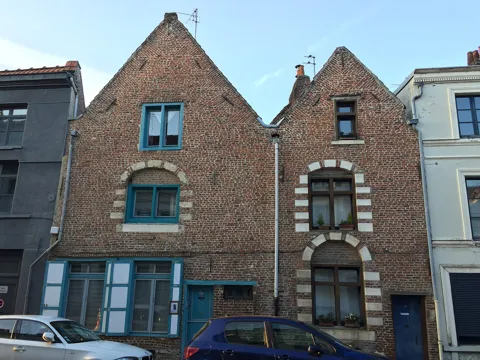
Vieux-Lille
Cobbled Flemish heart. Antique shops, designer boutiques, brick gables, and the prettiest streets in town.

Wazemmes
Multi-ethnic, market-loud, bohemian. The Sunday market, cheap eats, students and the city's most mixed streets.