
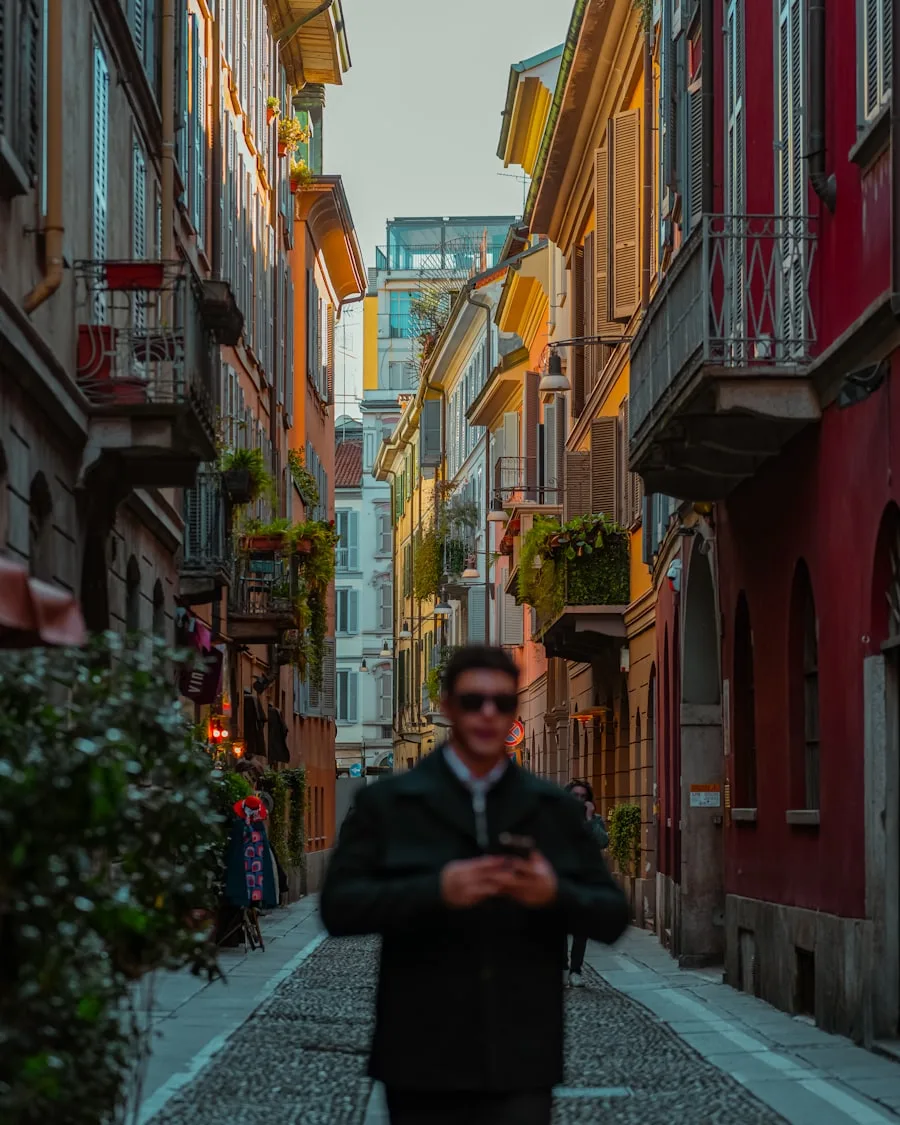
Photo Unsplash
Living in Brera, Milano
Affitto stanza singola tra privati Living in Brera, Milano - senza agenzia - Milan
Milano's historic artist quarter, the postcard quartiere of cobbled streets, art galleries and the Pinacoteca di Brera. Dense residential life, restaurants on every corner, and a price tag to match.
Brera is Milano's artist quarter - the wedge of cobbled streets between the Castello Sforzesco, the Pinacoteca, Piazza San Marco and Via Pontaccio. It takes its name from the medieval braida (open ground) where the Humiliati monks built their convent in the thirteenth century. The Pinacoteca di Brera (one of Italy's most important art galleries, with Mantegna's Dead Christ and Raphael's Marriage of the Virgin), the Accademia di Belle Arti di Brera (the historic fine-arts academy), the botanical garden and the Biblioteca Braidense all share the same eighteenth-century palace complex on Via Brera. The neighborhood feels older and more intimate than anywhere else in central Milano.
Who lives here
A particular and unusual mix. Long-time Milanese bourgeois families who never left, art-and-architecture professionals, gallerists, Accademia di Brera students and faculty, fashion and design names who can afford the price. Tourists are a constant presence but most live elsewhere - the resident population is small and stable, with low turnover. The buildings range from sixteenth-century palazzi with frescoed entrances to nineteenth-century townhouses, with very few new-builds.
What it's like during the day
Quietly elegant. Mornings are café-and-bakery slow - Marchesi 1824 and Princi on Via Madonnina, the corner bar on every block. Tourists trickle in from late morning toward the Pinacoteca and the Castello, but Brera's streets are narrow enough that they never feel overrun the way the Duomo does. The shopping is design and art rather than fashion big-brand: antique dealers on Via Solferino and Via Fiori Chiari, design and lighting showrooms on Via Statuto, contemporary galleries clustered around Foro Buonaparte. Tarot readers and street painters set up on Via Fiori Chiari most afternoons - a Brera tradition.
What it's like in the evening
One of Milano's busiest aperitivo and dinner strips. Bars, enoteche and restaurants fill Via Madonnina, Via Fiori Chiari, Via Brera and Via Solferino from 7 PM. The clientele tilts older and more elegant than Navigli, less corporate than Porta Nuova. Many restaurants are reservation-only on weekends. The Bar Brera in front of the Pinacoteca and the Jamaica (Hemingway's old Milano haunt) on Via Brera are stubbornly traditional. Pickpockets work the busiest blocks at weekends - basic vigilance.
Getting around
Brera is bracketed by three M2 green line stops: Lanza on the west, Moscova on the north, Cairoli on the south. The M3 yellow line Montenapoleone stop sits at the eastern edge, walking distance into the Quadrilatero. Tram lines 1, 2, 4, 12 and 14 thread around the perimeter. Walking is the main mode of transport - most of central Milano is fifteen minutes away on foot. Driving in Brera is genuinely difficult: cobblestones, one-way streets, ZTL (limited-traffic zone) restrictions, Area C charges. Don't try.
Eating and shopping
The food density is among the highest in Milano. Traditional trattorie (Latteria San Marco and Antica Trattoria della Pesa nearby), modern Italian, Japanese fine dining, French bistros, sushi, Thai, modern brunch spots. Prices are firmly central-Milano. The closest fresh-produce market is the one in the Garibaldi area, but the Mercato di San Marco every Monday and Thursday morning on Piazza San Marco is a Brera fixture. For groceries, a small Esselunga on Via Pontaccio, a Carrefour Express on Via Solferino, and a full Esselunga just beyond cover most needs.
When NOT to pick it
If you want affordability or any extra space. Brera is one of Milano's most expensive corners - apartments are small, often without lifts, on upper floors of historic buildings, with century-old wiring. Renovations are constrained by Soprintendenza heritage rules. The evening noise on the most popular streets - Via Fiori Chiari, Via Madonnina, Via Brera - can run until 2 AM at weekends, making sleep difficult on the lower floors. Tourist density grows year by year. Families with young children sometimes find the cobbled streets and lack of green space limiting - the closest large park is Parco Sempione a short walk away, which mostly makes up for it.
Brera works for the design or fashion professional, the architect or art-world resident, the couple in their thirties or forties who values aesthetics and centrality over space, and the long-stay newcomer who wants Milano at its most postcard-perfect. It's harder to recommend for families with multiple children or for anyone on a tight budget - try Isola or Sant'Ambrogio for similar centrality at noticeably lower rent.