
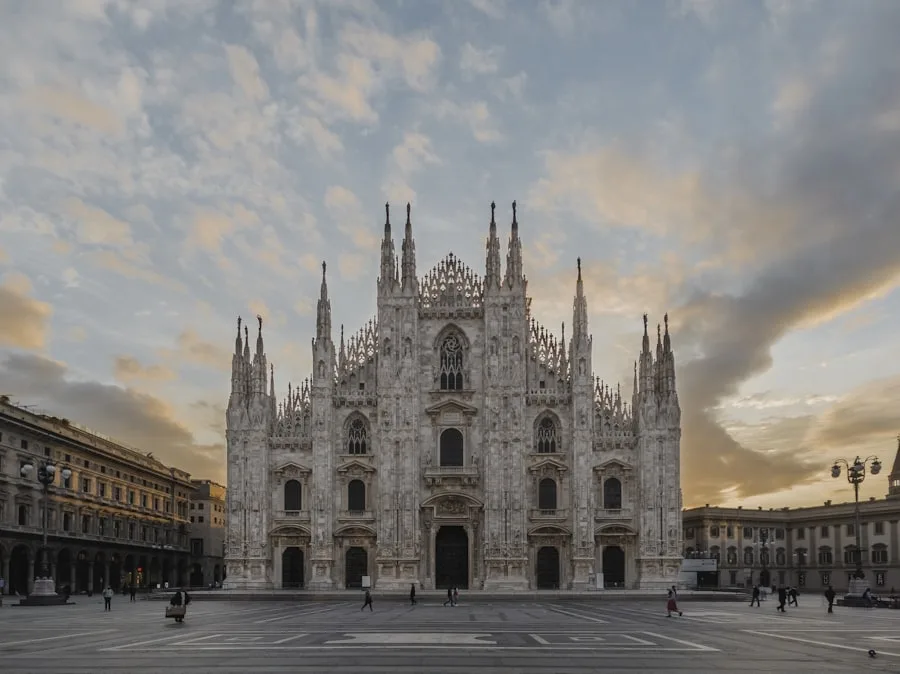
Photo Unsplash
Living in Milano, Italy
Affitto stanza singola tra privati Milan - senza agenzia
What you need to know if you're moving to Milano - how Italian rental contracts and the cauzione work, the Codice Fiscale and SSN registration, the ATM monthly pass and the suburban passante S, and how Brera, Navigli, Isola and the rest of the city feel different from each other.
Milano isn't only the Duomo and the Galleria. For people actually moving here, it's a city where Italian bureaucracy can be slower than the city itself, where the rental market moves faster than almost anywhere else in the country, and where the quartiere you pick shapes whether your days feel like a finance capital or a canalside village. This guide pulls together what you'll want to know before signing a contratto di locazione, from the Codice Fiscale to the ATM monthly pass, and the personality of the neighborhoods most newcomers consider first.
The city in a few sentences
Milano is Italy's economic capital and the second-largest city in the country by population, with around 1.35 million inside the municipal boundary and roughly 3.2 million in the wider metropolitan area. It sits in the Po Valley (Pianura Padana), in the north of Italy, with the Alps visible to the north on clear days and Lake Como less than an hour by train. It's the headquarters of Italy's banking and insurance sectors (UniCredit, Intesa Sanpaolo, Generali), the heart of Italian fashion (the Quadrilatero della moda, Fashion Week twice a year), the home of one of the most influential design industries in the world (the Salone del Mobile every April), and it has become Italy's most prominent tech and startup hub.
The climate is continental and famously unkind to the lungs. Winters are cold and grey, with persistent nebbia (fog) historically a Milanese signature, though it has thinned over recent decades. Summers are hot and humid - temperatures regularly above 32 °C in July and August. The city sits in a basin that traps air pollution, especially in winter; PM10 alerts and temporary traffic restrictions are part of the calendar. Spring and autumn are short and pleasant, when the city is at its best.
The language
Italian is the official language, and unlike Rome or Naples it's spoken here in a relatively clean, standard form - Milanese (milanés) survives only among older residents and the occasional café name. Milano is the most international Italian city after Rome, and in the central districts, around the universities, in tech offices and design studios, English is widely understood. Bocconi University, the Politecnico, IED and Domus Academy all attract large international student populations, and many master's programmes run entirely in English.
Outside the centre and outside professional settings, Italian still dominates. The Agenzia delle Entrate clerk, the GP's office, the amministratore di condominio (building administrator) and most landlords default to Italian. Learning the basics matters more than newcomers expect. Free or affordable Italian courses run at the Civica Scuola Lingue, at most consulates of origin, and through every major university's language centre.
Renting a room
Milano has one of Italy's tightest rental markets. Demand outstrips supply year-round, prices have risen sharply over the past decade, and the September student rush plus the spring fashion-week peaks tighten things further. it Real-estate agencies (agenzie immobiliari) still handle a large share of long-term lets and typically charge a provvigione of one month's rent plus VAT.
The standard residential contract is the contratto di locazione, regulated by Law 431 of 1998. The most common types are contratto 4+4 (open-ended residential, four years plus four years of automatic renewal) and contratto a canone concordato 3+2 (rent-capped in tariff-agreement areas, three years plus two of renewal). For students and short-term tenants there's the contratto transitorio (one to eighteen months) and the contratto per studenti universitari (six months to three years). Rooms in shared flats are usually let on individual sub-contracts or with the tenant added as a convivente.
The cauzione (deposit) is typically two or three months of rent and must be returned within a reasonable period after move-out, less documented damage. By law it should be deposited in a separate account, though in practice many landlords hold it directly. The contract must be registered with the Agenzia delle Entrate within thirty days of signing - registration is the landlord's responsibility but you can request the registration receipt as proof.
Documents: Codice Fiscale, residence, SSN
The first document you need is the Codice Fiscale, the Italian fiscal code. It's a sixteen-character alphanumeric string derived from your name, date of birth and place of birth, and it identifies you to every Italian institution. EU citizens request it at any Agenzia delle Entrate office with passport and a self-declaration of residence. Non-EU citizens receive it as part of their visa procedure or at the Questura when collecting the permesso di soggiorno. It's free, issued on the spot or by post, and you cannot sign a rental contract, open a bank account, get a phone contract or be hired without it.
The second is residence registration with the Anagrafe of your Municipio (city district). This is the formal declaration that you live at a given address, and it triggers your right to vote in EU elections (if you're an EU citizen), to enroll in the Italian health system, and to apply for the carta d'identità italiana. The application is filed online through Milano's Fascicolo del Cittadino portal; a vigile urbano (municipal police officer) will then visit your address to verify you actually live there before residence is confirmed. The process takes between two weeks and three months depending on backlog.
Italy: what changes if you're EU or non-EU
EU, EEA and Swiss citizens can move to Italy without any visa. If you intend to stay beyond three months you must register your residence at the Anagrafe, providing proof of either employment, study enrolment, or sufficient means with health coverage. After five years of legal residence you can apply for permesso di soggiorno UE per soggiornanti di lungo periodo, the EU long-term residence permit.
Non-EU citizens need a national visa from an Italian consulate before arrival, then must apply for the permesso di soggiorno within eight working days of entry. Applications are filed through the Sportello Unico per l'Immigrazione and the Questura, with appointments at one of the city's police stations. The permit comes in many varieties - lavoro subordinato (employee), lavoro autonomo (self-employed), studio (study), ricerca scientifica, motivi familiari, carta blu UE for highly skilled workers, and since 2024 the visto per investitori. Processing is famously slow; the temporary ricevuta is valid as your permit while you wait for the card.
Healthcare: the SSN
Italy's Servizio Sanitario Nazionale (SSN, the National Health Service) provides universal coverage funded mainly through general taxation. Enrolment is at the ASST health office of your Municipio, with passport, Codice Fiscale, residence registration and proof of work or study. EU citizens with valid EHIC are covered for emergencies during the first months; for non-emergencies and full coverage you enrol with a medico di base (family doctor) of your choice from the local list.
Once enrolled you receive the Tessera Sanitaria (health card), which doubles as your Codice Fiscale card. With it you access GP appointments (typically free), specialist visits and exams (with ticket co-payments, modest), hospital care, prescriptions and maternity care. Waiting lists for specialists in the public system can be long, which is why private health insurance and private clinics are common, especially among professionals. UniSalute, Allianz Italia, RBM and similar policies are widely offered as employer benefits.
Transport: ATM, the metro and the passante S
Milano's public transport is run by ATM (Azienda Trasporti Milanesi): five metro lines (M1 red, M2 green, M3 yellow, M5 lilac, and the new M4 blue connecting Linate airport to San Cristoforo), a dense tram network of 18 lines (including the historic orange Carrelli trams that newcomers love), and city buses. The Passante Ferroviario - the cross-city suburban railway run by Trenord - adds the S lines that connect Milano to its hinterland and to Malpensa airport.
The fare structure is zonal. A single Mi1-Mi3 urban ticket, which covers the entire municipality of Milano, costs 2.20 €. The Milano monthly pass for the central zone (Mi1-Mi3) is around 39 € for adults and noticeably cheaper for under-27s and over-65s. The abbonamento annuale for the central zone is about 330 €. The transport app ATM Milano Official App lets you buy tickets, plan trips, and tap directly on the gates with a stored credit card (the contactless system has been rolled out network-wide).
Bicycles are increasingly common. The bike-share service BikeMi covers the centre and most inner neighborhoods, and dedicated bike lanes have expanded sharply since 2020 - the Cambio Milano plan adds new corridors each year. The city is flat, which helps. E-scooters from various operators are everywhere; their use is now regulated with helmets, plates and insurance.
Linate airport is twenty minutes from the city centre via the M4 metro line. Malpensa is reachable in 50 minutes via the Malpensa Express train from Cadorna or Centrale. Orio al Serio (Bergamo) takes an hour by shuttle bus.
Working and studying
Milano concentrates Italy's finance industry: UniCredit, Intesa Sanpaolo, BPM, Mediobanca, plus most foreign banks have their Italian HQs here. The fashion industry is centred between the Quadrilatero della moda (Armani, Dolce & Gabbana, Prada, Versace flagship boutiques) and the design studios spread across the city. The startup scene clusters around Porta Nuova, Isola, Lambrate and the Politecnico's Polihub. Multinationals - Google, Amazon, Microsoft, IBM - have visible offices in the new business districts.
Universities matter for the rental market more than people realise: roughly a quarter of a million students live and study in Milano. The main institutions are Bocconi (private, finance and management, English-heavy), the Politecnico di Milano (engineering, architecture, design, with campuses in Bovisa and Città Studi), the Università degli Studi di Milano (Statale, public, the largest), the Università Cattolica del Sacro Cuore, IULM, NABA, IED, Domus Academy and the Conservatorio. Tuition at public universities is income-linked and can be very low; private universities (Bocconi, Cattolica, NABA) charge between 12,000 and 16,000 € a year.
Daily life: aperitivo, schedules and rhythms
Milano runs on a faster clock than the rest of Italy. Lunch is short - a piadina, a salad bar, a trancio di pizza - taken between 12:30 and 2 PM at most workplaces. Dinner is later, usually around 8 to 9:30 PM. The Milanese institution that newcomers love is the aperitivo: a drink (typically a spritz, a negroni, or a Campari) taken between 6 and 9 PM, with bar buffets that often cover small plates, focaccia, pasta, charcuterie. It's a cheap and social way to eat early without committing to a full restaurant; the busiest aperitivo strips are Navigli, Brera, Porta Venezia, Isola and Porta Nuova.
Sundays are quieter than weekdays but unlike Germany most supermarkets and many shops stay open at least for the morning. The traditional Milanese Sunday is brunch in the centre, a walk in Parco Sempione or the Giardini Indro Montanelli, a movie at the Anteo cinema. Public holidays cluster around Easter, Festa della Liberazione (25 April), 1 May (Festa dei Lavoratori), 2 June (Festa della Repubblica), Ferragosto (15 August, when much of the city empties), 1 November (Ognissanti), 7 December (Sant'Ambrogio, the city's patron saint, traditional opening of La Scala's opera season), and Christmas.
The fog has thinned but it hasn't gone - December and January mornings still bring it back from time to time. Air pollution in winter triggers periodic Aree B and Area C restrictions on vehicle access. The Milanese complain about traffic, prices, gentrification (notably in Isola and NoLo) and the relentless pace, then keep working harder than anyone else in Italy.
The neighborhoods
The fifteen profiles below cover the central and inner-ring quartieri most newcomers consider. From the financial heart at Cordusio and the tower-cluster of Porta Garibaldi, to the cobbled artist village of Brera and the luxury-shopping Quadrilatero della moda; from the gentrified-and-still-going Isola and the quieter Porta Vittoria, to the multicultural Porta Venezia and the canalside aperitivo of Porta Genova; from the residential Crocetta and the new business cluster of Tre Torri, to the design-studio strip of Porta Romana and the Chinatown of zona Paolo Sarpi; from the railway-hub Centrale and the historic-religious Sant'Ambrogio, to the skyline-defining Porta Nuova.
Each guide below covers who lives there, what days are like, what evenings look like, transport, food and groceries, and where the neighborhood doesn't fit.
Milan neighborhoods
Each neighborhood has its own character. Read the guides to pick the right one for you.
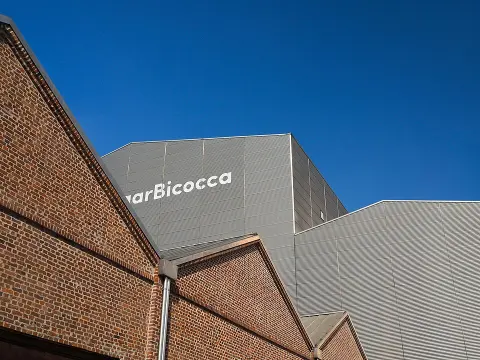
Bicocca
Planned Milan in the north: universities, offices, the contemporary art of HangarBicocca and the Teatro degli Arcimboldi. Modern and orderly, a little institutional.
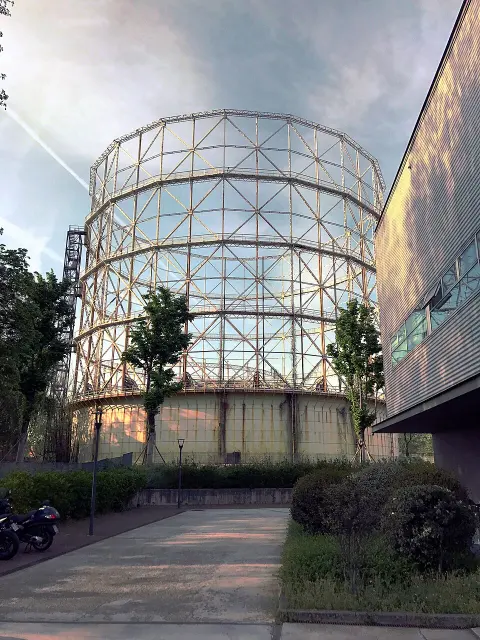
Bovisa
Post-industrial Milan of the north-west: the Politecnico campus, gasometers being converted, lower rents. In transformation - and no metro, you travel by train.
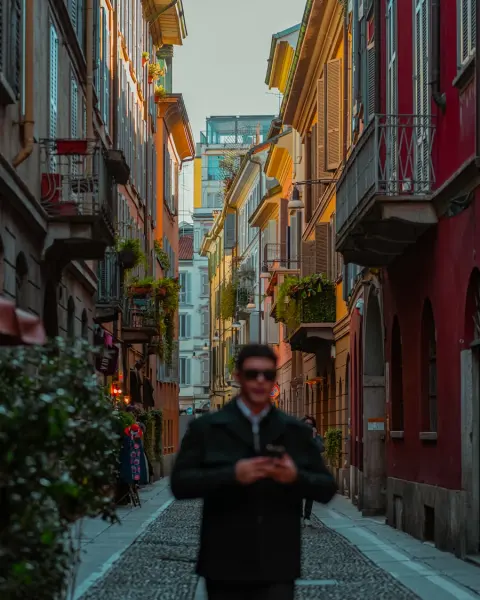
Brera
The cobbled artist quarter. Galleries, art school, restaurants, postcard streets and Quadrilatero-adjacent prices.
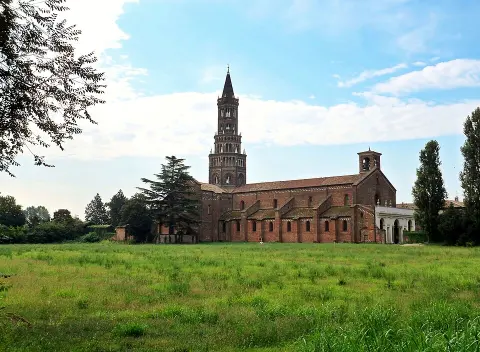
Chiaravalle
Countryside Milan: a Cistercian abbey from 1135, farmsteads and fields of the Parco Agricolo Sud. Peace and history - but very isolated, no metro.
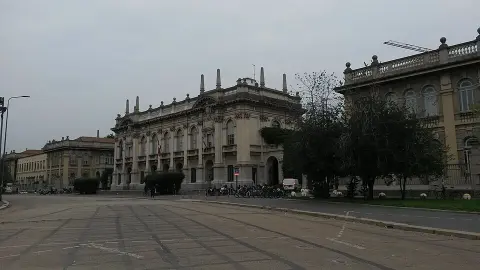
Città Studi
The Milan of students: the Politecnico and science faculties, bicycles and neighbourhood shops. Quiet, well connected and tailored to those who study.
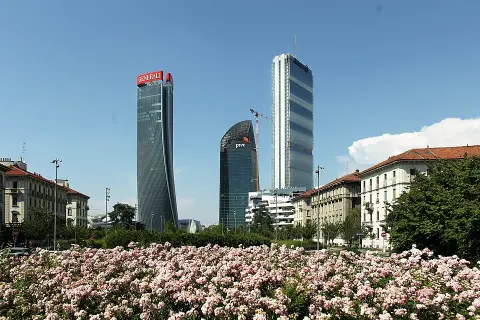
CityLife
The new business cluster of CityLife. Towers, shopping, young corporate community, very few historic streets.
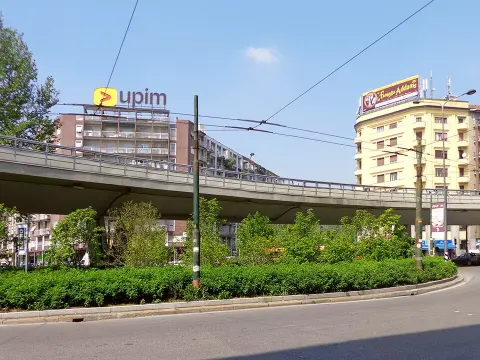
Corvetto
Working-class, multi-ethnic Milan of the south-east: low rents and the Duomo a few minutes away by metro. Authentic and undergoing regeneration, with the difficulties typical of a public-housing district.
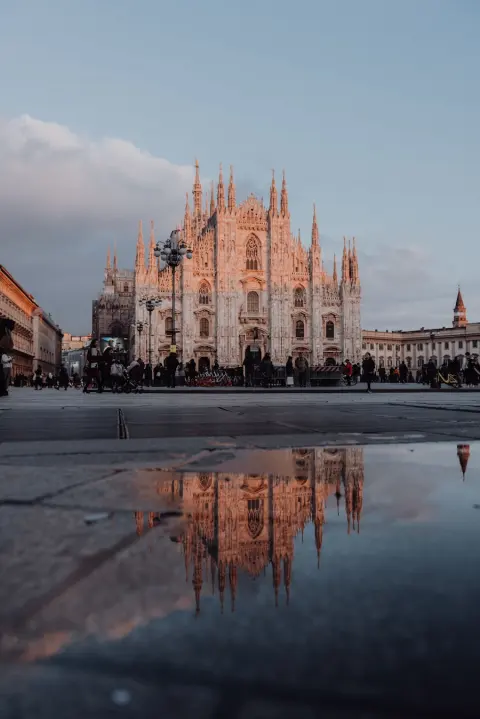
Duomo-Cordusio
The banking and insurance heart of Milano. Palazzi, suits, daytime energy, almost empty after eight.
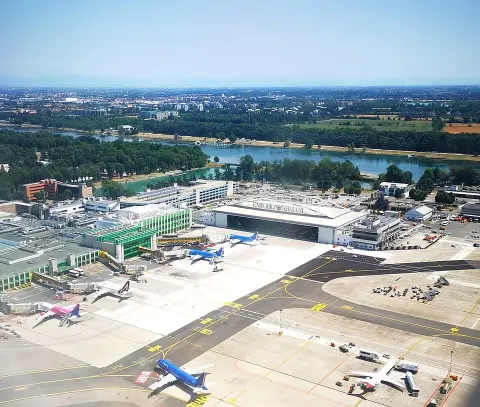
Forlanini
The Milan of the airport: next to Linate and a large park, with the M4 reaching San Babila in about 12 minutes. Very convenient for frequent flyers - with aircraft noise to factor in.
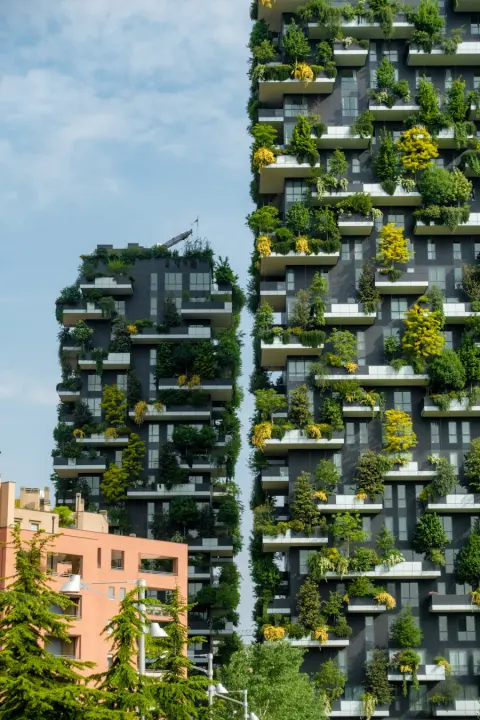
Isola
The ex-working-class quartiere turned skyline-adjacent. Young Milanese, design studios, gentrification tension.
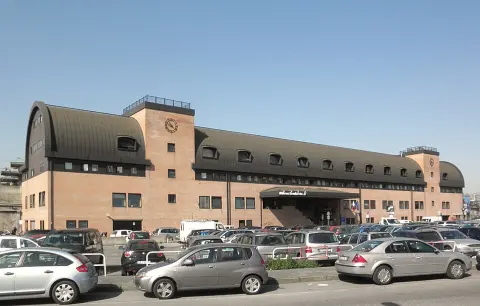
Lambrate
Post-industrial Milan to the east: converted former-factory spaces, excellent trains and lower rents than the centre. Semi-peripheral but very close to Città Studi.
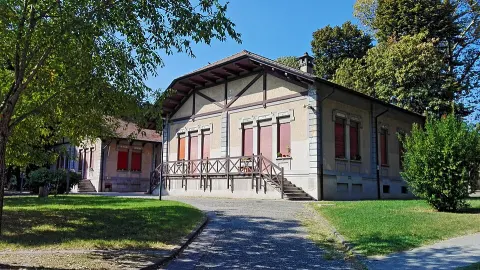
Loreto-NoLo
The Milan that is changing: multi-ethnic, full of street art and young energy, still affordable. Central and in full ferment - with the tensions of gentrification.
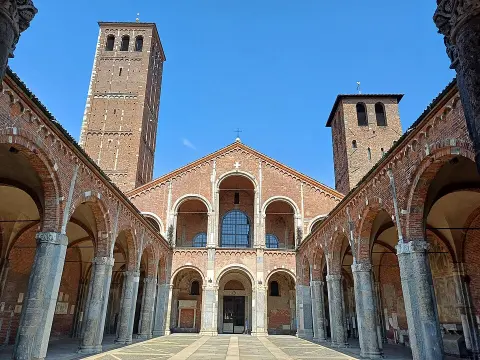
Magenta-Sant'Ambrogio
The historic-religious heart. Basilica di Sant'Ambrogio, Università Cattolica, quiet streets in the centre.
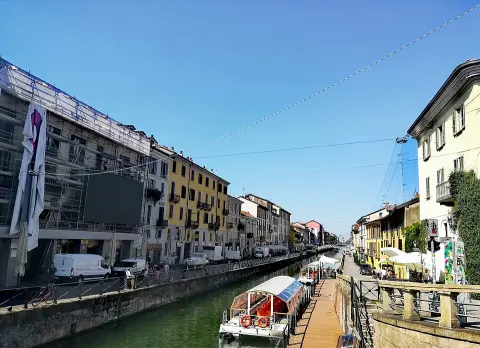
Navigli
The Milan of canals and aperitivo. Life on the water, an antiques market and bars at every step - at the price of very noisy evenings.
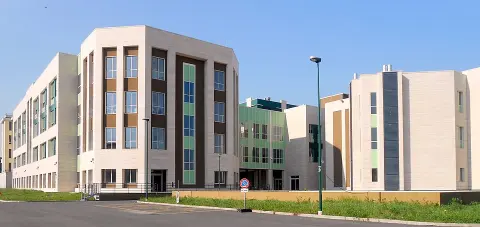
Niguarda
Residential Milan of the north: the large hospital, the Parco Nord a stone's throw away, a quiet atmosphere. More affordable rents - but no metro within the district.
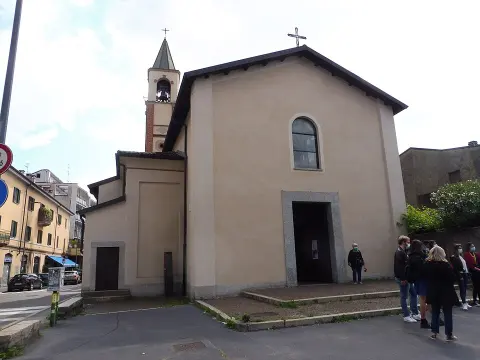
Ortica
Village-Milan to the east: a working-class village frozen in time, today famous for the large murals on the history of Milan and Italy. Quiet and characterful - but very small.
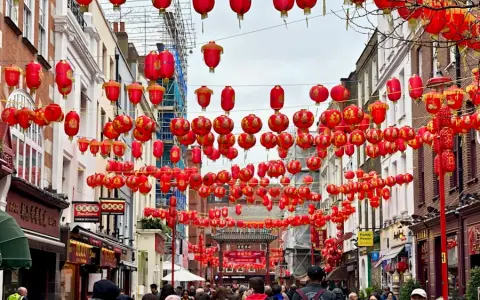
Paolo Sarpi-Chinatown
Milan's Chinatown. Pedestrian Via Paolo Sarpi, Chinese-Italian community, unusually dense food scene.
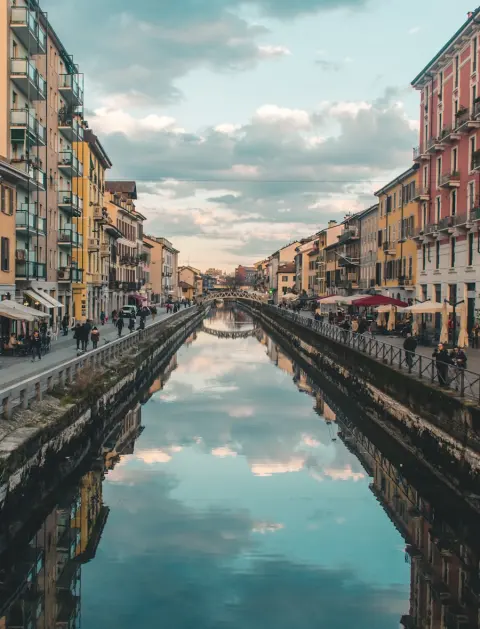
Porta Genova
Design and post-industrial Milano at the gate of the Navigli. Studios, the Armani Silos and aperitivo within five minutes.
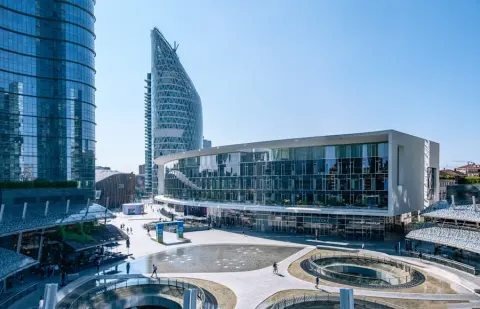
Porta Nuova
The signature skyline district. Bosco Verticale, Piazza Gae Aulenti, BAM park, polished business-residential mix.
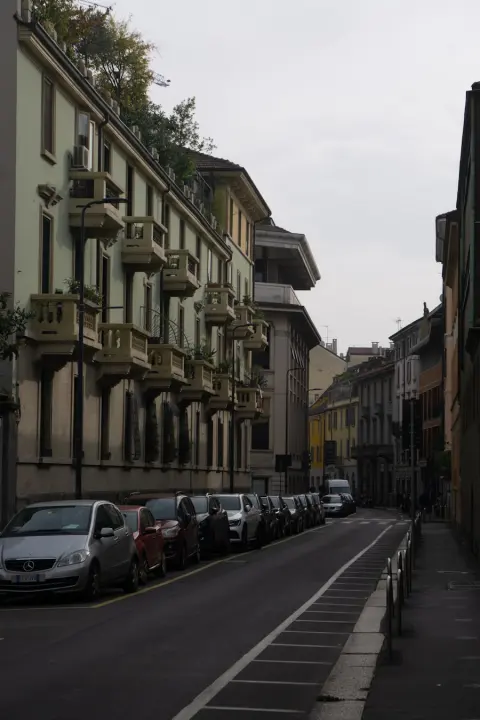
Porta Romana
South-central Milano along the Roman road. Fondazione Prada, the Olympic Village site, design studios and aperitivo.
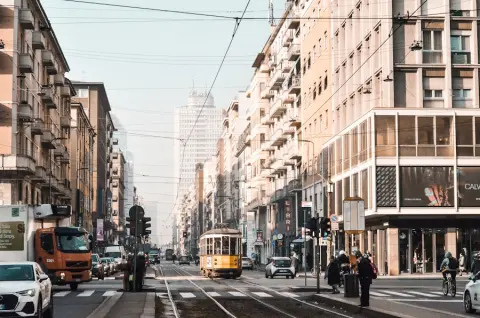
Porta Venezia
International, LGBTQ-friendly, Liberty-style palazzi and a dense aperitivo scene. The Eritrean community along Via Lecco.
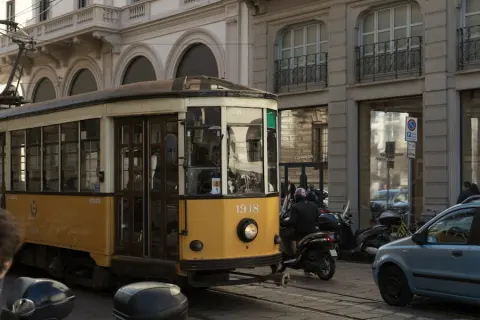
Porta Vittoria
South-eastern residential Milano. Tree-lined streets, the food market at Largo Marinai d'Italia, calm by day and quiet by night.
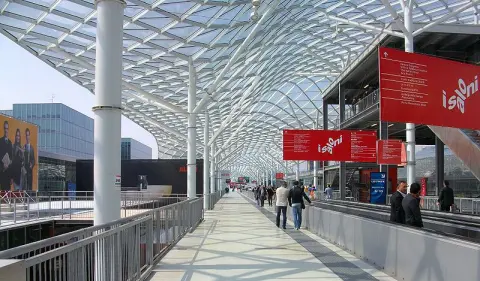
Rho Fiera Milano
The Milan of the trade fair and innovation: pavilions, research and university hubs, with the M1 and High Speed trains. Very easy to reach - but it is a municipality in its own right, not a district.
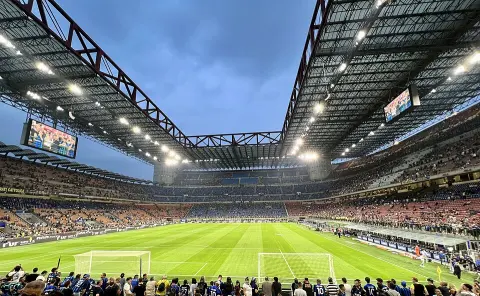
San Siro
The Milan of the stadium and the racecourse, with a large public-housing neighbourhood behind it. Affordable rents and excellent connections to the west - with match days to factor in.