
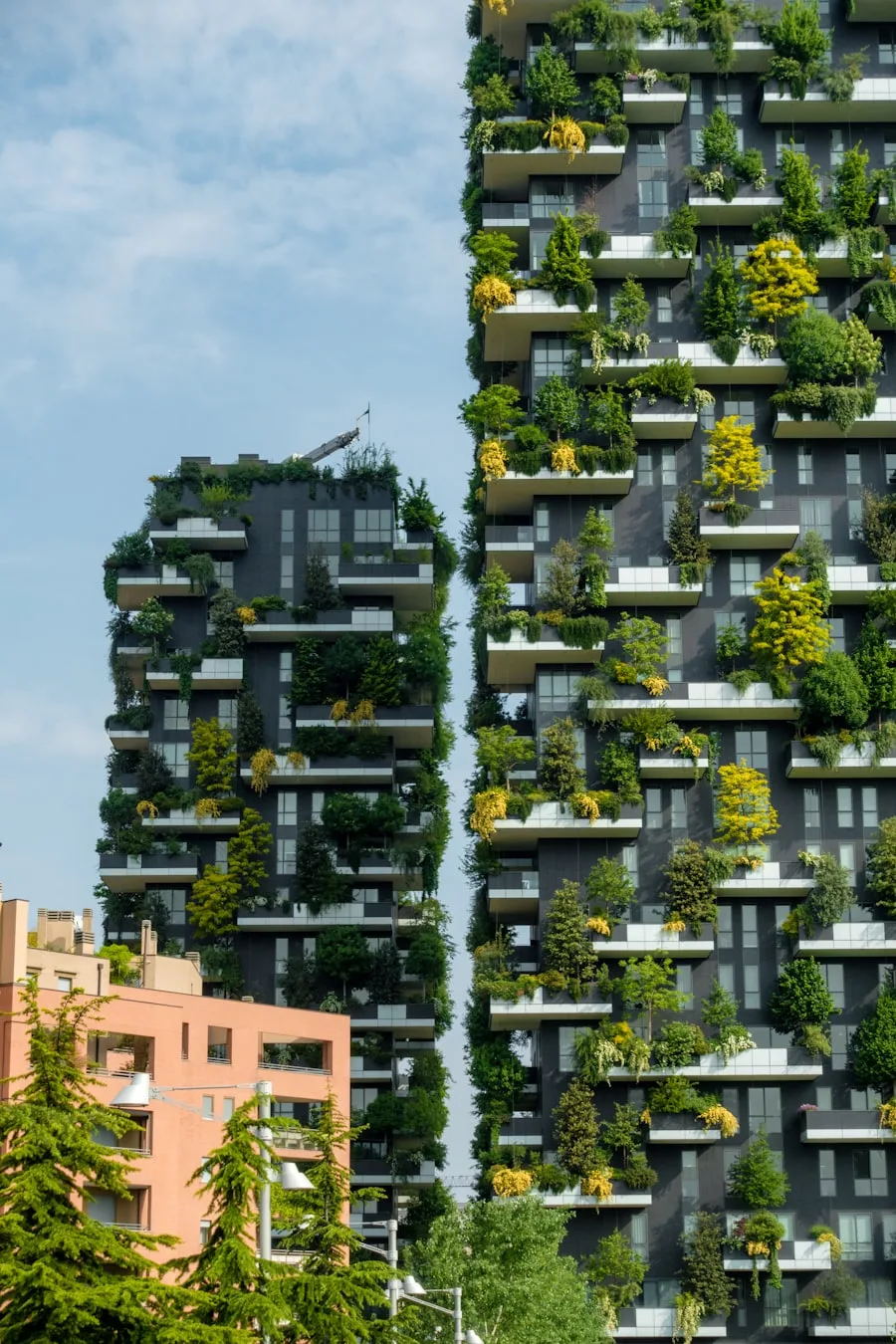
Photo Unsplash
Living in Isola, Milano
Affitto stanza singola tra privati Living in Isola, Milano - senza agenzia - Milan
The neighborhood that turned faster than any other in Milano. Historically working-class and cut off by railway tracks, now squeezed against the Porta Nuova skyline. A favourite of young Milanese, with all the friction of rapid gentrification.
Isola (Italian for "island") gets its name from the way the neighborhood was historically cut off from the rest of Milano by the railway tracks of the Garibaldi marshalling yards on one side and by the Cavalcavia Bussa on the other - a literal island accessible only by a small set of bridges. It was a working-class and railwaymen's quartiere through most of the twentieth century, with a strong leftist and partisan tradition (the Casa della Memoria sits in the neighborhood). The redevelopment of the railway lands into the Porta Nuova business district from 2007 onward pushed Isola into the centre of attention; prices have roughly tripled in fifteen years and gentrification is the dominant theme.
Who lives here
A mixed neighborhood undergoing rapid demographic change. The historic residents - long-time Milanese families, retired workers - are still visible in the older buildings of Via Borsieri, Via Confalonieri and Via Sebenico. They share streets with a younger wave of design and architecture professionals, fashion and media workers, tech employees from the Porta Nuova offices, university researchers from the nearby Bicocca, and a notable international slice (German, French, Spanish residents are common). Buildings range from courtyard-style nineteenth-century casa di ringhiera (with shared external balconies) to glass-and-steel new-builds along the southern edge.
What it's like during the day
Lively, design-aware, busy. Via Borsieri is the spine - independent shops, design studios, the MUDEC community bookshop, vintage clothing, vinyl records, plant shops, indie cafés. The Mercato di Isola on Piazza Minniti runs every Tuesday and Saturday morning and is a Milanese institution for fresh produce. Tourists are minimal. Office workers from the Bosco Verticale and Unicredit Tower drift through at lunchtime. The Casa della Memoria, the Casa Cova and the various foundation spaces give Isola a low-key cultural density that the surrounding business district lacks.
What it's like in the evening
One of Milano's better aperitivo neighborhoods. Via Borsieri, Via Confalonieri, Via Pastrengo and Via Sebenico are dense with cocktail bars (Frida, Camparino in Galleria's sister venues), enoteche, trattorie, vegan and modern Italian restaurants, and the occasional speakeasy. Less party-driven than Corso Como (the next neighborhood south), more relaxed, with a stronger neighborhood-resident core. The summer terraces on Piazza Minniti and along the streets fill from 7 PM. Late-night life is moderate - restaurants close around midnight, bars by 2 AM.
Getting around
Isola is well-connected. The M5 lilac metro line stops at Isola; the M2 green and M5 lilac interchange at Garibaldi FS is a five-minute walk. The Passante Ferroviario at Garibaldi makes Malpensa airport reachable in 50 minutes. Tram line 33 and bus 70 cover the rest. Walking to the Porta Nuova skyline, to Centrale or to Sarpi takes ten to fifteen minutes. The street grid is dense and walkable. Driving in is constrained by Area C charges and limited parking - cycling is the practical alternative, with the BikeMi dock at Isola FS and good bike lanes along Via Confalonieri.
Eating and shopping
The food scene is one of Isola's strongest assets. Frida for cocktails and brunch, Ratanà (one chef has a Michelin star) inside the Bosco Verticale park, Rita & Cocoa for pastry, Trattoria della Trebbia and Macelleria Sirtori for old-school Italian, plus the usual sushi, vegan, Levantine and modern Italian spread. The Tuesday and Saturday market on Piazza Minniti is the everyday produce stop. For groceries, Esselunga on Via Pasubio, Carrefour Express on Via Borsieri and Conad on Via Confalonieri cover most needs.
When NOT to pick it
If you want quiet or affordability. Isola is no longer cheap - rents are now within striking distance of Brera levels, particularly in the new-build towers along the southern edge and on the popular Via Borsieri strip. The gentrification tension is real and visible: historic residents talk openly about being priced out, some long-running shops have closed in the last few years, and the demographic balance shifts every year. Construction noise from the surrounding new-build projects has been periodic. If you want a Milano that feels more settled and less in transition, Porta Venezia or Sant'Ambrogio are calmer.
Isola works for the young or mid-career professional who values walking to a Porta Nuova office while keeping the texture of a real neighborhood, for the design or media worker who wants a creative-leaning quartiere, and for the international newcomer who wants Milano-as-Milano rather than Milano-as-luxury. Families do well here too - the schools are good, the streets are walkable, the park along the Bosco Verticale gives green space within five minutes.