
Photo Unsplash
Living in Porta Romana, Milano
Affitto stanza singola tra privati Living in Porta Romana, Milano - senza agenzia - Milan
Milano's south-central quartiere along the old Roman road. The Fondazione Prada, the post-industrial yards of the Scalo Romana now being rebuilt as the Olympic Village, and a creative-leaning resident community.
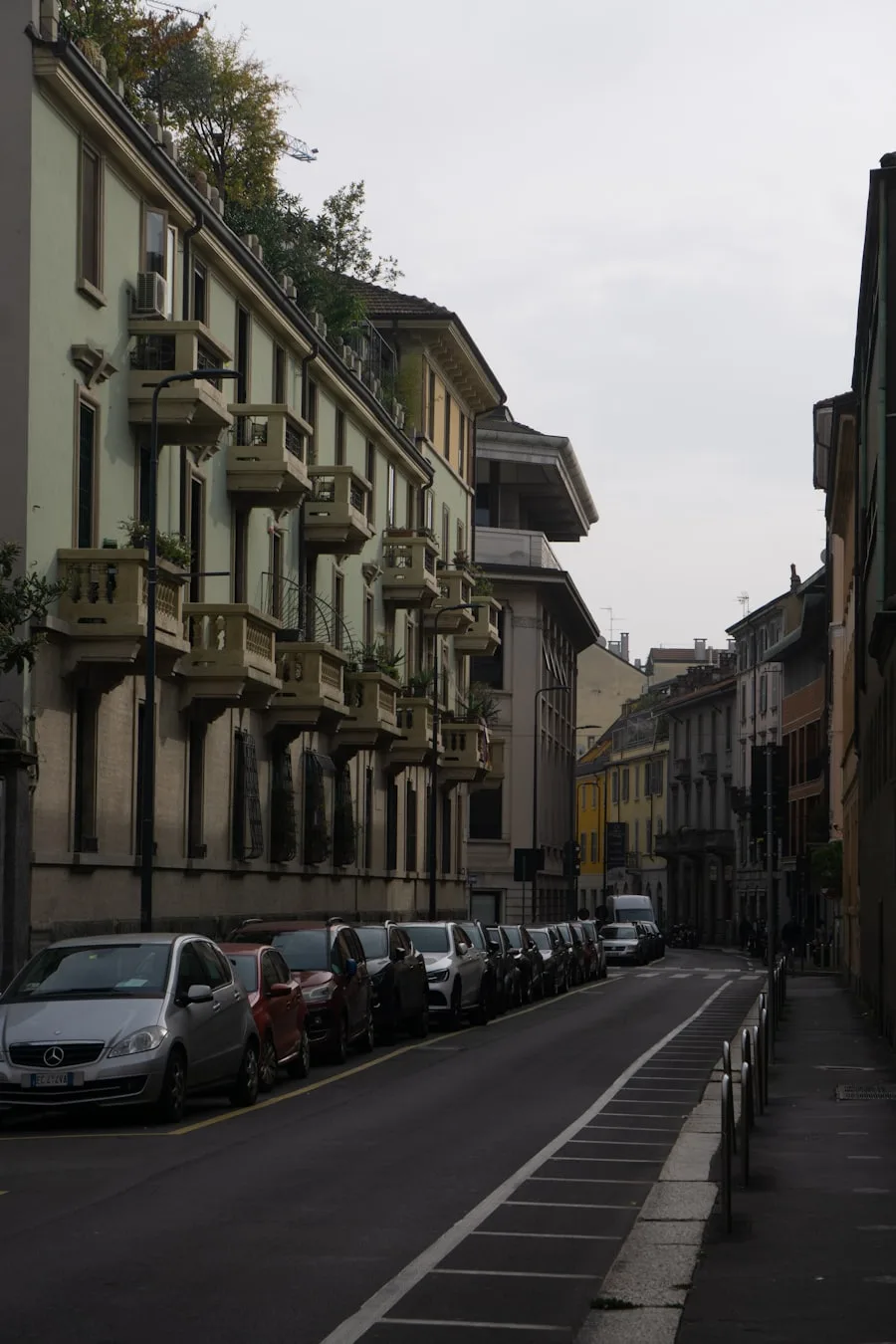
Porta Romana takes its name from the gate of the Spanish walls facing south toward Rome - the original Roman road south from Mediolanum left the city here. The neoclassical gate built in 1598 still stands on Piazza Medaglie d'Oro. The quartiere stretches along Corso di Porta Romana and Viale Sabotino, threaded by tram tracks and lined with early-twentieth-century apartment blocks. The railway lands of the Scalo di Porta Romana - closed when freight moved out - were rebuilt as the Olympic Village for the Milano-Cortina 2026 Winter Games and then converted into a mixed-use residential, student and office district. The Fondazione Prada (the foundation's contemporary art museum, designed by OMA inside a converted distillery) is the cultural anchor.
Who lives here
A creative and professional mix. Design and architecture professionals, fashion-and-media workers, young couples in their thirties and forties, families with school-age children in the larger apartments, the Politecnico's Bovisa-Leonardo students in the more compact blocks closer to the M3 line. Long-time Milanese residents are still numerous in the historic buildings. The presence of the Fondazione Prada, the Triennale's satellite spaces and several design studios gives the neighborhood a quietly creative tilt.
What it's like during the day
Active and varied. Mornings on Corso di Porta Romana are a flow of office workers heading to the centre on the tram, parents walking children to school, students from the Politecnico campuses. The cafés and bakeries along the corso - Pasticceria Cucchi historic branch nearby, Pavé Romana, the Bar Magenta equivalents - set the daytime rhythm. The Fondazione Prada draws international visitors but doesn't overwhelm the neighborhood. The Mercato di Viale Papiniano and the Mercato di Porta Romana (different days) handle fresh produce. The streets just east of the corso are residential and tree-lined.
What it's like in the evening
Moderately lively. The aperitivo strip along Via Crema, Via Vasari, Via Spartaco and Via Salasco draws a young-professional and creative crowd from 7 PM. Cocktail bars (the Bar Basso sister venues), modern Italian restaurants, sushi, vegan, brunch-pivoting-to-dinner concepts. Less party-driven than Navigli or Porta Venezia, more residential-feel. The Fondazione Prada's café-bar Bar Luce (designed by Wes Anderson) stays open into the evening. The streets quiet down by midnight on most nights.
Getting around
The M3 yellow metro stops at Porta Romana and Lodi T.I.B.B. bracket the area. Tram lines 9 and 16 thread along Corso di Porta Romana and Viale Sabotino respectively, with frequent service to the Duomo. The Passante Ferroviario station at Porta Romana (one of the major suburban-rail hubs) connects to the Milanese hinterland and Malpensa airport. Walking to the centre takes 20-25 minutes; cycling on the bike lane along Corso di Porta Romana is straightforward. Area C covers part of the area; parking is generally manageable on side streets.
Eating and shopping
The food scene leans modern Italian and design-aware. Erba Brusca nearby (modern Italian with a kitchen garden), Trattoria del Pescatore for seafood, Tipografia Alimentare on Via Vasari for charcuterie and wine, the various Lebanese and Levantine spots on Via Crema, sushi and ramen along Viale Sabotino. The Mercato di Viale Papiniano on Tuesdays and Saturdays is one of Milano's largest open-air produce-and-clothes markets. For groceries, Esselunga on Viale Bligny and on Viale Tibaldi, Iper La Coupole on Viale Sabotino, several Carrefour Express and Pam stores. The Fondazione Prada bookshop is worth knowing.
When NOT to pick it
If you want to avoid the disruption of the Olympic Village construction. The Scalo di Porta Romana redevelopment will continue through 2026 and beyond, with construction noise, temporary road closures and changing pedestrian flows. The promised post-Games transformation into a permanent neighborhood is positive but the transition years are messy. The historic apartments are sometimes dark inside, with small bathrooms and old wiring. The aperitivo strip on Via Crema gets noisy at weekends.
Porta Romana works well for the design or fashion professional with studios nearby, for the young couple wanting Milano-as-Milano texture with reasonable centrality, for the family with school-age children prioritising space over the highest centrality, and for the Politecnico student who values being close to both the Leonardo and Bovisa campuses. After the Olympic Village opens to residents post-Games, expect the neighborhood to evolve further - and rents to follow upward.