
Photo Unsplash
Living in Magenta-Sant'Ambrogio, Milano
Affitto stanza singola tra privati Living in Magenta-Sant'Ambrogio, Milano - senza agenzia - Milan
Central Milano's quietest historic-religious neighborhood, around the Basilica di Sant'Ambrogio. The Università Cattolica, the Museo Diocesano, and small streets that feel older than the rest of the centre.
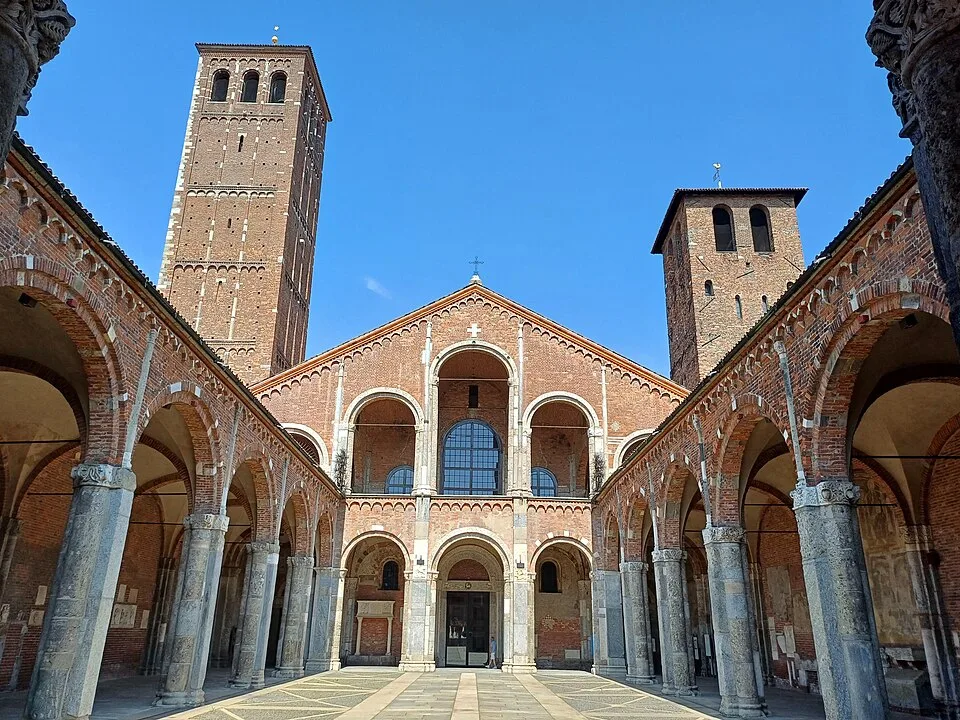
Sant'Ambrogio is the quartiere organised around the Basilica di Sant'Ambrogio, the oldest church in Milano (consecrated by Ambrose, the city's patron saint, in 386 AD) and one of the most architecturally important Romanesque basilicas in Italy. The neighborhood spreads from the basilica along Via San Vittore toward the Museo Nazionale Scienza e Tecnologia Leonardo da Vinci, and around to the Università Cattolica del Sacro Cuore main campus. The medieval-religious texture is denser here than anywhere else in central Milano - churches, courtyards, monastic complexes, a small grid of older streets that the post-war reconstructions mostly spared.
Who lives here
A quietly diverse central Milano. Università Cattolica faculty and senior administrators, established professionals (the area has historically been favoured by lawyers and doctors), retired Milanese in apartments their families bought decades ago, religious orders still operating from the surviving monastic buildings, and a younger student layer from the Cattolica's various faculties. The international expat presence is moderate - less than Porta Venezia, more than Crocetta. Families with school-age children are common, and the schools (the Scuola Civica and several Catholic schools) are well-regarded.
What it's like during the day
Calm and reflective. The Basilica di Sant'Ambrogio's medieval portico and the Chiostri di Bramante at the adjoining Cattolica are open daily and bring a steady but quiet flow of visitors. The science museum Leonardo da Vinci draws families. The streets between Via San Vittore, Via Olona and Via Carducci are tree-lined and pleasant for walking. The cafés and bakeries along Via De Amicis and Via Carducci set the daytime rhythm - Pasticceria Sissi, the historic Bar Magenta corner. Tourist density is lower than in Brera or the Duomo.
What it's like in the evening
Subdued. A small cluster of restaurants and enoteche along Via San Vittore and Corso Magenta draws a local crowd; the Bar Magenta on Via Carducci is a Milanese institution for the evening aperitivo. The streets quiet down by 11 PM. The aperitivo and nightlife energy of Brera (ten minutes' walk) or Navigli (fifteen minutes) is within easy reach but Sant'Ambrogio itself is residential first. Sant'Ambrogio Day on 7 December (patron saint, opening of La Scala's opera season) is the one evening when the basilica and surrounding streets fill with the Oh bej Oh bej Christmas market.
Getting around
The M2 green metro stop at Sant'Ambrogio sits in the centre of the area. The M1 red and M2 green Cadorna interchange is a five-minute walk north. Tram lines 16, 19 and 50 cover the perimeter. The Cadorna Stazione Nord with the Malpensa Express is ten minutes' walk. Walking to the Duomo takes 15 minutes; cycling along the bike lanes on Via San Vittore and Corso Magenta is comfortable. Area C charges apply.
Eating and shopping
The food scene tilts traditional and Italian. The Trattoria Milanese on Via Santa Marta (one of Milano's most respected old trattorie), the modern Italian Trippa on Via Vasari, in the Porta Romana area, and a thinner layer of international restaurants. The Mercato Comunale di Wagner is five tram stops west; the historic Mercato di Via Fauchè on Tuesdays and Saturdays is twenty minutes away. For groceries, Esselunga on Viale Papiniano, a few minutes' walk away, Carrefour Express on Corso Magenta, several Pam and Bio Company stores. The Saturday Sant'Ambrogio antiques market on the basilica's surrounding streets is a Milanese tradition.
When NOT to pick it
If you want a busy international neighborhood feel or evening buzz. Sant'Ambrogio is among the quietest central neighborhoods - newcomers from Mediterranean cities sometimes find the evening calm surprising. The international expat scene that defines Porta Venezia or Isola is much thinner here, and English-language services require more effort to find. Some of the historic apartments are dark inside, with small bathrooms, old wiring, and Soprintendenza heritage rules constraining renovation. The Cattolica's exam periods bring temporary student concentration.
Sant'Ambrogio works particularly well for the academic with a Cattolica appointment, the lawyer or doctor with a nearby office, the family with school-age children prioritising calm and quality schools over centrality buzz, the long-stay newcomer who values reflective Italian texture, and the religious or Catholic-tradition resident. Rents sit slightly below Brera for comparable space, which makes Sant'Ambrogio a strong value pick for those who want central Milano without the constant motion.