
Living in Vieux Nice, Nice
Colocation Living in Vieux Nice, Nice - chambre à louer entre particuliers, sans agence - Nice
Between Place Masséna, the Colline du Château and the sea, Vieux Nice is the medieval Italian old town that defines the city's character - narrow Ligurian streets, the daily Cours Saleya flower-and-food market, the baroque churches, socca counters on every block, and the densest tourist-and-nightlife centre.
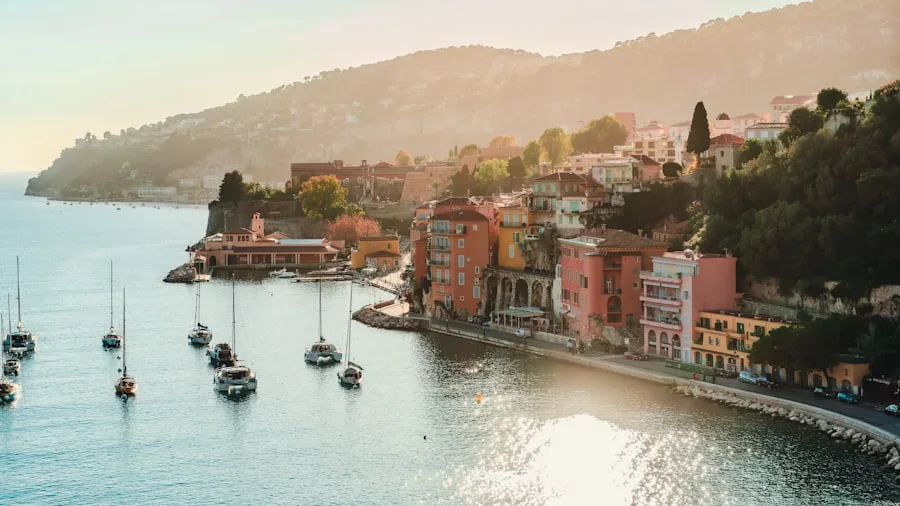
Vieux Nice is the medieval Italian old town - bounded by Place Masséna and the Coulée Verte to the north-west, the Colline du Château (the historic castle hill, now a park overlooking the bay) to the east, the Mediterranean and the Quai des États-Unis (the eastern continuation of the Promenade des Anglais) to the south. The quartier sits on the original Roman-and-medieval footprint - the castrum was founded by the Greeks of Marseille around 350 BC, the medieval town developed during the Savoyard period (1388-1860 as part of the Duchy of Savoy and Kingdom of Sardinia), and the streetscape is distinctly Ligurian-Italian - narrow streets, tall colourful buildings with painted façades and shutters, hidden courtyards, baroque churches.
What it is
A dense network of narrow medieval streets descending from Place Masséna to the sea. Cours Saleya - the long pedestrian square running parallel to the Quai des États-Unis - is the heart, hosting the daily flower-and-food market every morning (except Monday, when it switches to the Marché aux Puces antique market) and the evening restaurant terraces. Rue Pairolière, rue de la Préfecture, rue Droite, rue de la Loge and rue Sainte-Réparate are the main pedestrian streets. The Cathédrale Sainte-Réparate (the baroque cathedral of Nice, completed 1699), the Palais Lascaris (the seventeenth-century baroque palace housing the city's museum of ancient musical instruments), the Église du Gésu and the Chapelle de la Miséricorde are the architectural anchors. The Colline du Château at the eastern end - the hilltop park with the ruins of the old castle, the cascade, the cemetery and panoramic views over the Baie des Anges - is the green-and-recreational anchor.
Who lives here
A diverse central population. Long-term Niçois families - some with multi-generational ties to the old town, often elderly - in the upper-floor apartments. International expats and short-stay tourists - Vieux Nice has the highest concentration of Airbnb and short-stay rentals in the city. Young professionals working in the central tourism and hospitality industries. Students from the Université Côte d'Azur faculties drawn by the central location. Some immigrant families - Maghrebi, Italian, Eastern European - in the older blocks. Families with children are limited - the housing stock is dominated by small one-and-two-bedroom apartments in narrow medieval buildings.
What it's like during the day
Continuously alive and tourist-heavy. The Cours Saleya market opens at 6 AM and runs until 1 PM - flowers, fruit, vegetables, fish, socca, pissaladière, herbs, spices, olive oil, antiques on Monday. Tourists arrive in flow from late morning. Cafés and brasseries on Cours Saleya and the side squares (place Rossetti, place du Palais de Justice) serve continuous trade. Chez Pipo on rue Bavastro (a short walk east, in Riquier but conceptually part of the old town's socca tradition) and Lou Pilha Leva on rue du Collet serve the daily socca. The Colline du Château park draws daytime walkers and panoramic-view-seekers. The narrow streets bustle with tourists, residents, restaurant workers, delivery scooters.
What it's like in the evening
The densest nightlife in Nice. From early evening Cours Saleya fills with restaurant terraces, Rue Pairolière and the side streets fill with bars and pubs (Wayne's, Ma Nolan's, Snug & Cellar), and the medieval streets become continuously crowded. Place Rossetti and place du Palais de Justice host evening cafés. Aïoli, bouillabaisse, moules-frites, pissaladière, salade niçoise, daube de boeuf are on every menu - some at tourist quality, some genuinely excellent (look for Chez Acchiardo, Chez Palmyre, La Merenda). Late nightlife continues - bars and clubs around Cours Saleya and rue Saint-François-de-Paule run until 2 or 3 AM. Weekend evenings the streets are packed and loud.
Getting around
Tram T1 stops at Opéra-Vieille Ville and Cathédrale-Vieille Ville on the western and northern edges - direct access to Place Masséna (one stop north), to Garibaldi and Le Port to the east, and to the rest of the T1 line. Tram T2 (the airport line) runs underground beneath the centre with its nearest stops at Jean Médecin and Garibaldi, and its eastern terminus at Port Lympia by the harbour - direct east-west access and a one-change ride to the airport. The Promenade des Anglais is on your doorstep. The historic centre is essentially walkable. Cycling is moderate - the narrow streets and the pedestrian zone limit cycling inside the old town. The car is essentially useless inside Vieux Nice - narrow streets, pedestrian zones and ZPR (zone à priorité piétonne) cover most of the area; parking is restricted and rare.
Eating and shopping
The unmatched central food anchor. Cours Saleya market for daily produce. Socca counters - Chez Pipo on rue Bavastro (the legendary 1923 institution), Lou Pilha Leva on rue du Collet. Restaurants run the full range from authentic Niçois (La Merenda, Chez Acchiardo, Chez Palmyre - note that La Merenda has no phone and no reservations) to tourist menus to contemporary fine dining. Boulangeries on every block. The Patisserie Henri Auer and the historic Glacier Fenocchio (the famous Vieux Nice gelato counter on place Rossetti) are institutions. Italian, Lebanese, Maghrebi, Asian restaurants throughout. Supermarkets are limited inside the old town - small Monoprix and Carrefour City on the edges. The Galeries Lafayette and the central shopping on avenue Jean Médecin are a few minutes' walk north.
When NOT to pick it
If you want quiet residential streets, Vieux Nice is the loudest neighborhood in Nice - particularly on weekend evenings, when the Cours Saleya terraces and Rue Pairolière bars run until 2 or 3 AM and the upper-floor apartments take all the noise. If you want lower rents, Vieux Nice is among the most expensive quartiers in central Nice - the Airbnb pressure has pushed up long-term prices substantially. Families find the school provision thin, the recreational infrastructure limited, and the small medieval apartments unsuitable for children. If you have a car, parking is essentially impossible. The tourist density - particularly from June to September - is intense and can feel oppressive for residents. The narrow streets get hot in summer with limited ventilation.
Vieux Nice is the right pick if you want to live inside Nice's most distinctive quartier, the Cours Saleya market on your doorstep, socca and pissaladière a block away, the Colline du Château park for panoramic walks, the Promenade des Anglais and the beach within minutes, tram T1 and T2 to everywhere, and the densest restaurant-and-nightlife scene in the city. For young professionals, international expats wanting maximum old-town intensity, students, and people who place medieval Mediterranean character above quiet residential calm, it's the natural choice.