Living in Hellersdorf, Berlin
WG-Zimmer Living in Hellersdorf, Berlin - direkt von privat, ohne Makler - Berlin
The eastern extension of Marzahn. GDR Plattenbau, huge parks, prices among Berlin's lowest. A neighbourhood of families, slowly being upgraded.
History and identity
Hellersdorf was developed in the final years of the GDR, between 1980 and 1989, as the third major Plattenbau zone in East Berlin after Marzahn and Hohenschönhausen. Built on rural land, it was meant to house 100,000 people in 42,000 prefab apartments in 6-, 11- and 18-storey blocks. The fall of the Wall came while the plan was still being completed, and Hellersdorf suddenly found itself with a "socialist" identity in a world that wasn't socialist anymore. The 1990s brought unemployment and population flight. In the last 20 years the city has invested heavily: the Plattenbauten have been renovated and beautified, parks, kindergartens and schools have been added. Together with Marzahn it forms the Marzahn-Hellersdorf district.
What to expect
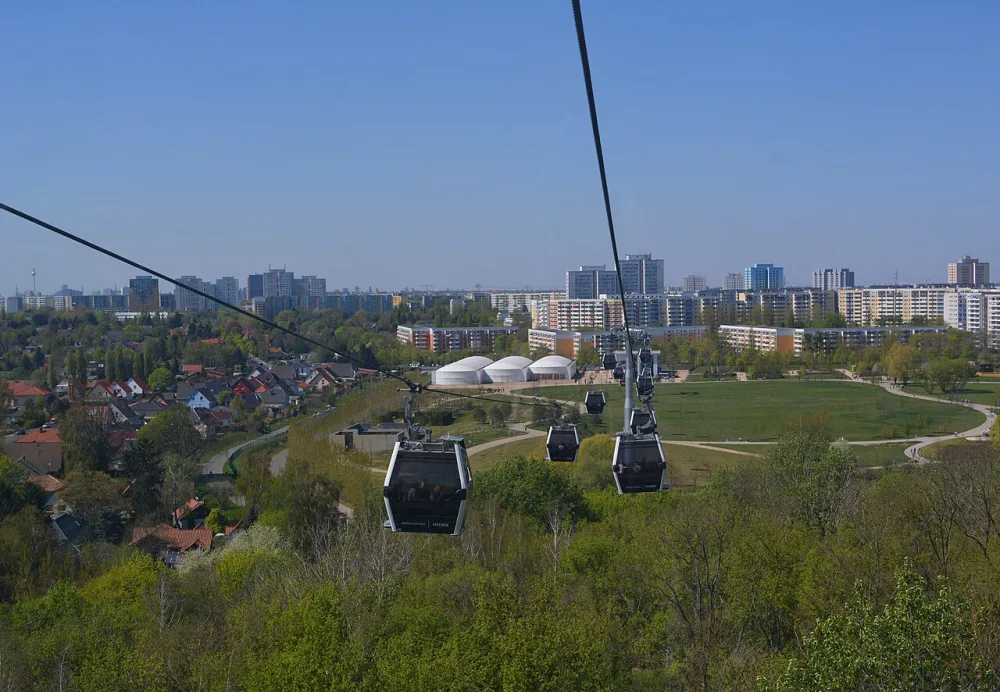
Well-kept Plattenbauten, repainted in pastel tones, with large green spaces between buildings. Density is low compared to other European prefab zones. Wide streets, bike lanes, playgrounds, supermarkets. The population is mostly working-class German, with a large community of ethnic Germans from the former USSR (Russlanddeutsche) and post-Soviet immigration, some recent Syrian and Afghan families (refugees rehoused 2015-2020), and a small wave of young people arriving for the very low prices. Neighbourhood life, almost no tourism.
Transport
U-Bahn U5 (Cottbusser Platz, Hellersdorf, Louis-Lewin-Straße, Hönow terminus). Trams M6, 18. Buses 195, 197, 269. Alexanderplatz reachable in 30 minutes by U5. Excellent for cycling: wide bike lanes along the Wuhletal.
What to do in the neighbourhood
Schloss Hellersdorf (actually a restored Gutshaus / manor) on the edge, district history museum. Wuhletalwanderweg - trail along the Wuhle stream that separates Marzahn from Hellersdorf, with meadows, trees, bridges, playgrounds. Kienberg (with the Wolkenhain tower) connected to Marzahn through the Gärten der Welt - one of Berlin's highest points, 360° views. Helle Mitte, the commercial and services hub that is the neighbourhood's heart. Kulturforum Hellersdorf for concerts and events. Pyramide, an iconic GDR building. Weekly market at Albert-Kuntz-Platz.
Who it's ideal for
Families and young professionals seeking low prices and space (apartments are big), students wanting affordable rooms, both long-standing German residents and new immigrants who value the network of public services and schools. Less suited to those wanting historic atmosphere, gourmet restaurants, nightlife, an international feel.