
Living in Białystok, Poland
Pokój do wynajęcia od właściciela Białystok - bez pośredników
What to know before moving to Białystok - how the umowa najmu works, the PESEL number, NFZ public healthcare, a city served entirely by buses, and how to read the districts of Poland's north-eastern corner.
Białystok is the largest city in the north-east of Poland, two hundred kilometres from Warsaw and close to the Belarusian border, which is also the eastern edge of the European Union. It is the tenth largest city in the country, cheap to live in, surrounded by forest, and quieter than anywhere else of its size in Poland.
The city in a few sentences
Białystok has about 289,000 inhabitants, with roughly 415,000 in the urban area and 450,000 in the wider metropolitan area. It sits on the edge of the Knyszyn Forest, and the landscape of Podlasie, forest, ponds and wooden villages, starts immediately outside the city.
The building people come to see is the Branicki Palace, built by the Branicki family in the eighteenth century and known as the Polish Versailles. It now houses the medical university, which is an unusual fate for a palace and says something about the city.
Białystok was one of the most mixed cities in pre-war Poland. In the Russian census of 1897 Jews made up around sixty-three per cent of its sixty-six thousand inhabitants; by 1936 they were still 42.6 per cent, and there was a substantial Orthodox minority, 8.2 per cent in 1931. Almost all of that world was destroyed in the war. The Orthodox presence in the region did survive, and it is one of the things that makes Podlasie different from the rest of Poland.
Industrially the city was a textile centre and was once nicknamed the Manchester of the North, the same comparison that was made about Łódź.
The universities are the University of Białystok, founded in 1997 and the largest in the north-east, the Białystok University of Technology, founded in 1949, and the Medical University of Białystok, founded in 1950.
The climate is the coldest of any large Polish city, because this is the north-eastern corner of the country. Winters are long and properly cold; summers are warm.
The language: Polish
Polish is the only official language. English is spoken by students and younger people but less widely than in Kraków, Wrocław or the Tricity, because Białystok has less of an international business presence. If you are coming here to work or study, expect to need more Polish than you would in a bigger city.
Renting a room: how it works
Białystok is one of the cheapest cities of its size in Poland to rent in. The market tightens in September with the student intake and is calm otherwise.
The standard contract is the umowa najmu, either open-ended (na czas nieokreślony) or fixed-term (na czas określony). The stricter najem okazjonalny variant gives the landlord stronger eviction rights and requires a notarial declaration from the tenant; check which one you are signing.
The kaucja, the deposit, is normally one month's rent. Listings split the price between the czynsz najmu paid to the landlord and the czynsz administracyjny paid to the co-operative or wspólnota, covering common areas, water and often heating. Electricity, gas and internet are usually extra.
The PESEL and NFZ
The PESEL is the eleven-digit national identification number, needed for a bank account, an employment contract, NFZ registration and any public office. EU citizens request it after the zameldowanie, the registration of the address, which needs a declaration signed by the landlord. Non-EU residents normally receive it with the residence card.
NFZ is the national health fund. On a Polish employment contract the employer registers you and contributions come from your salary. Once registered you choose a lekarz rodzinny near your address, who refers you onwards. Public waiting times for non-urgent specialists are long, and private packages through employers are common.
Getting around: buses, and only buses
This is the one thing about Białystok that catches people out. It is the largest city in Poland with a single form of public transport: there are no trams and no metro, only buses. The network is run by the municipal transport authority with three operators, and it covers the city properly, but everything depends on it.
Before the Second World War the city had a horse tram network. After the war, electrifying the lines was judged too expensive and the tracks were taken up, and nothing has replaced them since.
In practice this means the bus line and the stop matter more here than in a city with rails. Check them before taking a flat. The city is flat, which makes cycling realistic, and the centre is small enough to cross on foot.
Poland: what changes if you are EU or non-EU
EU, EEA and Swiss citizens can move freely, register their residence if staying longer than three months, work without a permit and use NFZ once registered. Non-EU citizens need a visa or residence permit, usually tied to work or study, processed through the voivodeship office. Start early and keep copies.
Being this close to the Belarusian border does not change any of that, but it does mean the eastern crossings are nearby, and the region's road and rail traffic reflects it.
What it costs, roughly
Low. Rooms and flats are cheaper than in any comparable Polish city further west, transport with a monthly pass is modest and groceries are inexpensive. The cold matters for bills: this is the coldest large city in Poland and the heating season is long, so ask how a flat is heated before signing.
The districts, in short
Centrum is the middle of the city, with the palace, the main shopping streets and most of the services. Around it are the older inner districts: Sienkiewicza along the main street to the north-east, Bojary immediately east, Piaski to the south and Przydworcowe by the railway station to the south-west.
Bojary is the one to know about. It is a short walk from the centre and it preserves the nineteenth-century wooden houses, with carved decoration and garden plots, that once covered much of Białystok and were almost entirely replaced by concrete after the war.
Further out are the housing estates built in the socialist decades and after: Antoniuk and Dziesięciny to the north-west, Wysoki Stoczek and Bacieczki beyond them, Słoneczny Stok, Zielone Wzgórza and Leśna Dolina to the west, Mickiewicza and Nowe Miasto to the south. These are where most people live and where most of the rental supply is.
South of the centre is Dojlidy, which was a village and farmland before the city reached it. It has the Dojlidy brewery, founded in 1768 and the home of Żubr, and the Dojlidy ponds, which are the city's main place for swimming and walking in summer.
The outer edges, Zawady and Jaroszówka to the north, Dojlidy Górne to the south-east, are semi-rural, large in area and thinly built.
Areas in Białystok
Each area has its own character. Read the guides to choose the right one for you.

Bojary
Nineteenth-century wooden houses and cobbles: the most distinctive corner of the city.

Centrum
The centre around the palace: compact, walkable and where most services are.
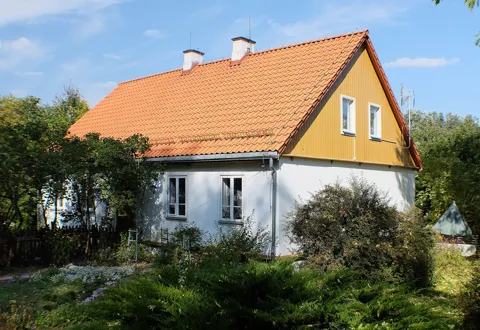
Dojlidy
Brewery, ponds and open space: the greenest of the city's districts.

Nowe Miasto
Planned estates with space and greenery, at the lowest rents in the city.

Przydworcowe
Around the railway station: central, practical, and the natural base if you travel often.